
 Home
Home“The Pan-Caucasian Home” in the Architecture of the “Belt and Road”
-
 04 Feb 2026 10:27
-
 368
368
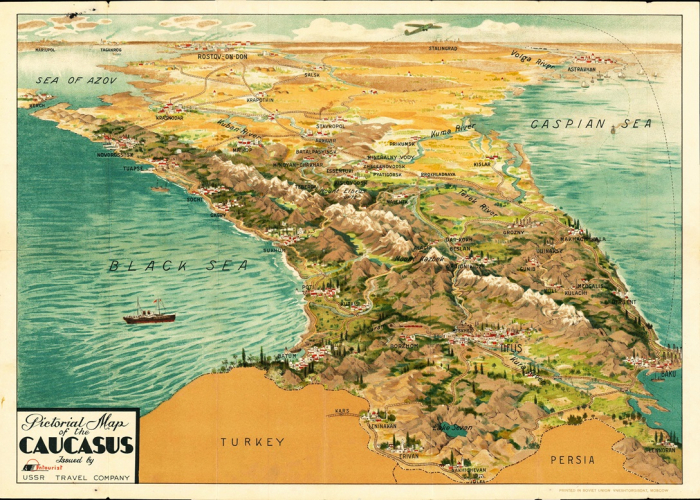
China’s interest in the idea of a Pan-Caucasian Home does not stem from a desire for political dominance or from a logic of influence, but from a deep civilizational understanding of sustainability, in which development is impossible without connectivity, and security is inseparable from the ability of regions to function as spaces of cooperation rather than lines of fracture. Within this logic, the Caucasus is perceived neither as a periphery nor as a buffer zone between centers of power, but as a historic crossroads of the Silk Road, where for centuries peace was a rational choice, difference was not a threat but a condition for exchange, and coexistence was a practice rather than an abstract ideal. It is precisely for this reason that support for the region’s infrastructural, humanitarian, and economic connectivity—including the development of the Middle Corridor and a modern rethinking of the Silk Road—is viewed by China as a contribution to the formation of resilient regional “homes” capable of independently maintaining balance, predictability, and long-term development, without imposing a single model, without interfering in internal identities, and without turning the region into an arena for others’ conflicts. Within this architecture, the “Pan-Caucasian Home” is conceived not as a political project or an institutional construct, but as a form of regional maturity, where connectivity becomes an instrument of peace and shared development the foundation of stability.
The idea of a “Pan-Caucasian Home” has been discussed in the Caucasus for a long time. Sometimes with irony, sometimes with fatigue. Most often, it is perceived as a beautiful but detached-from-reality metaphor—too many conflicts, too much pain, too many external interests. And yet in recent years this image has returned, not as a slogan and not as a utopia, but as an unsettling question: does the Caucasus have any shared future at all beyond the role of an eternal playing field for others’ games? It is important to say at once that this is not about a new state and not about erasing borders. The “Pan-Caucasian Home” is not a political construct, but a way of thinking—an attempt to view the region not as a collection of conflicts, but as a single living space in which differences are not abolished, but learn to coexist.
The Caucasus has never been unified and has never been simple. It emerged as a mosaic of peoples, languages, and traditions. The mountains here both divided and connected. Trade, ideas, and kinship ties passed through them. Conflicts existed, but they did not destroy the very possibility of living side by side. In this sense, the Caucasus has always been a home—complex, noisy, sometimes dangerous, but alive.
The image of a home here is not accidental. A home can have different rooms, its own rules, and its own pains. But there is a shared roof and a shared understanding that if the house collapses, everyone suffers. The Caucasus has never been an empty space between civilizations, because it was their crossroads. And the idea of a common home grows precisely out of this experience.
Why, then, is it so difficult to achieve? First, because of unhealed traumas. Wars, deportations, lost homes—for many, this is not the past but part of the present. Without acknowledging this pain, it is impossible to move forward. But if pain becomes the sole language of identity, the future also becomes impossible. Second, because of external actors. For too long, the Caucasus has been viewed as a territory of influence, a outpost, a buffer. Any attempt to speak about regional subjectivity is met with suspicion, because it disrupts the familiar logic of governing through conflict. And finally, conflict has been convenient. It mobilized, simplified, and justified many things. Dialogue is complex, lengthy, and does not deliver quick dividends. A home project requires precisely what is most often lacking—patience, a culture of institutions, and a view beyond the current moment.
Therefore, politics cannot be the starting point. Any conversation about statuses and borders too quickly explodes the space. The only real path is to begin with what unites without coercion—culture, education, the economy, ecology, joint projects. With trust, which grows slowly but endures for a long time.
It is precisely now that this conversation becomes especially important. The world is moving away from global universal rules toward regional models. Those who do not build their own framework risk remaining forever objects of others’ strategies. The Caucasus stands before this choice right now. The “Pan-Caucasian Home” is not a project against anyone. It does not abolish states, languages, or histories. It proposes something else—to learn to live with difference rather than to wage war against it. This is a long conversation—perhaps the most difficult of all. But without it, the Caucasus will not only lack a common home; it may also be left without a common future.
Meanwhile, the main question today is not whether a “home” is possible as a political project, but rather in which spheres of life of the South Caucasus it can already begin to take shape, step by step, without slogans and ultimatums. If one removes from the discussion the politics of statuses and borders—precisely what most often makes the conversation toxic—it becomes clear that elements of a common home already exist. Moreover, they are developing precisely where the logic of confrontation simply does not work.
Culture is the first and most natural point of convergence. It does not require a single version of history and does not impose identity. Music, cinema, cuisine, crafts, and literature have long lived beyond borders. Joint festivals, cultural routes, translation projects, and creative residencies allow people of the region to see one another not through political labels, but through lived experience. Importantly, culture does not eliminate differences; it teaches how to live with them. In this sense, it forms not a “shared past,” but a shared present—and thus a space of trust.
Today, education as an investment should be oriented toward regional thinking. If culture creates the emotional fabric, education shapes long-term horizons. Joint university programs, academic exchanges, regional research centers, and summer schools gradually cultivate a generation that perceives the South Caucasus not as a set of isolated national narratives, but as an interconnected space. This is especially important for the three countries of the region—Armenia, Azerbaijan, and Georgia—because education sets a horizon of 20–30 years. Without such a horizon, any conversation about the future is doomed to remain declarative.
A home is impossible without shared benefit. The economy is a language in which ideology yields to calculation. Small and medium-sized businesses, processing industries, agro-projects, logistics, joint industrial zones, and regional brands create an interest in stability rather than conflict. When jobs, supply chains, and shared income emerge, conflict ceases to be an abstract symbol and becomes a direct loss. This is why the economy can become the load-bearing structure of the Pan-Caucasian Home without touching questions of sovereignty.
Ecology is a space without alternatives. Mountains, rivers, climate, and biodiversity do not recognize borders. Environmental challenges—from water resources to climate change—make cooperation not desirable, but inevitable. Here it is impossible to “win alone.” Joint management of natural resources, transboundary reserves, climate programs, and environmental science create a rare zone where cooperation is not perceived as a concession. This is one of the strongest and most underestimated elements of the future home.
Media and public dialogue mean the return of the human image. Without changing the information environment, any projects are doomed. Regional media, joint documentary formats, journalistic exchanges, and platforms for public dialogue are capable of dismantling the most dangerous form of conflict—dehumanization. This is not about a “single truth.” It is about ensuring that on the other side of the border a human being reappears, rather than an abstract enemy. Without this, neither culture nor the economy will be able to sustain fragile trust.
The Pan-Caucasian Home begins to be felt when it manifests itself in everyday life: transport, tourism, digital services, healthcare, humanitarian services. Joint infrastructural solutions make the region more convenient for living, and this is precisely what gradually reduces the demand for confrontation. People begin to perceive the region not as a line of fracture, but as a space of opportunity.
No home can be built on the denial of pain. But it also cannot exist if pain becomes the sole foundation of identity. Joint archival, educational, and dialogue projects, work with oral history and memory, make it possible to speak about the past without a hierarchy of victims and without imposing a “correct” version of history. This is the longest and most fragile process. But without it, the home will stand on cracks.
The Pan-Caucasian Home does not emerge through a treaty or a declaration. It takes shape gradually—through culture, education, the economy, ecology, dialogue, and everyday connectivity. It is not directed against external actors and does not abolish national states. Its logic is simple: difference ceases to be a threat and becomes a form of coexistence. This is not a fast path. Its horizon is decades. But it is precisely such slow constructions that prove to be the most resilient. For the South Caucasus, the question today is not whether a common home is possible in theory, but whether the region is ready to begin building it where it is already real—in life, not in slogans.
The discussion of the “Pan-Caucasian Home” inevitably leads to the question of connectivity. A home is impossible without roads, and a region is impossible without routes that connect rather than divide. It is precisely here that the Middle Corridor and the historical logic of the Silk Road begin to play a special role. Contrary to common perception, these are not merely trade routes and not only geo-economic projects. In their deeper logic, they have always been and remain paths of peace. The Silk Road was never the road of a single empire and never served a single culture. It arose because different worlds needed one another and learned to interact without subordination. Fabrics, spices, and metals traveled along these roads, but far more importantly, ideas, faiths, knowledge, languages, and experiences of coexistence moved along them. It was a space where being foreign meant being interesting rather than dangerous. The main secret of the Silk Road lay in the fact that it did not demand uniformity. A merchant, a monk, or a traveler could speak another language, believe in something else, live differently—and still remain part of the common movement. Trade cannot survive without trust, and trust is impossible where war becomes the norm. Therefore, where the route remained alive, conflict proved too costly. Connectivity made peace a rational choice.
Today, the Middle Corridor returns this logic in a contemporary form. It is often discussed as a route or a geopolitical instrument, but in essence it once again transforms the South Caucasus from a buffer zone and outpost status into a crossroads. And a crossroads does not tolerate permanent hostility. It requires minimal agreement, predictability, and a willingness to negotiate at least for one’s own benefit. The Middle Corridor begins to work for the Pan-Caucasian Home not because someone proclaimed lofty goals, but because everyday logic changes. When revenues, transit, and jobs depend on stability, conflict ceases to be a symbol and becomes a loss. When customs, transport, and digital procedures must be coordinated, a habit of conversation emerges rather than one of accusation alone. When the region ceases to be an arena for others’ games, it begins to feel itself as a subject.
The Silk Road—both historical and contemporary—has never been a path to division. It functions where borders exist but do not turn into walls, where difference is not considered a threat, and where security is achieved through development rather than isolation. Yes, infrastructure by itself does not create peace. But it creates conditions in which peace becomes more profitable than war. And that is precisely why the Pan-Caucasian Home begins not with declarations and not with slogans, but with a road along which one wants to keep moving forward, rather than return to past conflicts.
Gulnara Safarli

