
 Home
HomeThe Renaissance of Central Asia as a Project for Regional Agency
-
 09 Jan 2026 07:58
-
 354
354
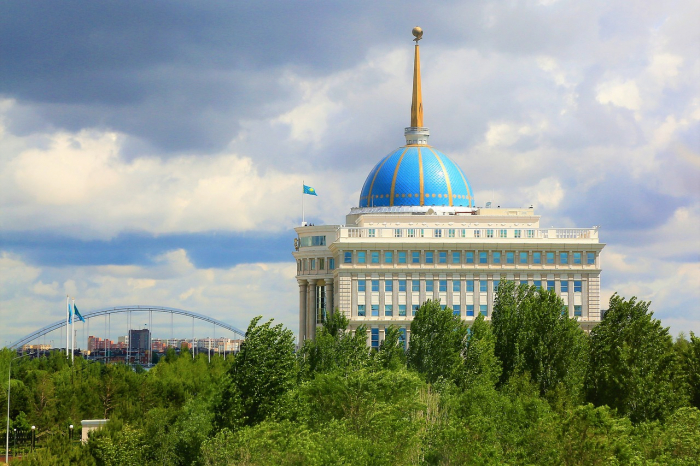
President Kassym-Jomart Tokayev's article, "The Renaissance of Central Asia: Towards Sustainable Development and Prosperity," was published in mid-2024 and is structured as a policy framework for the next 15 years. This policy article is intended to simultaneously solidify the region's new self-identity and offer the world a renewed format for interaction with the "Central Asian Five." This is not a review of achievements or a set of wishes, but a manifesto of regional agency, in which Central Asia is elevated from its status as a "space between" – between external centers of power, between routes and markets, between competing projects – and is positioned as an independent actor in international relations, capable of becoming a new center of gravity.
The article sends an important message to the world: "The region has already passed the stage of existential development and proven its statehood." The author deliberately emphasizes the thesis that pessimistic predictions about the Central Asian republics becoming failed states have not been borne out. The states have strengthened their territorial integrity, freedom, and independence, and have accumulated their own experience in state building, market development, restoration of cultural heritage, and the formation of national identity. While "previously" the key objective was survival and the basic stabilization of institutions, "today" the right to the next level emerges—the joint design of the future and the conversion of regional potential into strategic weight.
The past is transformed into the legitimation of future cooperation.
Based on the historical and cultural commonality of Central Asia, President Tokayev constructs a picture of the region as a unified geopolitical and spiritual space, formed by the symbiosis of nomadic and sedentary ways of life. From this symbiosis emerges a distinct political and legal culture and value system, distinguished by tolerance and resilience to change. Emphasizing that empires arose and fell, and models evolved, in the vast expanses of Central Asia, the author emphasizes the key point: the preservation of a unique identity and the ability to harmoniously interact with various civilizations. This fundamental idea is that the current rapprochement of the region's countries is not an artificial project of elites, but a return to the historical norm of a civilizational area that can be open to the outside world while simultaneously preserving its ethnocultural and spiritual identity.
The article specifically highlights the region's role in the history of the Great Silk Road and greater Eurasia as a whole. Kassym-Jomart Tokayev includes this motif not to romanticize the past, but to return Central Asia to the category of historically significant Eurasian hubs that can once again become key centers of trade, routes, and influence. Kassym-Jomart Tokayev emphasizes that Central Asia is not an appendage or a transit void, but a space where exchanges, meanings, trade, and political connections have historically been concentrated. The author then consistently describes the modernization trajectory of recent history: the development of institutions, infrastructure, and industry; the construction of thousands of kilometers of railways and highways; social facilities; increased openness and integration into the global economy; and improved education, healthcare, and pension systems. This enumeration becomes proof that the region is capable not only of surviving but also of developing, and therefore can raise the bar for interaction. It is on this basis that President Tokayev introduces his second key thesis, noting that interstate relations within the region have undergone fundamental changes, constructive dialogue has been established at all levels, mutually beneficial cooperation is developing, and progress has been made in resolving problematic issues that previously generated disagreements and hindered cooperation. The water and energy sector stands out as a separate area, where mutually beneficial solutions have been found and conditions have been created for advancing border delimitation issues, improving the operation of border crossing points, expanding transport links, launching new routes, and facilitating travel for citizens. President Kassym-Jomart Tokayev explicitly affirms the irreversibility of the rapprochement between Central Asian countries, linking it to ensuring the long-term security and sustainable prosperity of the region. Thus, regional cooperation is presented not as a short-term expedient or an ad hoc compromise, but as a conscious strategic choice, already enshrined in practical decisions and institutional mechanisms. This gives rise to another important element: a "pragmatic strategy of foreign policy relations," which ensures a balance of intercountry and interregional interests and enables the development of a fully-fledged partnership. Central Asian countries are active participants in global processes. A fundamental principle is formulated here: Central Asia does not intend to isolate itself or become a foreign "zone." The region asserts its peacefulness, but simultaneously demonstrates its ability to act through multilateral structures and to be a founder and active participant in organizations that are already shaping the Eurasian architecture—from the CIS and SCO to the CICA, ECO, EAEU, and the United Territories of Central Asia. As a result, a final formula is emerging in which the "Central Asian Five" are self-sufficient, steadily developing countries in the heart of Eurasia, with their historical past and traditions of good neighborliness serving as the foundation for further rapprochement.
Regional subjectivity through "CA Plus" format and balance of interests
In the article, President Tokayev also highlights the key international political agenda and returns to geography as a source of destiny. He notes that, thanks to their location, the peoples of Central Asia have historically contributed to cultural enrichment and intercivilizational dialogue, and today they continue this mission. Against this backdrop, the region's states' similar views on sustainable development, security, and stability, their mutual support in regional and international structures, and their joint promotion of UN General Assembly resolutions are emphasized.
The central thesis emphasized by Kassym-Jomart Tokayev is the growing political weight of Central Asia as an independent actor in international politics. He supports this thesis not with declarations, but with concrete actions—the emergence and institutionalization of new dialogue platforms in the "CA Plus" format. The list of CA-RF, CA-China, CA-USA, CA-Germany summits, meetings of Central Asian heads of state with the European Union, the CA-GCC, CA-India formats, and the upcoming CA-Japan summit in Astana serves two functions. First, it demonstrates that the region is already in demand as a holistic political partner, and its status as an independent actor is de facto recognized by leading global power centers. Secondly, it is a clear signal of a preferred model of external interaction, one in which entry into Central Asia is envisaged not solely through bilateral channels, but through collective formats in which the region is presented as coherent, coordinated, and capable of developing common positions.
A synthesis of ideological importance for the region is separately formulated, in which adherence to traditional values is combined with a desire for modernization and advanced knowledge. This is another way to allay the suspicion that modernization will lead to cultural blurring and traditionalism to isolation. In this context, the Central Asian project becomes a self-sufficient and influential participant in a renewing international system, aimed at strengthening its role as the Eurasian epicenter of geopolitical and geoeconomic transformations. The author thus elevates the region from the category of "route" to that of "node," which is not simply a link between Asia and Europe, but an independent actor capable of becoming a new center of global gravity. At the same time, the need to consolidate efforts in regional projects with external partners and jointly promote common positions in dialogue platforms is emphasized—that is, not competing with each other for the favor of external centers, but cooperating to increase the region's negotiating value.
"Consultative meetings as the 'skeleton' of integration without loss of sovereignty"
Kassym-Jomart Tokayev explicitly emphasizes that the next decade will be decisive for the region, and that it is up to the Central Asian states themselves to effectively utilize this historic opportunity. Amid growing geopolitical turbulence, as his argument suggests, Central Asia has already managed to create a space of trust and shared, indivisible security, remove key barriers that have hindered regional cooperation, and lay a solid foundation for a qualitatively higher level of interaction.
In this context, a clear hierarchy of relations between Kazakhstan and its neighboring states is also being introduced. These include allied relations with Kyrgyzstan, Tajikistan, and Uzbekistan, as well as the systematic expansion of the strategic partnership with Turkmenistan, demonstrating a real degree of political rapprochement within the region, which should and will be consolidated through practical cooperation mechanisms.
The key mechanism is described as a unique Central Asian cooperation format based on the fundamental principles of mutual respect for independence, sovereignty, and territorial integrity, as well as the peaceful resolution of potential disagreements. The central instrument is the Consultative Meetings of Heads of State, which have been held more than five times to date and, according to the author, have elevated cooperation to an unprecedented level, making integration processes progressive, systemic, and continuous.
The six pillars of "CA-2040" as a strategy a regional framework against the background of deglobalization
In his key program block, Kassym-Jomart Tokayev sets a general framework for regional cooperation: in the context of deglobalization, intraregional interaction is becoming critically important both for the self-preservation of Central Asia as a distinct civilizational space and for maintaining the region as a coherent and sustainable system. Under these circumstances, the unifying foundation must be the complementarity of the five states, stemming from their historical and cultural commonality. In fact, regional cooperation is no longer understood as a given or a backdrop, but as a vital necessity.
The author consistently outlines six areas, the resolution of which will determine the fate of the region:
The first area is peace and stability in and around Central Asia as the foundation for long-term development. Kazakhstan adheres to the principle of "peace above all else," emphasizing balance, respect for international law, sovereignty, and the inviolability of borders. Central Asia is envisioned as a space of indivisible security, capable of developing coordinated responses to traditional and emerging threats and interacting with the UN and other international organizations.
The second area concerns the economy and deepening cooperation. This is a simple but fundamental task: creating a solid common economic foundation for interaction between countries in the region. Central Asia is described not as a periphery, but as a space of real opportunities in trade, investment, science, and innovation. Citing key indicators—its size, population over 80 million, combined GDP of approximately $450 billion, and significant energy reserves—Tokayev emphasizes that the region is large and significant enough to claim an independent role in the global economy.
The primary focus, however, is on the future. The strategic goal is to gradually move away from dependence on raw materials and rely on technological development.
The third area is transforming Central Asia into a major global transport and logistics hub. Here, Tokayev places a key geoeconomic emphasis on the region becoming not just a transit corridor, but a vital link in global transportation chains. In this context, the Belt and Road Initiative, the North-South Corridor, and the development of the Trans-Caspian route, whose potential could significantly increase shipping volumes, are mentioned. A special role is assigned to the ports of Aktau and Kuryk, which provide access to the South Caucasus, Turkey, and Europe. At the same time, the prospects for corridors through Afghanistan to South Asia and the Indian Ocean are outlined—an approach that transforms Afghanistan from a mere threat to an element of the region's future economic architecture. In practical terms, this involves modernizing infrastructure and border crossings, launching new routes, and introducing technologies that will transform geography into a sustainable source of development and strengthen the region's negotiating position.
The fourth area concerns water, energy, and food security—the most sensitive issue for Central Asia. President Tokayev directly acknowledges that water shortages are already causing serious socioeconomic damage. The focus is on the International Fund for Saving the Aral Sea and the proposal to create an International Water and Energy Consortium with a food component. The Kambarata and Rogun hydroelectric power plants are cited as projects of strategic importance. Coordination of food policy and the creation of a unified information platform by 2030 are also proposed.
The fifth focus is youth as the region's main strategic resource. Central Asia is one of the youngest regions in the world, and this demographic factor is viewed as a significant competitive advantage. Young people are declared the driving force behind economic, technological, and cultural renewal. This underpins a focus on education and science: interuniversity cooperation, joint faculties, increased quotas, the opening of branches of foreign universities, and the development of research centers and technology parks. Kazakhstan is clearly positioning itself as a regional educational hub and promoting the idea of a unified Central Asian higher education space. Politically, this is a soft but solid foundation for integration—the formation of a layer of specialists and elites who think regionally, without compromising sovereignty.
The sixth area concerns civilizational identity and cultural and humanitarian rapprochement. President Tokayev speaks of a Central Asian mentality based on shared historical roots, intercultural dialogue, and interfaith harmony. Historical memory is seen as the foundation of national identity, and respect for the past as a resource for development. The need to write a common history of Central Asia based on a wide range of sources is emphasized—not for the sake of symbolism, but to form a distinct intellectual framework capable of competing with external ones. and interpretations. In a context of geopolitical uncertainty, regional cooperation is described here not as a choice, but as a vital necessity. Strengthening unity, trust, and openness to the world should ensure a renaissance for Central Asia. This logic gives rise to the concept of "Central Asia 2040" and the formula "Successful Central Asia – Successful Kazakhstan," emphasizing a willingness to advance integration gradually and to the extent that partners are ready.
Who is this policy article addressed to, and what signals does it send?
The article simultaneously addresses several audiences. For Central Asia's domestic elites, it articulates the key idea that integration is not a concession or a loss of position, but a tool for strengthening resilience and increasing the region's negotiating power through joint projects, security mechanisms, and institutional interaction. For the societies of the region's countries, this policy article transforms the idea of cooperation from abstract diplomacy into a clear set of practical benefits—developing transport and trade, ensuring water and food security, and expanding educational and youth opportunities. For external power centers, the article serves as a signal of a preferred architecture for interaction with the region, one that entails not only bilateral agreements but also multilateral "CA Plus" formats, within which Central Asia acts more coherently and therefore has greater opportunities to balance interests and protect itself from unilateral dependence. Investors and international organizations are demonstrated the "scale of the region," the growth of mutual trade, political rapprochement, and the project potential of corridors, hubs, and industrial cooperation.
Ten-Year Horizon 2026–2036: The likely trajectory charted by the programmatic article
President Tokayev explicitly states that the next decade will be decisive. Consequently, the text of his programmatic article can be read as a map of a phased regional assembly, where each element flows from the previous one. In 2026–2028, the most logical continuation of the described course will be the deepening of institutionalization and the "gluing together of rules." The role of the Council of National Coordinators and consultative meetings will grow, as these mechanisms have already proven effective in reducing barriers and launching practical roadmaps. Sectoral formats—transport, energy, media, and information—will likely become regular and begin to shape professional integration frameworks. External "CA Plus" platforms will also proliferate and thematically fragment, as this is how the region will be able to balance the interests of various external partners and monetize its agency without being tied to a single center of power. Key areas of practice will be logistics and the modernization of border crossing points, increasing the connectivity of air and rail routes, simplifying mutual travel, and creating comparable control regimes. The risk at this stage lies in the asymmetry of interests and capabilities between countries and the potential vulnerability of the water agenda, as droughts and seasonal imbalances can quickly raise tensions and test trust. An additional risk is the external "division" of the region through bilateral packages, which could create competition between countries for external resources. In the period 2028–2031, following the logic of the article, the region will enter a stage where declarations give way to large-scale projects and genuine economic cohesion among Central Asian countries. This is precisely where the economic complementarity effects discussed in the article should manifest themselves. Transport and logistics will become increasingly important, and the Middle Corridor and Caspian infrastructure will become a field of route competition, forcing the region to strive for transit standards, speed, safety, and predictability. The educational agenda during this period should become an important "soft cement," in which a unified higher education space, joint programs, and university branches will foster a cadre of specialists for whom regional connectivity will become a professional norm.
In 2031–2036, the region will enter a stage of strengthening its own security architecture and long-term resilience in the area of key resources. If the security risk catalog is implemented as a living tool, it can develop into a system for continuous threat monitoring and coordinated response measures, including cyber threats and the protection of critical infrastructure. It is here that the region's ability to function as a single space of indivisible security will be tested.
The water and energy consortium that President Tokayev proposes to create within the IFAS framework becomes a key test on this horizon. If it is created and equipped with mutual compensation mechanisms and a common information platform, Central Asia will gain resilience to climate and seasonal shocks and be able to rely on food security as an element. sovereignty. If the consortium fails to materialize, water shortages and energy seasonality will continually return the region to distrust and hinder common projects.
President Tokayev offers the world Central Asia as a unified platform for sustainability and growth in the context of deglobalization—a space where state sovereignty serves as the foundation of trust, security is conceived as a common architecture, and transit, transport, water, energy, and food form a unified development system. The key pillars of this model are youth, education, shared history, and civilizational identity as factors of internal sustainability. The "Central Asia 2040" concept and the "Successful Central Asia—Successful Kazakhstan" formula enshrine regional cooperation as a vital necessity and the optimal response to external challenges. The ultimate goal is to transform the region into an independent hub of Eurasia, capable of managing resources, developing human capital, and serving as a full-fledged hub of global attraction.
GSR
Original article: https://kazpravda.kz/n/renessans-tsentralnoy-azii-na-puti-k-ustoychivomu-razvitiyu-i-protsvetaniyu/

