
 Home
HomeC5+1 - A reset of regional policy and growing interest in Central Asia
-
 21 Nov 2025 14:59
-
 499
499
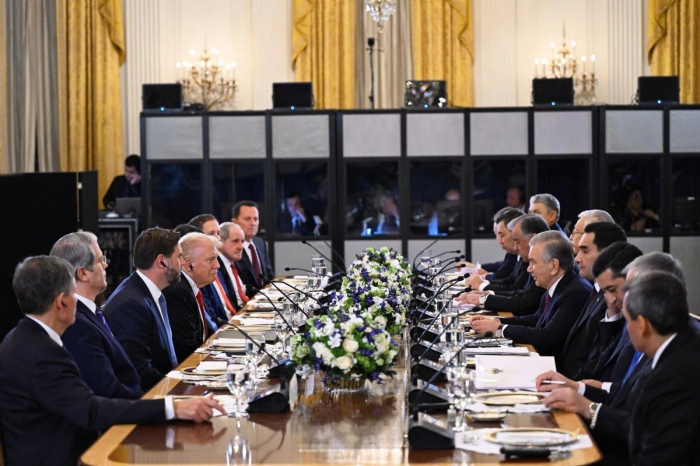
November can rightfully be called the month that drew exceptional attention to the states of Central Asia. Kazakhstan, Uzbekistan, Turkmenistan, Kyrgyzstan, and Tajikistan appeared significantly more frequently in regional and international media agendas—a trend itself reflecting the global community's growing interest in the processes unfolding in the region.
The primary catalyst for this heightened media activity was the meeting held on November 6 at the White House, where U.S. President Donald Trump hosted the leaders of Central Asian countries in the C5+1 format. This dialogue marked a landmark event, reaffirming both sides’ commitment to deepening cooperation and broadening discussions on the most pressing issues of security, economic development, and regional resilience.
As a result of the Washington meeting, numerous bilateral agreements worth tens of billions of dollars were signed—$17 billion with Kazakhstan alone. With Uzbekistan, an "incredible trade and economic deal" was concluded, involving Tashkent's investments of nearly $35 billion over three years—and more than $100 billion over a decade—into key sectors of the U.S. economy: aviation, agriculture, and IT. As noted, the American president discussed with Central Asian leaders issues concerning the diversification of access to energy resources and minerals within their territories, opportunities to mitigate risks associated with transit corridors, and expanding the presence of American companies in the region. "This is the heart of Eurasia, a region of colossal potential," declared the U.S. leader. "This part of the world was once part of the ancient Silk Road—a great history! Unfortunately, previous U.S. presidents completely ignored it, despite the fact that it’s actually a very wealthy region, but now we are correcting that mistake."
Donald Trump was particularly interested in mining and processing minerals—especially rare earth elements (REEs)—and related logistics issues. As Reuters observed, "the U.S. is specifically seeking new agreements to secure access to critical minerals, energy resources, and overland trade routes that bypass its geopolitical rivals." Kazakhstan is the world's largest producer of uranium, while Uzbekistan ranks among the top five global uranium producers; together, these two Central Asian countries account for more than half of the world's uranium output. Moreover, the region holds vast reserves of copper, lithium, tungsten, other rare earth metals, as well as gold, natural gas, and oil.
Notably, almost immediately after his visit to Washington, Kazakhstan’s President Kassym-Jomart Tokayev—the leader of Central Asia’s largest country—embarked on a two-day state visit to Russia, which took place in an overtly friendly atmosphere and was marked by the signing of a declaration on comprehensive strategic partnership. Russia is currently the largest investor in Kazakhstan, with bilateral trade already reaching $20 billion in the first nine months of the year. Over 20,000 companies with Russian capital operate in Kazakhstan, and joint projects total more than $50 billion.
Indeed, Russia’s economic presence—not only in Kazakhstan but across Central Asia as a whole—remains substantial. Last year, Russia’s trade turnover with the five Central Asian states exceeded $45 billion. All are members of the Commonwealth of Independent States (CIS), while Kazakhstan and Kyrgyzstan belong to the Russia-oriented Eurasian Economic Union (EAEU). Kazakhstan, Tajikistan, and Kyrgyzstan are also members of the Collective Security Treaty Organization (CSTO), while Kazakhstan, Tajikistan, Kyrgyzstan, and Uzbekistan participate in the Shanghai Cooperation Organization (SCO), where Russia plays a central role. Russia maintains its largest overseas land-based military base in Tajikistan, which includes the Nurek optoelectronic facility in the Pamir Mountains (part of Russia’s space surveillance system). In Kyrgyzstan, the Joint Military Base comprises a key communications node for Russian armed forces, an anti-submarine weapons testing site, and a seismic monitoring station for nuclear tests. Russia also holds significant presence in Central Asia’s energy sector.
Yet many observers argue that Russia is rapidly losing influence in Central Asia, and this trend is likely to accelerate further in the wake of the Washington meeting.
However, the situation may not be so straightforward—especially when considering Russia’s existing military presence in the region, something no other country currently possesses. Certainly, Moscow would have preferred that the U.S. continued to keep Central Asia on the periphery of its foreign policy. But as access to rare earth elements becomes increasingly vital and competition with China intensifies, Washington has reassessed its strategy. Meanwhile, Russia itself finds itself in an entirely new position due to the war in Ukraine and related sanctions—and may have chosen the lesser of two evils. After all, no one knows exactly what Putin and Trump discussed privately during their meeting in Alaska. Nor has anyone in the U.S. adequately explained why Trump suddenly lost his keen interest in Ukraine’s REE reserves.
These remain mere speculations—but it is still worth pondering whether Russia might actually benefit from increased U.S. presence in Central Asia.
First, if the U.S. invests in Central Asia’s infrastructure, energy, and digitalization, it could reduce migration pressures from these countries to Russia. Should U.S. plans materialize, numerous jobs would emerge in the region, making it more advantageous for local populations to stay home rather than migrate to Russia, where requirements for migrant workers have been progressively tightened.
Second, once the U.S. enters the region and commits its capital, it will have a strong incentive to promote regional stability—something also beneficial to Russia, given Central Asia’s proximity to Afghanistan.
Third, geographical factors remain decisive in Central Asia–Russia relations—a reality understood both by Central Asian states and by Moscow. A simple example illustrates this: the region increasingly faces acute freshwater shortages, threatening food security, energy production, social stability, and interstate relations. Crucially, REE mining and processing require substantial water volumes, much of which is irreversibly lost or contaminated. While the U.S. may invest capital, introduce technology, and establish transit routes, it cannot supply water. Perhaps coincidentally, Russian media at this very moment reported that the Russian Academy of Sciences is studying a project to divert the flow of several rivers—the Northern Dvina and Pechora toward the Azov Sea, and the Ob toward the Aral Sea, i.e., into Uzbekistan and Kazakhstan. Unsurprisingly, this announcement sparked strong negative reactions from bloggers, political analysts, and journalists. But why did this news emerge precisely now? Russia may be signaling the region’s vulnerabilities—including in mineral extraction—or floating a trial balloon for mutually beneficial business. According to some Russian experts, Moscow would incur no significant ecological damage while gaining substantial economic and geopolitical advantages. In today’s world, water is becoming as valuable a resource as lithium, uranium, or tungsten.
Fourth, amid ongoing debate about whether Russia has already hit the ceiling of its influence in Central Asia, China’s reaction to growing U.S. ambitions in the region remains unclear. Beijing has spent recent years actively expanding its footprint through the Belt and Road Initiative, financing massive infrastructure projects. Thus, from a balancing-of-interests perspective—and given Russia’s inability to economically compete with China—U.S. involvement in Central Asia offers Moscow certain strategic benefits. Additionally, Central Asian states compete with Russia in hydrocarbon exports to China. Greater transit opportunities for them would give Moscow stronger negotiating leverage when concluding its own gas and oil deals with Beijing. Clearly, U.S.–Central Asia cooperation poses serious risks to China, particularly amid escalating U.S.–China global rivalry. At minimum, it could break China’s near-monopoly on REE supply. Central Asian REE production would also bolster the U.S. military-industrial complex and support NATO and Pentagon rearmament, as these materials are essential for defense applications. Moreover, the U.S. would gain influence over key overland trade corridors linking China to Europe and the Indian Ocean. Finally, Afghanistan’s proximity must be considered—another country exceptionally rich in minerals, where the U.S. reportedly seeks to restore its military presence at Bagram Air Base.
Once perceived as a periphery of global politics, Central Asia is now transforming into an arena of complex geopolitical balancing. In this game, every factor matters—from a war waged thousands of kilometers away to geographic terrain and climate change.
Irina Khalturina

