
 Home
HomeBoard of Peace– a new architecture of global governance?
-
 25 Jan 2026 10:04
-
 359
359
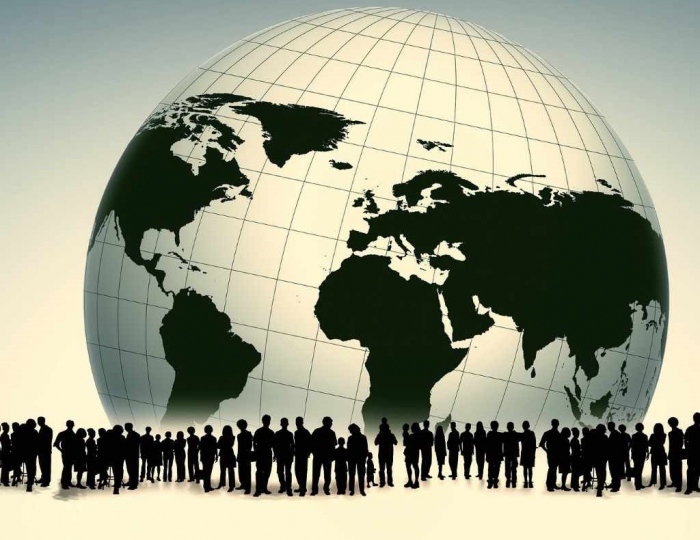
The Board of Peace is a newly established intergovernmental body, initiated by Donald Trump as part of the Gaza peace plan, publicly announced on international platforms, including the World Economic Forum in Davos as an international mechanism for coordinating and implementing post-conflict arrangements. However, it became evident from the outset that this was not a local experiment. The Council's mandate underwent rapid expansion, with the initiative itself becoming one of the most extensively debated and controversial international projects of the past decade.
At that juncture, the armed conflict in Gaza, which had commenced on 7 October 2023, had entered a phase of strategic stalemate. It was evident that the parties involved had been unable to achieve a decisive advantage, and it was apparent that the utilisation of international mediation formats had reached its limits. The primary concern for external actors was not so much the issue of a ceasefire, but rather the question of the territory's future governance. A portion of the international community sought a reconstruction model that would enable the avoidance of a direct external military presence, whilst simultaneously not reducing governance to the placement of Gaza under the exclusive administrative control of the UN. The UN is an organisation whose effectiveness in crisis zones is increasingly subjected not so much to objective criticism as to the deliberate erosion of its authority and influence.
In August 2025, former UK Prime Minister Tony Blair proposed a model of an international mandate for Gaza. In September of that year, the US President, Donald Trump, unveiled his own proposal, which was met with support from Israel and partial approval from Hamas. A pivotal moment was the decision of the UN Security Council on 17 November 2025, when Resolution 2803 was adopted. The organisation has expressed its support for the establishment of the Board of Peace as an external initiative, while simultaneously emphasising that it does not constitute an official United Nations body. This compromise subsequently became the legal foundation for the launch of the new structure.
The formal establishment of the Board of Peace was declared on 15 January 2026, when Donald Trump disclosed its formation on the social network Truth Social. The signing of the charter was conducted on the margins of the World Economic Forum in Davos, accompanied by a political ceremony of a demonstrative nature, attended by leaders and representatives of Armenia, Azerbaijan, Pakistan, Qatar, Türkiye, Indonesia, Argentina, and Hungary. In expressing his opinion on the composition of the participants, Trump, in his customary manner, stated that he "harbours a favourable sentiment towards all members of the Council, with the exception of a small number of individuals whom he finds particularly disagreeable." He further elaborated that, in such settings, there are typically "two or three individuals who he finds particularly distasteful." This episode vividly underscored the personalised nature of the new structure and its close linkage to the political style of its initiator.
The Board of Peace has been organised into a three-tier hierarchy, with the Executive Council occupying a pivotal role. The primary function of the Ministry of Finance is to oversee the country's diplomatic relations and investment decisions. According to Bloomberg, the Council's charter was drafted in such a way that Donald Trump will be able to retain the post of chairman even after the end of his presidential term in 2029, effectively transforming this position into a lifetime one. The Executive Council includes prominent figures such as Marco Rubio, Tony Blair, Jared Kushner, U.S. Special Envoy Steve Witkoff, Apollo Global Management CEO Marc Rowan, and World Bank President Ajay Banga. This combination of politicians, financiers, and international officials immediately gave the Council the character of a political-investment mechanism.
Concurrently, an Executive Council for Gaza was established, comprising representatives from Turkey, Qatar, Egypt, the UAE, and Azerbaijan — states that wield substantial regional influence. The third tier of the structure, designated as the Main Peace Council, comprises an assembly of approximately 60 states that have been personally invited by Trump. This format finally established the personalised principle for the formation of the new institution.
It has been confirmed that full participation in the Board of Peace is to be undertaken by the United States, Russia, Israel, Azerbaijan, Argentina, Armenia, Belarus, Hungary, the UAE, Qatar, Türkiye Indonesia, Egypt, and Pakistan, as well as a number of other countries, including Paraguay, Vietnam, Uzbekistan, and Morocco. Kazakhstan was instrumental in the establishment of the organisation, taking on the role of a founding state. Concurrently, pivotal roles were swiftly delineated among the key players. It has been confirmed that the Russian Federation will be participating at the highest level. Vladimir Putin reported receiving a personal invitation from Donald Trump and proposed directing one billion dollars from frozen Russian assets to the Peace Council's fund. This step could potentially set a precedent in international financial and legal practice. Belarus, for its part, insists that its participation is structured as a political partnership, and does not necessitate mandatory financial contribution. Concurrently, Hungary assumed a prominent role as a proponent of the initiative, becoming one of the most active public supporters.
One of the features of the Board of Peace that was most the subject of controversy was the financial threshold. In order to be granted permanent member status, a state is required to make a financial contribution amounting to one billion dollars to the Reconstruction Fund. In contrast, rotational members are offered a three-year term, with the option of renewal. This model was met with immediate criticism, with accusations that peacekeeping was becoming a closed commercial club. Nevertheless, Sergey Lavrov characterised the format as pragmatic, emphasising that participation in the Council does not invalidate Russia's membership of the UN.
A further indication of this shift in attitude was the reaction of states that refused to participate. France declared the inadmissibility of substituting the role of the UN, a declaration which quickly escalated into a public conflict. In a recent development, Donald Trump has issued a warning that he is prepared to impose tariffs amounting to 200 percent on French wine and champagne. Concerns were expressed by Italy regarding a potential contradiction between the format and its national constitution, while Sweden officially declined to participate. Ukraine declined the invitation, stating that Russia's participation renders the Council illegitimate. The United Kingdom adopted a policy of non-committal observation, despite the fact that Tony Blair assumed a leadership position within the new structure.
From its inception, the Board of Peace has served as a harbinger of a potential paradigm shift in global governance, signifying a transition from universal institutions to personalised, financially filtered coalitions. For proponents of the approach, it signifies a pragmatic endeavour to intervene in circumstances where the UN has experienced a diminution of both its operational capacity and its political adaptability. Critics have expressed concerns that this could set a dangerous precedent, whereby peacekeeping operations are transformed into a political-investment mechanism, and global governance becomes contingent on the will of individual leaders and the volume of contributed resources.
In this sense, the Board of Peace cannot be regarded as merely a new organisation. This is a test for the future of the international system, the effectiveness of which will determine whether the model of universal institutions will be preserved or whether the world is truly entering an era of fragmented, personalised governance built around specific crises, leaders, and financial capacities. The response to this question will have consequences that extend far beyond the confines of Gaza.
China, the UN, and the logic of the Global Governance Initiative
For China, the United Nations is not merely one of numerous international structures; it is a pivotal component of the global security and stability system. Despite the People's Republic of China being established subsequent to the formation of the United Nations, Beijing has consistently underscored its role in shaping the post-war international order and developing universal norms. Within the Chinese interpretation, the UN is regarded as one of the few remaining venues for collective governance of global processes, in which the predominance of individual powers is circumvented.
In 2021, at an event commemorating the 50th anniversary of China's re-establishing its position within the UN, Xi Jinping made a statement emphasising the organisation's pivotal role in upholding global stability. In official documents and public statements, Beijing consistently emphasises that its course is aimed at strengthening peace and multilateralism, rather than seeking hegemony or revising the foundations of the world order.
This position is closely linked to the overall philosophy of contemporary Chinese foreign policy, which is based on "Xi Jinping Thought on Socialism with Chinese Characteristics for a New Era." The fundamental logic of the situation can be summarised as follows: The ongoing development of China is rendered unfeasible under conditions of global instability. The correlation between economic growth, technological progress and social well-being, when considered in relation to the state of the international environment, is a subject that has been the subject of much debate. Consequently, Beijing has consistently advocated for the establishment of international relations based on the principles outlined in the UN Charter, emphasising cooperation and mutual benefit, as opposed to confrontation and bloc-based rivalry.
In a similar manner, the Belt and Road Initiative is also interpreted, and the concept of a "Peaceful Silk Road" is increasingly complementing this in Chinese discourse. This encompasses not only the establishment of economic corridors and infrastructure, but also the reduction of conflict potential, the cultivation of trust, and the joint addressing of security issues in regions involved in global connectivity.
The Global Governance Initiative is not a phenomenon that occurred in isolation. This course of action may be considered a logical progression of the series of steps that China has been undertaking since 2021. Concurrently, the Global Development Initiative, the Global Security Initiative, and the Global Civilization Initiative were initiated in succession. Collectively, these elements coalesce to establish a cogent framework that delineates China's modus operandi in the global political arena. This framework eschews the notion of global politics as a theatre for rivalry and contest for pre-eminence, preferring instead to conceptualise it as a domain for the collective management of risks and opportunities that are inherently shared.
The Global Development Initiative was oriented towards the most significant divide in today's world, namely the development gap. The People's Republic of China is candid in its recognition that pervasive issues of poverty, inequality, food insecurity, and technological underdevelopment persist as primary sources of societal fragility. Consequently, the emphasis is directed towards pragmatic objectives, namely the acceleration of the attainment of the Sustainable Development Goals, the provision of support to developing countries, and the allocation of resources to infrastructure, healthcare, the digital economy, and green development.
The Global Security Initiative, to be presented subsequently, addresses an additional level of problems—those of a military and political nature. The People's Republic of China has proposed the abandonment of the logic of "security at the expense of others" and bloc thinking. The government of China believes that this approach only serves to intensify confrontation. Instead, the concept of the indivisibility of security, respect for sovereignty, and the primacy of dialogue is advanced. In the Chinese perspective, the notion of security is predicated on the premise that it cannot be sustained if its foundation is predicated on the expansion of alliances and the exclusion of certain states at the expense of others.
The Global Civilization Initiative introduces a cultural dimension to this framework. The concept is predicated on the acknowledgement of cultural diversity and the entitlement of each nation to pursue its own unique trajectory, informed by its historical, cultural, and traditional heritage. This approach is indicative of the criticism levelled at the imposition of universal development models and value dominance, which, according to China, serve only to exacerbate global divisions.
The various initiatives under discussion can be viewed as converging towards the concept of the Global Governance Initiative. Within this paradigm, development is conceptualised as a means of addressing the underlying causes of conflicts, with security functioning as a mechanism for their prevention. The promotion of civilizational dialogue is identified as the cornerstone for fostering long-term trust. Consequently, China's proposal does not entail the dismantling of the prevailing international order; rather, it advocates for its incremental renewal and adaptation to the realities of the 21st century.
At the center of this approach is the idea of inclusiveness and strengthening the role of the Global South. Developing countries cease to be objects of governance and become full participants in decision-making. It is precisely in this that China sees an opportunity to make global governance more sustainable, legitimate, and responsive to the interests of the world’s majority.
GSR

