
 Home
HomeCentral Asia on the threshold of a new era
-
 11 Jan 2026 10:51
-
 405
405
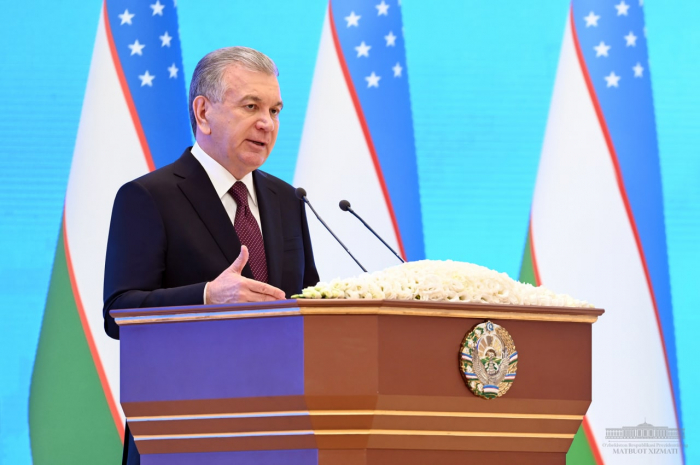
The policy text of the President of the Republic of Uzbekistan, Shavkat Mirziyoyev, "Central Asia on the Threshold of a New Era," published on November 14, 2025, marks a historic turning point in the region's development. It signifies a shift from a prolonged period of mutual mistrust, disunity, and accumulated problems, to a conscious choice in favour of unity, cooperation, and shared responsibility for the future. This vision is not an arbitrary concept, nor is it an abstract declaration of intent for a distant future. The phenomenon has emerged as a consequence of specific political decisions, pragmatic measures, and substantial changes that have already transpired in Central Asia. These developments have materialised not only at the state level but also in the quotidian lives of societies within the region.
This is not a desired vision of the future, but rather the political consolidation of a new reality in which the region is gradually emerging from a state of chronic fragmentation and entering a qualitatively new phase of its development. The author posits that these transformations should become irreversible, as they no longer depend on the current situation, individual personalities, or external circumstances, but rest on an established foundation of trust, good neighbourliness, and institutionalized interaction.
In this article, Central Asia is presented not as a space between external centres of power or as a collection of individual national trajectories, but as a region beginning to recognise itself as a coherent community with a shared destiny and an interconnected future. In this context, regional unity, trust between states, respect for each other's sovereignty, and established cooperation mechanisms are not regarded as abstract values, but rather as practical pillars of a new stage of development. At this new stage, Central Asia aspires to be a sustainable, responsible, and independent actor in international relations. The author employs the language of completion, focusing not on the search for a path, but on the transition to a "new era," where, for the first time in a long period, the region is gaining internal coherence and the capacity for collective action. The concept of genuine unity in Central Asia is posited as a phenomenon emerging from the confluence of two factors: the political will of regional leaders and the expressed desire of the region's populace. In doing so, President Shavkat Mirziyoyev immediately establishes a framework of subjectivity in which the region is not the object of external strategies, but rather the source of its own agenda and development course.
The central tenet of the article is the assertion that an atmosphere of trust, mutual respect, and amiability has become a stable state in the region for the first time in many years. President Shavkat Mirziyoyev has emphasised that this process is not spontaneous or accidental, but rather the result of conscious and targeted political work, as well as a consequence of the recognition of the shared destiny and interdependence of the Central Asian countries.
A pivotal aspect of the argument pertains to the apprehension of the public dimension inherent in this process. The concept of regional rapprochement is presented not as an elite project, but as a response to the demands of societies interested in cooperation, freedom of movement, economic growth, and stability. Consequently, the legitimisation of the regional course is enacted in a dual manner, originating from both the "top-down" and "bottom-up" perspectives, thereby fortifying the stability of the entire system.
The article places a particular emphasis on the format of the Consultative Meetings of the Heads of State of Central Asia. The presentation of this initiative is not merely as a diplomatic instrument, but as a symbol of a new era of regional interaction. The author emphasises that, in a relatively short period of time, this format has become an effective mechanism for developing common approaches to strategic issues that are defining the present and future of the region.
The impending summit in Tashkent is regarded as a significant milestone in the Central Asian process, aimed at substantiating the irreversibility of the selected trajectory. As stated by President Shavkat Mirziyoyev, the Consultative Meetings are evolving into an institutional "anchor" of regional agency. This ensures the maintenance of regular dialogue, the continuity of decisions, and the gradual deepening of cooperation without the establishment of supranational structures.
President Shavkat Mirziyoyev situates the regional transformation within a broader international context. The present geopolitical climate is characterised by a series of objective factors that are widely considered to be reinforcing the need for regional unity. These factors include large-scale changes in the global order, the fragmentation of the global economy, climate risks, and threats to food and energy security. In light of these circumstances, the consolidation of Central Asia appears not to be a political choice, but rather a strategic necessity.
It is important to note that 2017 was a significant turning point in the history of regional interaction. The author posits that it was from this period that a systematic and regular dialogue between the region's leaders commenced, unmediated by external entities. This is interpreted as the genesis of a novel political philosophy, predicated upon trust, transparency, and a recognition of common interests. This discourse led to the resolution of numerous accumulated contradictions and a transition from a confrontational logic to a cooperative one. Consequently, the region's autonomy is reinforced through its capacity to independently address internal challenges and formulate its own security and development framework.
A pivotal element of the article's argument is the final resolution of border issues. The formalisation of the Treaty on the Junction of the Borders of the Three States and the Khujand Declaration between Uzbekistan, Kyrgyzstan, and Tajikistan in March 2025 is regarded as a significant landmark, signifying the legal resolution of a protracted source of discord. The phrase "borders have become bridges" is employed as a political and humanitarian symbol of the new regional reality. This development marks a historic milestone in the realm of international relations, as it signifies the establishment of a comprehensive legal framework governing the full perimeter of mutual borders. This legal framework serves to transform the geographical landscape from a potential source of risk into a foundation for trust and cooperation, thereby fostering a more stable and secure international environment.
It is evident that progress in the water and energy sector, which has historically been the most contentious, is being placed under particular emphasis. In his address, President Shavkat Mirziyoyev provided detailed insights into the specific agreements and projects concerning the Kambarata-1 Hydroelectric Power Plant, the Chashma Spring agreement, cooperation on the Yavan and Fandar Hydroelectric Power Plants, coordination of reservoir regimes, and the agreement with Turkmenistan on the Amu Darya River. The aforementioned elements have been identified as conducive to the establishment of a novel spirit of partnership, predicated on principles of justice, mutual benefit, and responsibility for a shared future. The notion of cooperation in the domains of water and energy is presented not merely as a technical issue, but rather as a pivotal element in ensuring the sustainability and economic security of the region.
The article under scrutiny places significant emphasis on the imperative for alterations to border procedures and the facilitation of humanitarian exchanges. The ability to cross borders with identification documents, the growth of cross-border trade, and the expansion of cultural and humanitarian ties are interpreted as the creation of a space for genuine regional mobility. The growth of intraregional tourism, which now accounts for over 80% of total tourist flow, is used as an indicator that regional rapprochement has become part of citizens' daily lives, not just a political process.
A fundamental aspect of the article under scrutiny is the institutionalisation of cooperation. The establishment of the Council of National Coordinators, the advancement of interparliamentary discourse, and the periodic convening of Security Council Secretaries collectively constitute a robust framework for regional engagement. Concomitantly, the author consistently emphasises that cooperation must be founded on the principles of sovereignty, equality, and non-interference. The rejection of supranational structures and the imposition of models is a fundamental principle that ensures the voluntary and pragmatic nature of integration.
The economic section of the article is structured not as a formal set of statistical data, but as consistent evidence of the real, tangible viability of the regional project. A logic emerges from examining the figures for GDP growth, expanding trade, increased mutual investment, and industrial production, which indicates that this is a process that is already underway and cannot be attributed to one-time successes or opportunistic factors. The economy here serves not as a backdrop to political statements, but as their practical confirmation. It is imperative to acknowledge the significance of industrial cooperation as the foundational element for the long-term interdependence of the countries in the region. This is not merely a matter of exchanging goods, but rather of creating joint value chains, launching joint investment funds, coordinating industrial cooperation plans for 2025–2027, and developing border zones as growth areas. This transition signifies a shift from disparate national economies to a more connected and complementary regional model. In this interpretation, economic cooperation emerges as a pivotal mechanism that transforms political trust from mere declarations to sustainable development. The initiative is poised to function as a catalyst for enhancing the population's well-being, generating employment opportunities, augmenting production capacity, and establishing the foundations for the region's long-term stability.
The final conceptual layer of this presentation is the notion of shaping a new regional identity. The edifice is not erected upon the eradication of disparities; rather, it is founded upon their deliberate acknowledgement, the acknowledgement of the historical kinship and profound interdependence that exists among the nations of the region. In this vision, Central Asia is presented as a unified space where the success of each state enhances overall resilience and makes the entire region stronger. President Shavkat Mirziyoyev is acutely aware of the irreversibility of the chosen path and is therefore prioritising the strategic goal of creating a New Central Asia. The creation of a robust, stable, and prosperous region is imperative, one that is capable not only of ensuring its own development but also of offering the world a compelling model of peaceful, creative, and responsible cooperation.
GSR
Original article: https://dohanews.co/central-asia-on-the-threshold-of-a-new-era/

