
 Home
HomeThe Water Crisis in the South Caucasus and Central Asia: Between Climate, Geopolitics, and National Interests
-
 23 Dec 2025 08:07
-
 747
747
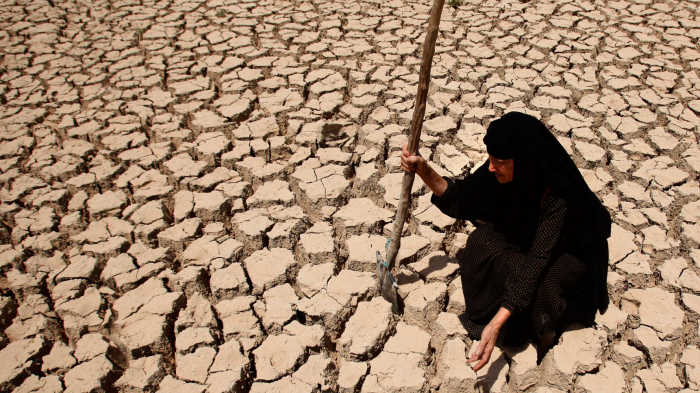
Water has always been a cornerstone of human civilization —shaping settlement patterns, enabling the rise of cities and nations, and influencing the outcomes of wars and conquests. Even in today’s high-tech, AI-driven world, the fundamental importance of water remains unchanged. No viable substitute for water exists. While societies may adapt to the scarcity of other resources, water is a basic necessity for survival—without it, survival is measured in days, not weeks.
Beyond domestic and agricultural uses, water underpins numerous critical economic sectors: hydropower, thermal and nuclear power generation, metallurgy, chemical manufacturing, pulp and paper production… Vast quantities are also required for semiconductor (chip) production and for cooling data centers and server farms. Consequently, even localized water-related disruptions can cascade into global supply chain failures.
As of 2022, roughly half the world’s population experienced severe water scarcity for at least part of the year, while a quarter faced “extremely high” levels of water stress. And since competition for limited resources invariably exacerbates both domestic and interstate conflicts, water scarcity is increasingly becoming a powerful geopolitical factor. Consider this: around 60% of the planet’s freshwater lies in transboundary basins—rivers, lakes, and aquifers shared across borders. Yet out of 153 countries with such basins, only 24 have established mechanisms for cross-border cooperation. This governance gap renders water crises a potential trigger for interstate disputes, hybrid warfare, or even full-scale conflict. It also offers a potent tool for external coercion: altering a nation’s political course or extracting concessions by exploiting water vulnerability. Indeed, when farmers lose income due to water shortages, triggering rural-to-urban migration, while urban residents are forced to conserve water, detrimentally affecting their health and quality of life, discontent and social tension inevitably arise, which can be exploited by third parties.
This is especially true in densely populated regions of the world such as the Middle East and North Africa, South Asia, and sub-Saharan Africa. But significant risks also loom across a vast zone stretching from the Black Sea and Caucasus Mountains to the Tien Shan and Pamir ranges—encompassing the South Caucasus (Azerbaijan, Armenia, Georgia), the five Central Asian republics (Kazakhstan, Kyrgyzstan, Uzbekistan, Turkmenistan, Tajikistan), and neighboring Iran and Afghanistan.
The South Caucasus
The main source of water for Georgia, Azerbaijan, and Armenia is the transboundary Kura and Araz river basins, whose declining water levels have long been a concern. On several summer occasions, the Kura River has not even reached the Caspian Sea. While climate change—declining precipitation, prolonged droughts, altered snowmelt patterns—plays a role, human activity compounds the crisis: new reservoirs, expanding agriculture, inefficient irrigation, industrial growth, and irrational water use.
Georgia possesses the region’s most abundant water resources, drawing its drinking supply largely from major groundwater sources. Armenia faces moderate deficits. Azerbaijan, however, confronts the most critical situation, heavily dependent on the transboundary Kura and Araz rivers. The quality of these rivers is seriously deteriorating due to uncontrolled economic and industrial activities in their upper reaches, including the systematic discharge of untreated and inadequately treated wastewater, leading to chronic pollution and increased environmental risks for the country. Yet Baku is adapting. Leveraging its hydrocarbon wealth, Azerbaijan is investing in advanced water treatment, irrigation, and desalination infrastructure to reduce vulnerability.
Of the total irrigated land in the Kura-Aras basin, 45% lies in Azerbaijan, followed by Iran (21%), Georgia (14%), Armenia (11%), and Turkey (8%). Still, inefficient agricultural practices and aging infrastructure mean 40–60% of water is lost in irrigation canals. Population growth and urbanization further strain supply. Hydropower development adds another layer of tension. For example, Turkish dams on the tributaries of the Araz River, or in the Chorokhi/Chorukh River basin (affects Georgia's interests). Meanwhile, Georgia itself plans to build more than 120 new hydroelectric power plants in the coming years, especially in the Kura River basin.
Finally, the unfolding water crisis is largely fueled by the lack of a coordinated water policy. However, with the resolution of the Karabakh conflict between Azerbaijan and Armenia, the preconditions for resolving the water crisis in the South Caucasus are emerging. Azerbaijan's return to control over the occupied territories has opened up new opportunities for regional cooperation, and there is every reason to believe that Baku, Yerevan, and Tbilisi will seize them.
Iran
Just beyond the Caucasus, Iran’s water crisis has spiraled into a national emergency. According to the Iranian Meteorological Organization, this year’s rainfall was 89% below the long-term average. As of November, 19 Iranian reservoirs—about 10% of the total—are on the brink of drying up, holding less than 5% of capacity. Unprecedented drought has forced Tehran, a megacity of over 15 million, into water rationing. Some experts now float apocalyptic scenarios about relocating the capital itself. Past water shortages have already triggered nationwide protests, and President Masoud Pezeshkian faces sharp criticism for lacking a coherent crisis-response strategy. The crisis unfolds amid heightened geopolitical tensions with the U.S. and Israel, which drain state resources and compound domestic instability. Iranians increasingly recognize that mismanagement—not just climate—is to blame. Tehran's water supply system has long been in disrepair, with a third of the water lost due to leaks and theft, outdated irrigation methods, and a lack of necessary infrastructure. Agriculture consumes 88% of Iran’s water but contributes only about 10% to GDP. Furthermore, drought is undermining Iran's food security, which relies on domestic production. This year, Lake Urmia in the northwestern part of country completely disappeared. Over the past two decades, this once-largest reservoir in the Middle East, stretching 140 kilometers from north to south and 85 kilometers from east to west, has been reduced to a lifeless, salt-laden surface, and experts say restoration is now unlikely. Dust and salt storms have become more frequent in this part of the country, degrading air quality in the surrounding regions and further complicating agriculture. The dwindling water supply in the reservoirs also leads to chronic power shortages in Iran, affecting industrial production.
The Caspian Sea
Near Urmia, another crisis unfolds: the Caspian Sea is rapidly shrinking. The world’s largest lake—shared by Iran, Azerbaijan, Russia, Turkmenistan, and Kazakhstan—hit a record low in summer 2025, dropping below 29 meters (Baltic Sea reference), the lowest level ever recorded. Although the Caspian Sea has historically been subject to significant fluctuations in its level, experts warn that this time, the water recede is not a temporary phenomenon, but rather a combination of large-scale natural (tectonic), climatic (rising temperatures, increased evaporation), and anthropogenic (intensive use of river water, etc.) processes that could change the face of the region. Long-term projections are alarming: the Caspian may split into two isolated bodies of water —northern (Derbent Depression) and southern (Lankaran Depression). Many see parallels in the Caspian Sea's current situation with the drying up of the Aral Sea, once the fourth-largest lake on the planet, located in Central Asia. The depletion of the Aral Sea has led to an environmental and humanitarian catastrophe (salts and pesticides carried by the winds, unemployment, deteriorating public health, etc.).
Central Asia
By 2028, Central Asia could become one of the planet’s most arid regions, sliding into chronic water scarcity. Of the nearly 80 million people living in Central Asia, more than 20 million lack access to safe drinking water, while the World Bank estimates that the region's population could grow to 90-110 million by 2050. Even in Tajikistan—the region’s most water-rich country—some communities must buy water from tankers, and hydropower shortages force electricity rationing from mid-autumn to mid-spring. Protests over water access have erupted in Kyrgyzstan and Kazakhstan. In November, mosques in Uzbekistan and Tajikistan held communal prayers for rain.
The five countries in the region are closely linked by two major transboundary rivers, the Amu Darya and Syr Darya, fed by the Pamir and Tien Shan mountain ranges. However, warming in these areas is occurring significantly faster than the global average, and glaciers there have already lost a significant portion of their mass since the 1960s. The World Bank warns that river flow could decline by another 20-30 percent by 2035. However, the region still relies heavily on resource distribution systems developed during the Soviet era, when everything was coordinated from a single center. Infrastructure is dilapidated, with water losses of 40–70%. Agriculture consumes 80–90% of withdrawals, much of it for cotton—a notoriously water-intensive crop—especially in Uzbekistan and Turkmenistan. Meanwhile, soil salinization reduces farm incomes, accelerating climate-driven migration and raising destabilization risks.
Nowhere is this more acute than the Fergana Valley, a densely populated and politically sensitive area shared by Uzbekistan, Tajikistan, and Kyrgyzstan. Local disputes over irrigation water occasionally escalate into violent clashes, sometimes triggering interstate incidents—such as the 2021 Kyrgyz-Tajik conflict over the Ak-Suu/Isfara water channels. Incidents have also occurred on the Uzbek-Kyrgyz and Tajik-Kyrgyz borders, between Kyrgyzstan and Kazakhstan, and between Tajikistan and Uzbekistan. Upstream states—Kyrgyzstan and Tajikistan—are increasingly framing transboundary water as a tradable commodity for downstream neighbors – Uzbekistan, Turkmenistan, and Kazakhstan, which have more other resources, including oil, gas, uranium, and rare earth elements.
Afghanistan
No discussion of regional water stress is complete without Afghanistan. In 2023, disputes with Iran over water allocation from the Helmand River escalated into armed clashes. Recently, the intensification of water construction in Afghanistan is also becoming a major long-term challenge for Central Asia, potentially even more serious than internal disputes. Conflict is escalating around the commissioning of the Qosh Tepa Canal in Afghanistan, which will lead to chronic water shortages in the region from 2028. The canal, being constructed using outdated methods, will annually divert approximately a third of the Amu Darya River's flow, inevitably impacting Iran, Tajikistan, Uzbekistan, and Turkmenistan. Kabul insists the project is vital to reviving agriculture, which employs most Afghans. In addition, Afghanistan also plans to build the Dasht-e-Juma hydroelectric dam, which will allow it to concentrate most of the summer flow of the Panj River, which borders Tajikistan.
Challenges and Opportunities
The water crisis is a formidable geopolitical force. In the future, water shortages can and most likely will be used as a tool for political pressure and hybrid wars, catalyzing new conflicts. Access to water directly affects food security and social stability, raising the risk of uncontrolled migration and climate refugees. Public outrage over water shortages can unite disparate groups—farmers, urban poor, ethnic minorities—into powerful protest movements.
Another crucial point should not be overlooked: in the context of the South Caucasus and Central Asia, control over water resources is becoming part of a broader struggle for influence over regional logistics routes. Furthermore, a water crisis can impact the final cost and effectiveness of transport projects. The Caspian’s decline, for instance, threatens shipping routes and port viability—requiring constant dredging. Water shortages could also hamper mineral extraction, particularly rare earth elements, which Central Asian states view as key to their economic future.
This crisis is drawing global powers into the fray: China, Russia, Turkey, the EU, and the U.S. China and Russia have a direct stake in the ongoing processes, as any large-scale crisis in Central Asia and the South Caucasus could have a significant impact on their interests, as well as on overall regional stability and the sustainability of transregional ties. China seeks stability along its western (Xinjiang) borders and the Belt and Road Initiative routes. On the other hand, some of the regional rivers also cross the Chinese border, making disputes over water use likely. For example, this concerns water intake from the Black Irtysh. This issue is of great concern to Beijing, and local scientists are devoting considerable attention to it.
Russia, traditionally positioning itself as a regional security guarantor and historical arbiter, is losing ground to Turkey and Western actors. The latter is actively pursuing regional leadership. Turkey, though not a water source for Central Asia, shapes the region’s water-energy agenda through technology, investment, and soft power. Meanwhile, Russia, which is geographically closest to Central Asia, possesses significant water resources, ranking second in the world in total renewable water resources.
In the 21st century, water geopolitics may shape global stability as profoundly as oil did in the 20th. As climate change accelerates and populations grow, water security is becoming as critical as energy or food security. Yet water’s dual nature—as both a potential cause of conflict and a prerequisite for collective survival—creates a paradoxical foundation for cooperation. Realizing this potential, however, demands strong political will from all regional actors and robust international mediation.
Irina Khalturina

