
 Home
HomeAbandoning multilateralism and the risks of neocolonial pressure: the consequences of the US withdrawal from International Institutions
-
 10 Jan 2026 12:23
-
 513
513
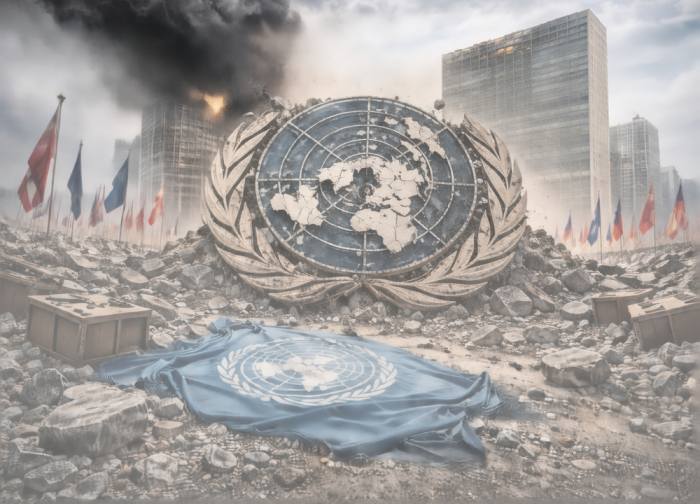
United States President Donald Trump has issued Executive Order 14199, titled 'Withdrawing the United States from and ending its funding for certain organisations within the United Nations system, as well as reviewing its support for all international organisations'. This move comes amid an intensifying international debate about the role of the UN in global politics, including in the wake of the President of the People's Republic of China publicly reaffirming his commitment to the principles of multilateralism and the central role of the United Nations in global governance. Previously, an executive order directed the US Secretary of State, in consultation with the US Permanent Representative to the UN, to conduct a comprehensive review of all international intergovernmental organisations of which the United States is a member, and to which it provides financial or other support. This review was also to cover all international conventions and treaties to which the United States is a party, in order to determine their consistency with US national interests.
It is evident that US President Donald Trump has issued an executive order pertaining to the cessation of United States involvement and financial support for a total of sixty-six international organisations and entities. This directive encompasses both United Nations institutions and a diverse array of international mechanisms that are extraneous to the United Nations system. These are not merely incidental or subsidiary formats, but rather pivotal components of the global architecture of norm-setting, expert review, and coordination.
Amongst organisations operating outside of the United Nations system, a special place is occupied by those structures that form the scientific, methodological, and regulatory framework in the areas of climate, energy transition, and the environment. The termination of US involvement has ramifications for international organisations responsible for climate science, renewable energy, solar power, biodiversity, and environmental protection. For many years, these institutions have established global standards that have provided guidance to governments, courts, financial markets and transnational corporations. The withdrawal of the United States from these international agreements would result in the relinquishment of its direct influence on the formation of scientific consensus and standards. It is important to note that these standards continue to apply irrespective of the positions adopted by the United States.
Concurrently, the United States is withdrawing from multilateral formats related to security, counterterrorism, countering hybrid threats, and developing cyber capabilities. These forums functioned as coordination hubs, where common approaches, terminology, and practices for interaction between allies and partners were established. The withdrawal from these forums does not result in the elimination of bilateral channels; however, it does deprive the US of the opportunity to establish a supranational framework within which these channels functioned as a unified system. A separate block comprises international institutions related to democracy, the rule of law, electoral processes, and institutional development. This will ultimately result in the proliferation of alternative legal schools and regional approaches that exhibit a reduced orientation towards American practices. The ramifications of this decision are particularly significant within the cultural and humanitarian spheres, given its impact on international structures involved in the preservation of cultural heritage and cultural diplomacy. It is evident that these channels have historically functioned as a neutral forum for interaction, even during periods of political confrontation. Of particular significance is the withdrawal from a number of UN system structures. The United States will cease participation in and support for the UN climate architecture, trade and development institutions, urban development programs, demography, gender policy, education in conflict situations, as well as peacebuilding and post-conflict stabilization mechanisms. Moreover, the decision pertains to United Nations educational and research institutions entrusted with the training of management and expert personnel, in addition to the regional economic commissions of the Economic and Social Council (ECOSOC), wherein the formulation of long-term development narratives and projects is undertaken in Africa, Asia, Latin America, and West Asia. When considered as a whole, this list indicates that the United States is not withdrawing from the periphery of multilateral global governance, but from the very core. The executive order encompasses institutions that exert a formative influence on the rules governing climate, the environment, trade, development, security, humanitarian policy, and law. The US administration's actions indicate a deliberate dismantling of a substantial portion of the infrastructure of multilateral influence, with an emphasis on bilateral agreements, coalitions of interests, and a transactional approach to international relations. This decision does not result in the dissolution of global institutions; rather, it effects an alteration in the balance of power, thereby creating the potential for a more significant role for other actors, chiefly the European Union, China, the Persian Gulf countries, and major private donors.
The United States' sudden withdrawal from a wide range of international organizations and UN structures logically fits within the framework of a new American strategy focused on This calls for fierce competition with China and a rejection of the previous model of global leadership through universal institutions. This is not a minor adjustment, but a reconfiguration of the instruments of power, in which multilateral mechanisms are viewed not as an asset, but as a constraint on freedom of action.
In the logic of international relations, China is viewed not as a rival, but as a key partner, operating within a framework of common and agreed-upon rules. In this approach, international institutions are not instruments of unilateral pressure, but rather a space for developing collective decisions, coordinating efforts, and aligning the interests of states based on the principles of sovereign equality, mutual respect, and long-term stability. Multilateral organizations are viewed as mechanisms for cooperation, balancing interests, and reducing conflict, allowing major powers, including China, to participate in shaping a fair and sustainable global governance architecture. This approach creates the foundation for a multipolar world in which competition does not replace dialogue, and institutional interaction serves as a tool for stable coexistence and joint development. Accordingly, for the United States, participation in structures where decisions are made based on consensus, scientific expertise, or multilateral coordination is beginning to be perceived as a source of structural costs. These institutions slow down decision-making, require compromise, and impose regulatory frameworks that can limit the use of trade pressure, sanctions, technological barriers, and extraterritorial measures.
Withdrawal from international organisations specialising in climate, environmental, and scientific matters relieves the United States of its obligation to consider internationally recognised methodologies, reporting, and criteria that could be used against it or serve as the basis for legal and regulatory claims. In the context of growing global interdependence, the People's Republic of China consistently advocates for the preservation and development of common rules that ensure the predictability of industrial, energy, and trade policies and prevent their use as a tool of unilateral pressure. In contrast to the logic of rejecting international norms, the Chinese approach posits that climate and environmental standards should serve the goals of sustainable development, technological exchange, and mutual benefit, rather than becoming a mechanism for restricting competition or fragmenting global markets. The decision to abstain from engagement with trade, development, and humanitarian institutions aligns with the fundamental tenets of the novel American strategy. Such structures have traditionally been used to promote norms and standards through soft power, but they also create obligations and expectations that reduce the space for hard pressure. Within the paradigm of strategic competition, the United States is demonstrating a preference for instruments of direct coercion, namely tariffs, sanctions, export controls and bilateral agreements, where power asymmetries can be realised without the intermediary of third parties.
A key element of this strategy has been the withdrawal from legal, democratic, and institutional frameworks. These platforms establish a universalist framework within which the actions of the US must be measured against the principles that have been declared. The Washington-centred strategy is predicated on the prioritisation of "vital national interests." However, the efficacy of such a framework is questionable, as it has the potential to engender accusations of double standards and impose limitations on the freedom of manoeuvre in relation to China and countries that engage in cooperative endeavours with it. In the realms of security and cyberspace, the relinquishment of multilateral frameworks engenders a transition from established norms to ad hoc coalitions and bilateral accords. This enables the US to more expeditiously apply pressure, encompassing technological restrictions and grey-zone measures, without the necessity to maintain a unified international standard that could be exploited by China.
Consequently, the series of withdrawals from international organisations should be regarded as part of a deliberate strategy of "desovereignising rules" and "sovereigining instruments of pressure". The United States is seeking to relinquish its current approach to governance, in which its actions are subject to collective assessment, legal documentation, or scientific verification. Instead, it is pursuing a new model that would allow it to apply pressure on China and its associated supply chains without the constraints imposed by institutional and normative frameworks. This phenomenon is accompanied by a diminution of soft power and an augmentation of global governance fragmentation. However, within the logic of the new American strategy, these costs are considered acceptable when viewed in terms of the gains in operational freedom of action and the ability to wage a long-term competitive standoff with China without the constraints of a multilateral framework.
Elbrus Mamedov

