
 Home
HomeThe South Caucasus in the Strategy of Route Diversification
-
 06 Feb 2026 08:19
-
 384
384
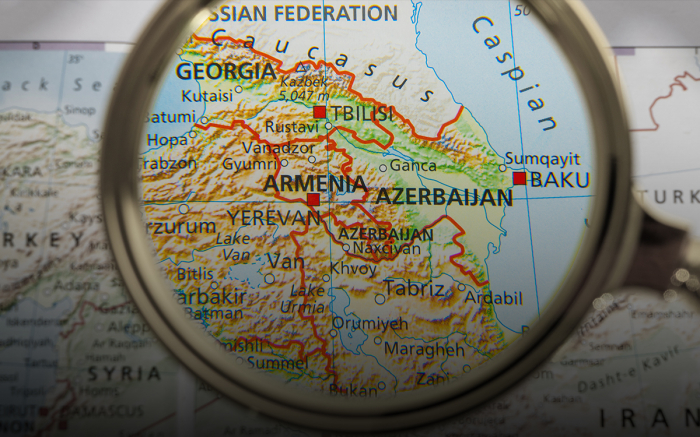
Ten years ago, the South Caucasus played a relatively minor role in China’s foreign economic strategy. Beijing’s primary focus was on Central Asia, Russia and traditional overland routes to Europe. These regions offered China’s Eurasian logistics predictability, scale, and political inertia. However, geopolitical shifts in recent years — most notably the war in Ukraine, sanctions on Russia and disruption to established supply chains — have dramatically altered this landscape.
Against this backdrop, finding alternative, less vulnerable routes to European markets has become a matter of strategic importance for China. Consequently, the South Caucasus is gradually ceasing to be merely a 'transit zone' and is evolving into an integral component of China’s Eurasian connectivity architecture, forming part of a network of reserve and parallel corridors.
This evolution also reflects the development of the Belt and Road Initiative itself. Rather than being perceived as a single, linear route, it is increasingly being seen as a network of interconnected yet alternative pathways. In conditions of growing geopolitical uncertainty, flexibility, diversification and the ability to rapidly reallocate flows have become key principles. It is within this context that Azerbaijan, Georgia and, subject to certain qualifications, Armenia are acquiring new strategic significance.
Of the South Caucasus states, Azerbaijan has proven to be the most prepared for this new stage of China’s strategy. In 2025, Baku and Beijing formally established a strategic partnership, linking it directly to the development of the Belt and Road Initiative and the Middle Corridor. This move has firmly established Azerbaijan’s role as a key hub connecting China, the Caspian region, the South Caucasus and Europe.
The economic dimension of this partnership has been reinforced by consistent investment growth. According to the Eurasian Development Bank, China’s accumulated foreign direct investment in Azerbaijan reached USD 405 million by the end of the first half of 2025, up from USD 259 million in 2016. Notably, there was an acceleration after 2022, with average annual growth rates approaching 10 per cent, which coincided with the rising importance of the Middle Corridor amid the crisis of traditional routes.
The manufacturing sector has been the main driver of Chinese investment, accounting for 88 per cent of the entire portfolio of Chinese FDI in Azerbaijan. Investment volumes in this sector have increased almost fortyfold compared to 2016 — a rare occurrence even by the standards of China’s outward investment expansion, indicating a shift from isolated projects to the establishment of a production base.
The emergence of concrete industrial projects has become a symbol of this shift. BYD is setting up the Electrify Azerbaijan plant in Sumgayit to assemble electric buses, with the potential for investment to increase to USD 60–94 million. Meanwhile, a Chinese private investor is establishing the Fujiai Azerbaijan plant in the Aghdam Industrial Park for the production of elevators and escalators. Notably, these projects are largely being funded by the investors themselves, without direct budgetary support from China, which highlights their commercial sustainability and long-term orientation.
The energy sector also deserves special attention. Chinese companies are entering Azerbaijan’s renewable energy market, which aligns with both Baku’s national strategy to diversify its energy mix and China’s “green” BRI agenda. Universal Energy is building a 100 MW solar power plant in the Gobustan district, and China Datang Overseas is developing a 100 MW solar project with energy storage capabilities. Consequently, Azerbaijan is evolving from a mere transit route for China to a multi-sectoral partner encompassing logistics, industry, and energy transition.
While Azerbaijan serves as the Caspian hub of the Middle Corridor, Georgia represents China’s gateway to the Black Sea and, more broadly, to European markets. This makes Georgia strategically indispensable within the logic of route diversification. Tbilisi was among the first in the region to sign a Silk Road cooperation memorandum with China in 2015, and in 2023 the two countries formalised a strategic partnership, providing the political foundation for cooperation.
The key infrastructure project is the Anaklia deep-sea port, which is being developed in partnership with a Chinese–Singapore consortium. Successful completion of the project, which is estimated to require an investment of approximately USD 2.5 billion, could transform Georgia into a fully-fledged Black Sea transport hub integrated into Eurasian container routes. Chinese companies are also involved in the construction of roads and railways, including critical east–west segments linking Azerbaijan and Turkey. However, China’s presence in Georgia remains predominantly transit-oriented, and large-scale industrial investment lags significantly behind that in Azerbaijan, reflecting the differing roles of these countries in Beijing’s regional strategy.
By contrast, Armenia long remained an outsider to the Belt and Road Initiative in the South Caucasus. Its closed borders with Turkey and Azerbaijan, limited infrastructure and reliance on alternative routes have effectively excluded it from China’s main logistics schemes.
However, the situation began to change in 2025, when the Armenian–Azerbaijani declaration was signed with U.S. support, and the TRIPP project was launched — a new east–west transit route through historic Zangezur, located in Armenia’s Syunik region. Unlike earlier concepts, this route formally remains under Armenian jurisdiction and is managed by an international corporate structure, significantly reducing political sensitivity and making the project more acceptable to external stakeholders.
For Beijing, TRIPP may not serve as an alternative to the Middle Corridor, but rather as an additional 'switch' within the China–Central Asia–West Asia connectivity architecture. Its value lies in enhancing routing resilience and expanding negotiating space by providing another viable transit route towards Turkey and Europe. This reduces dependence on the Azerbaijan–Georgia route and makes the network less vulnerable to local congestion, tariff politicisation and infrastructure bottlenecks.
Since 2022, China has restructured Eurasian logistics far more rapidly and decisively. At the core of this reassessment lies a simple yet crucial principle: having parallel routes in place to mitigate the impact of political, sanctions-related or infrastructure disruptions. In a world where any corridor can suddenly become vulnerable, relying on a single route becomes a strategic risk. The South Caucasus is one of the most sensitive segments of this system.
Currently, the primary overland route of the Middle Corridor depends on the Caspian Sea–Azerbaijan–Georgia–Turkey chain, providing access to either the Black Sea or the Mediterranean. While this route has proven its viability, it is increasingly seen as a 'bottleneck' through which a significant proportion of alternative Eurasian transit flows must pass.
It is precisely at this point that the significance of TRIPP becomes evident. Rather than dismantling the existing architecture or replacing current routes, the project potentially adds a second axis within the same macro-region. This could help to redistribute transit pressure, provide an alternative in the event of local congestion, political friction or tariff disputes, and—crucially—expand Beijing’s negotiating leverage. For China, this is not about replacing one route with another, but about acquiring an additional balancing instrument.
It is equally important to consider how the project is framed conceptually. TRIPP is positioned as a multimodal transit route through southern Armenia, directly linked to the goal of expanding regional trade and transit capacity.
Consequently, rather than being seen as an alternative to the Middle Corridor, TRIPP appears to Beijing as its complement — a reserve contour that enhances the resilience of the entire Eurasian connectivity system. When route reliability is valued as much as distance, the very possibility of choice becomes a strategic asset in its own right.
At the same time, however, the project faces a number of structural challenges. Implementing it requires substantial investment and engineering expertise due to the mountainous terrain, as well as the gradual, phased development and institutional calibration of the corridor. Nevertheless, these processes could accelerate significantly as a peace agreement between Azerbaijan and Armenia is consolidated and regional risks decline.
Overall, the South Caucasus is ceasing to be a peripheral region for China and is gradually becoming a space of multiple complementary routes. Azerbaijan is already established as an industrial and logistics hub in Beijing’s strategy, Georgia is consolidating its role as the Black Sea gateway, and Armenia is attempting to integrate into the new configuration through alternative corridors. Taken together, the region is evolving from a single line on the map into a system of options, which is fully consistent with the updated logic of the Belt and Road Initiative that emphasises flexibility, redundancy and multi-vector connectivity.
It is important to note that transport corridors do not inherently engender peace; however, they have the capacity to effect substantial alterations to the prevailing interests. When considerations of transit, investment, and market access become contingent on stability, peace ceases to be merely an abstract political formula and becomes an economic necessity. For Azerbaijan, Georgia, and Armenia, the development of several complementary routes has gradually fostered a shared appreciation of regional predictability and made confrontation an increasingly unattractive instrument of policy.
Elbrus Mamedov

