
 Home
HomeA Warning from Foreign Affairs: Why U.S.–China Relations Are Approaching a Dangerous Point
-
 09 Mar 2026 09:09
-
 483
483
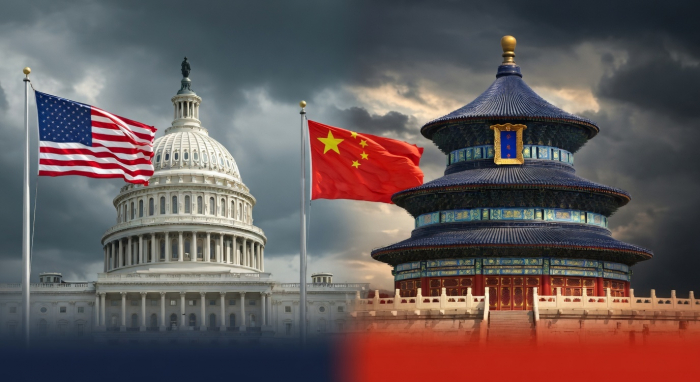
An article titled “America and China at the Edge of Ruin: The Last Chance to Step Back from the Brink,” published on February 12, 2026, in the influential journal Foreign Affairs, has drawn significant attention within the expert community. The authors are two well-known specialists in international relations, American analyst David M. Lampton and Chinese political scientist Wang Jisi. The very fact that representatives of academic circles from both the United States and China jointly authored the article gives it particular significance.
In their work, the authors warn that relations between the world’s two largest powers are rapidly approaching a dangerous point where mutual rivalry could spiral out of control and lead to serious consequences for the entire international system. The article effectively serves as an alarm signal for policymakers and experts, reminding them that further escalation between Beijing and Washington carries risks far beyond ordinary geopolitical competition.
The authors of the Foreign Affairs article describe U.S.–China relations as having dangerously approached the point where manageable rivalry could turn into a systemic crisis. In their interpretation, Beijing and Washington have, over the past decade and a half, moved away from cautious engagement toward a situation in which each side increasingly views the other not merely as a competitor but as the principal threat to its values, political stability, and vital national interests. According to the authors, this shift has been driven not only by international developments but also by domestic politics, bureaucratic instincts, and deeply rooted fears of vulnerability, decline, and loss of status. They argue that what once appeared to be a cautious effort to hedge risks has gradually evolved into a full-fledged strategy of mutual containment. As a result, tensions have intensified across several dimensions. They now manifest themselves in the military sphere, the economy, cultural contacts, and diplomacy. The authors’ central argument is that this logic has begun to take on a life of its own. Competition is no longer merely a tool but an end in itself, and the costs of this dynamic fall not only on China and the United States but on the international system as a whole.
The article emphasizes that a world in which the two most powerful states build their strategies around mutual hostility inevitably becomes more dangerous, less stable, and less capable of responding to shared threats. Among these threats the authors include climate change, pandemics, and financial instability. They warn that in such an environment conflicts can easily spiral out of control. The greatest danger, they suggest, lies not in a deliberate war but in accidental escalation. They recall incidents such as the 2001 collision between a Chinese fighter jet and a U.S. reconnaissance aircraft near Hainan Island and the 1999 bombing of the Chinese embassy in Belgrade. Their point is that in today’s atmosphere such incidents could have far more severe consequences.
The authors also note that the mutual perceptions of the two countries have become increasingly rigid and ideological. In Washington, China is now frequently portrayed as a systemic challenge to American global leadership, technological superiority, economic dominance, and even democratic norms. In Beijing, by contrast, the United States is widely seen as the central force attempting to contain China’s rise, undermine the Communist Party, and preserve its own global advantage at China’s expense.
The authors stress that these views have long moved beyond rhetoric. They are now embedded in military planning, alliance structures, export control regimes, and public diplomacy.
They consider the military dimension particularly troubling. In their assessment, deterrence is becoming more complex and unpredictable due to the modernization of nuclear and conventional forces and the expansion of military capabilities in space, cyberspace, and artificial intelligence systems. Such an environment encourages both powers to expand and diversify their arsenals. The authors state directly that an arms race is already gaining momentum, while frequent close encounters between Chinese and American forces in the Western Pacific make the risk of real conflict no longer theoretical but increasingly tangible.
The economic dimension is presented as equally revealing. For a long time economic interdependence was seen as the key stabilizing factor in U.S.–China relations, and it indeed contributed to significant economic growth in both countries. The authors cite figures showing how dramatically income levels increased in China and the United States after China joined the World Trade Organization. At the same time, they note that these gains were accompanied by painful domestic disruptions. China’s northeastern regions and the American Midwest became examples of areas where globalization did not prevent unemployment and social dislocation.
For these reasons, and because of worsening strategic tensions, economic interdependence is now increasingly viewed by both governments not as a safeguard against conflict but as a vulnerability. Economic policy is becoming subordinated to national security considerations. Export controls, industrial subsidies, supply chain restructuring, and discussions about decoupling, de-risking, and self-reliance are becoming the new norm. The authors warn that this trend not only undermines bilateral stability but also contributes to the fragmentation of global markets. They cite tensions surrounding rare earth supplies and advanced semiconductor technologies as clear examples.
The cultural and humanitarian sphere also appears troubling. According to the authors, the number of Americans visible in China is far smaller than before the pandemic, and academic cooperation has come under particular pressure. They point to the decline in the number of Chinese students receiving U.S. visas and to a growing atmosphere of suspicion in which scholars, journalists, and researchers on both sides increasingly feel vulnerable. In such an atmosphere, the authors argue, governments tend to frame relations in geopolitical and civilizational terms, while any hint of compromise becomes politically toxic at home.
The article gains additional force from the authors’ personal perspective. They remind readers that they belong to a generation that remembers a time when hostility between China and the United States was not an abstract geopolitical concept but a lived reality marked by war, ideological confrontation, and fear of nuclear destruction. For Americans of that generation, this experience was shaped by the Korean and Vietnam wars. For China, it was shaped by the Korean War, enormous domestic sacrifices, and involvement in conflicts across Indochina. Through this historical lens the authors emphasize that their generation understands how strategic hostility penetrates classrooms, families, careers, and personal aspirations. For this reason they turn to the example of the early 1970s, when Mao Zedong and Richard Nixon, with the involvement of Zhou Enlai and Henry Kissinger, initiated the restoration of relations between China and the United States.
The authors suggest that a similar opportunity may exist today. As a possible sign of such a moment, they mention the meeting between Xi Jinping and Donald Trump in Busan in October 2025. According to their assessment, both leaders emphasized de-escalation and economic cooperation, although with clear reservations.
They note reports that China agreed to resume purchases of American soybeans, ease export controls on rare earth elements, and cooperate with Washington in combating fentanyl trafficking. From the American side they see signs that Trump attempted, at least rhetorically, to reduce the tone of confrontation and shift toward a language of respect and deal-making. At the same time, the authors caution against exaggerating the significance of this episode. The Busan meeting did not represent a fundamental reset because it focused primarily on trade while leaving deeper strategic disputes unresolved. Nevertheless, they regard even partial adjustments as important signals that space for limited correction still exists.
The authors also believe that public opinion in both countries may be growing weary of confrontation. Surveys indicate that more Americans now support cooperative engagement with China, while Chinese respondents show slightly more favorable attitudes toward the United States. In the authors’ interpretation, this shift reflects not sudden goodwill but fatigue with the costs of confrontation and a desire to focus on domestic challenges. Both China and the United States face a shared need to rebuild strong and stable middle classes, and prolonged conflict between the world’s two largest economies directly undermines that goal.
The authors argue that one of the most effective ways to stabilize relations may paradoxically lie in addressing the most dangerous issue of all, Taiwan. In their view, tensions in the Taiwan Strait are serious but have not yet crossed the point of irreversibility. They note that China’s 2005 Anti-Secession Law defines specific conditions under which Beijing might resort to nonpeaceful measures, and they argue that the current situation does not formally meet those conditions. They also emphasize that Beijing continues to state its preference for peaceful reunification despite increased military activity around the island.
This leads them to conclude that there is still room for both sides to reduce political hostility. Beijing could reaffirm its peaceful intentions, while Washington could reiterate that it does not support Taiwanese independence. The same logic applies to the broader regional context. The authors cite Japan as an example, noting that statements about possible Japanese involvement in a Taiwan conflict triggered a strong reaction in China and worsened the atmosphere in Sino–Japanese relations.
Beyond the Taiwan issue, the authors propose several practical steps. These include reopening the U.S. and Chinese consulates in Houston and Chengdu that were closed in 2020, reducing average tariff rates, and reconsidering certain subsidies and trade barriers. They argue that tariffs and trade restrictions ultimately harm the most vulnerable populations in both countries and weaken both economies over time. While they do not advocate a return to unrestricted free trade, they insist that tariffs should remain as low as possible consistent with national security and reciprocity.
The authors also stress the need to dismantle cultural barriers. They point out that unrealistic assumptions about each other have become widespread in both societies. Some American observers expect China’s political system to collapse in a manner similar to the Soviet Union, while some Chinese analysts believe China will soon surpass the United States in every major field. Both expectations, the authors argue, are misguided and dangerous because they distort policy calculations and increase the risk of misjudgment. To counter these tendencies, they advocate deeper societal engagement. Restrictions on journalists should be eased, academic exchanges restored, and students and scholars from the other country should no longer automatically be treated as potential spies.
Finally, the authors call for the restoration of direct military-to-military dialogue. Such communication would reduce the risk of accidents and miscalculations while potentially slowing the emerging arms race. They suggest that a starting point could be a joint recognition that both the United States and China have legitimate roles in Asia and beyond, and that reducing tensions requires urgent action rather than rhetorical commitments.
The article ends with both a warning and a call to action. The authors acknowledge that today’s policymakers possess analytical tools, including artificial intelligence, that previous generations never had. Yet they insist on a fundamental point. No technology can truly calculate the human cost of a real war between China and the United States. Preventing such a catastrophe therefore requires something else entirely: strategic memory, experience in managing crises, and the gradual building of trust across decades.
GSR

