
 Home
HomeCentral Asia and the Caucasus are becoming a space for new industrial cooperation
-
 06 Apr 2026 08:52
-
 361
361
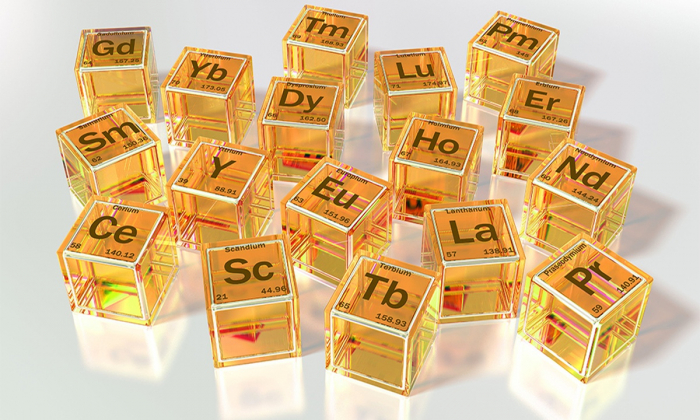
Recent developments in Central Asia and the Caucasus have led to an increased focus on new industrial cooperation. A gradual yet systematic transformation in the utilisation of natural resources and the preservation of ecosystems is becoming increasingly evident. It is evident that Central Asia and the Caucasus are assuming a pivotal role in this process, emerging as a critical nexus for international development strategies. In recent times, the global focus has been on measuring well-being in terms of barrels of oil and cubic metres of gas. However, there has been a gradual shift in focus towards the fundamental elements underpinning progress: namely, critical minerals and rare earth elements. A growing body of opinion among experts in the field suggests that rare earth metals are emerging as the new strategic fuel of modern civilisation. The role of these actors has evolved beyond the sphere of raw materials, given the pivotal function of these materials in shaping the competitiveness of high-tech industries, dictating the pace of the energy transition, and fortifying the geopolitical influence of states.
In March 2026, researchers from Tsinghua University, Zhang Zemin and Lu Yipei, published their latest work, which was entitled "The Race for Rare Earth Metals: Why China, Central Asia and the Caucasus Are the New Axis of Global Resource Power", which points to the transforming architecture of global supply chains for critical raw materials amid unprecedented geopolitical tension. The event in April 2025, when the largest American company, Mountain Pass Materials, suspended exports of rare earth concentrates to China, clearly demonstrated the fragility and high degree of politicization of global supplies of strategic resources. In this context, Central Asia and the South Caucasus – regions that have historically been on the periphery of rare earth geopolitics – are gaining new strategic importance as zones for resource diversification and promising investments.
The authors consistently highlight a paradoxical situation: on the one hand, China maintains a dominant position in the global rare earth industry, controlling approximately 70% of mining and 90% of processing capacities; on the other hand, the country faces serious structural challenges, including the depletion of domestic reserves, technological competition from the West, and coordinated efforts to rebuild global supply chains bypassing Chinese infrastructure. The authors of the study observe the potential for regional cooperation among the countries of Central Asia and the South Caucasus. The authors observe that "Kazakhstan and Kyrgyzstan possess unexplored reserves of rare earth elements, while Azerbaijan, Georgia and Armenia have promising mineral structures" (Smith et al., 2023, p. 123). Concurrently, the absence of adequate processing and component production capacities engenders the prospect of these nations becoming new resource peripheries. The authors persuasively demonstrate that this predicament can be circumvented through a transition from a raw materials model to the establishment of vertically integrated production chains, accompanied by technology transfer and the cultivation of industrial potential.
The creation of modern technologies, ranging from wind turbines and electric transport to advanced defence systems, is contingent on the availability of rare earth metals. The production of these metals involves a sophisticated multi-stage process, encompassing ore beneficiation and chemical purification, the creation of specialised materials, component manufacturing, and final assembly. It is evident that China is the only nation that currently possesses a complete technological cycle, thereby affording it a high degree of autonomy with regard to global processing. According to the United States Geological Survey, the country possesses approximately 44 million tons of rare earth resources, constituting nearly half of the global reserves, while its share of production has reached 69.2 percent. Rare elements belonging to the middle and heavy groups, which are of critical importance to the aviation and defence industries, play a special role. The situation worsened further in the spring of 2025, when the Ministry of Commerce of the People's Republic of China imposed restrictions on the export of products containing such components, affecting seven commodity categories. This increased the risks of shortages and heightened the instability of global supplies.
China has maintained its dominant position in the global value chain for rare earth elements for decades, especially in mining and processing. However, the country is currently facing structural challenges that require technological upgrading, industrial modernisation, and geopolitical diversification. The basis of China's light rare earth resources is the Bayan Obo deposit in Inner Mongolia, which has long provided stable domestic supply and, according to estimates, will retain this importance in the near term. Nevertheless, the equilibrium of supply and demand is becoming less predictable amid a post-pandemic decline in demand and the rapid growth of the new energy sector. Consequently, the industry is confronted with a strategic dilemma: the option of escalating production, albeit with the caveat of potential decline in prices, or the retention of present production levels, a course of action that could potentially precipitate the emergence of competing projects in foreign territories, such as Mountain Pass Materials in the United States and Lynas Corporation in Australia. Concurrently, domestic reserves of critical materials such as praseodymium-neodymium are exhibiting a steady decline, thereby engendering a state of heightened uncertainty within the market. In the segment of heavy rare earth elements, a shift is also occurring, as the traditional reliance on ionic clays in the southern provinces of China is diminishing due to increased supplies from Myanmar and the emergence of new sources of raw materials.
For the Caucasus region, this global shift opens opportunities not only for resource extraction but also for full participation in shaping the economy of the future. The South Caucasus, with its unique strategic position, deserves to play an equal role in this process and is becoming the bridge that will connect the region’s wealth with advanced technologies.
Recent discoveries have provided substantial evidence that the region's geology possesses the capacity to transform the economic landscape, exhibiting both significant potential and considerable promise. Kazakhstan, where significant rare earth metal deposits have already been identified, is consistently moving towards transforming its role from that of a raw material supplier to that of a full and equal partner in global production chains. This is facilitated by large-scale geological exploration programmes and balanced institutional support for the industry. It is evident that Kazakhstan possesses the necessary factors that justify its assertion of being a pivotal centre for the development of the critical minerals industry in Eurasia.
The South Caucasus, in turn, unveils a more tempered yet equally promising array of prospects. In the Azerbaijani context, rare earth elements are predominantly linked to polymetallic and copper-molybdenum deposits, particularly within the western regions of the country and in Nakhchivan. The presence of mining infrastructure and ongoing exploratory activities will facilitate a rapid transition to industrial extraction, thereby integrating these resources into existing production networks. In the context of Georgia, the exploration of its geological formations has revealed the presence of valuable rare earth components within kaolin structures. This finding warrants meticulous and judicious examination to ensure a comprehensive understanding of the implications. In the context of Armenia, rare earth elements have been integrated into existing mining complexes, thereby establishing a conducive foundation for their phased and rational development. Indeed, at this juncture, the discourse pertains predominantly to scientific and research endeavours. Nevertheless, it is precisely this dynamic that signifies the emergence of a novel and promising resource base for the region. This base has the potential to evolve into a pivotal component of regional cooperation and sustainable development.
Against this background, the gradual but consistent evolution of China’s approaches to international cooperation deserves attention. If at previous stages interaction was often built around the “resources in exchange for infrastructure” model, today there is a visible desire for a more balanced and comprehensive paradigm. Increasingly, the focus is on creating a full production cycle — from geological exploration and extraction to deep processing and the production of finished products. Such a shift opens new opportunities for partners. It contributes to technology transfer, the development of local competencies, and the formation of mutually complementary production links. This is not just a change in format; it is a step toward a more sustainable and predictable model of cooperation, where benefits are distributed more evenly and long-term interests are taken into account by all parties.
The escalating risks to global supplies of rare earth elements, coupled with the imperative for diversification of sources and routes, have emerged as pivotal concerns. This has resulted in the strategic significance of Central Asia and the South Caucasus being elevated to a forefront. The countries of the region are located on an important route of China's "Belt and Road" initiative and, concomitantly, are strengthening ties with Europe and the United States. This development is likely to consolidate the region's geopolitical position, with the potential to establish balanced relations with major global actors. Concurrently, it is imperative to implement a coherent transformation of the entire South Caucasus economy. The primary objective is to transition from the export of raw materials to the enhancement of institutional frameworks, the development of technological capabilities, and the production of goods with higher added value.
The People's Republic of China is developing a cooperation model based on mutual flows of resources, technologies, and investments. This model goes beyond the extraction of raw materials to the creation of vertically integrated chains from exploration to high-tech production. The model encompasses the development of processing, personnel training, and the establishment of industrial clusters, for instance, the production of magnetic materials and components for batteries. A pertinent example of this is the collaborative endeavour with Kazakhstan in the uranium industry, wherein mining, processing, and educational programmes are being developed in a concurrent manner.
China is moving from bilateral agreements to multilateral formats through the SCO and the “China — Central Asia” mechanism, building a regional governance system that includes the exchange of geological exploration data, harmonization of standards, and coordination of reserves and logistics.
Against the backdrop of global competition and supply chain disruptions, the reliability of a partner becomes a critical factor. Despite criticism from Western countries, China remains a predictable player that processes more than 80% of the world’s rare earth elements.
In contrast to approaches that prioritise immediate financial gain, China's investment strategy is oriented towards long-term projects. These endeavours facilitate the transition of partners from the export of raw materials to more lucrative segments. This transition is facilitated through the transfer of technology, the provision of training, and the development of infrastructure. The combination of bilateral and multilateral mechanisms, including the Belt and Road Initiative and the SCO, ensures the adaptability of projects to local conditions.
In the context of Central Asia and the South Caucasus, the competition for rare earth elements is precipitating a shift in the industrial and geopolitical landscape. In the contemporary context, the prospect of establishing shared databases, scientific centres, and coordinated export regulations is being realised. These initiatives are poised to enhance the region's resilience and its standing within the global market. The objective is to facilitate the transformation of the countries of the South Caucasus from raw material suppliers into full participants in the new industrial system. In this new industrial system, resources will become the basis for technological development and the strengthening of their international role.
Elbrus Mamedov

