
 Home
HomeMilitary conflict is not a solution to the situation in the Middle East
-
 10 Apr 2026 12:37
-
 333
333
Regional peace and stability require the joint efforts of all parties.
On February 28, the United States and Israel carried out military strikes against Iran, escalating tensions in the Middle East and seriously affecting neighboring countries. Although a ceasefire agreement has been proposed, a full cessation of hostilities remains distant. The conflict has resulted in civilian casualties and damage to civilian infrastructure. Regional tensions have disrupted major international maritime routes, while global industrial and supply chains have suffered significant losses, raising deep concern within the international community.
As a responsible major power and a permanent member of the United Nations Security Council, China has made it clear from the outset that military strikes against Iran by the United States and Israel, conducted without Security Council authorization, violate international law. China consistently maintains an objective, impartial, and balanced position, actively promoting a ceasefire and a political settlement of the conflict. Chinese Foreign Minister Wang Yi has held numerous phone conversations with his counterparts in Iran, Israel, Russia, the Gulf states, and other parties. China’s Special Envoy for the Middle East has undertaken multiple visits to the region to mediate and call on all parties to cease hostilities and prevent further escalation.
To achieve a ceasefire and restore peace and stability, all parties must reach consensus as soon as possible, and more countries should actively voice their positions. On March 31, Chinese Foreign Minister Wang Yi and Pakistan’s Deputy Prime Minister and Foreign Minister Ishaq Dar exchanged views in Beijing on the current situation in the Persian Gulf and the Middle East and jointly put forward the following five-point initiative:
1.Immediate cessation of hostilities. China and Pakistan call on all parties to cease hostilities without delay and to prevent the further spread of the conflict. Humanitarian assistance should be provided to all affected regions.
2.Prompt launch of peace negotiations. The sovereignty, territorial integrity, independence, and security of Iran and the Gulf states must be respected and safeguarded. Dialogue and diplomacy remain the only viable path to resolving the conflict. All parties should commit to a peaceful settlement and refrain from the use or threat of force.
3.Protection of civilians and civilian infrastructure. The principle of civilian protection in armed conflict must be upheld. All parties should immediately cease attacks on civilians and civilian objects, strictly comply with international humanitarian law, and refrain from targeting critical infrastructure, including energy facilities, desalination plants, and power stations, as well as peaceful nuclear facilities.
4.Ensuring the security of maritime routes. The Strait of Hormuz and its surrounding waters are vital international trade routes for goods and energy supplies. All parties should ensure the safety of vessels and their crews, guarantee safe passage for civilian and commercial shipping, and restore normal navigation as soon as possible.
5.Upholding the primacy of the UN Charter. China and Pakistan support genuine multilateralism, the central role of the United Nations, and the establishment of a comprehensive peace framework based on the purposes and principles of the UN Charter and international law.
China and Pakistan, as important members of the Global South, have put forward reasonable and constructive proposals aimed at easing tensions and restoring peace in the Persian Gulf and the broader Middle East. This initiative is open to participation by all countries and international organizations.
Following its launch, Foreign Minister Wang Yi held discussions with German Foreign Minister Johannes Wadephul, EU High Representative for Foreign Affairs and Security Policy Kaja Kallas, and representatives of other countries and international organizations to brief them on the initiative. They emphasized that ending the conflict as soon as possible is in the common interest of the international community. The European Union expressed its appreciation for China’s active diplomatic efforts, including the newly proposed five-point initiative. Encouragingly, thanks to these efforts and the active mediation of China and Pakistan, a temporary ceasefire between the United States and Iran was reached on April 8.
Georgia is an important transport hub linking Eurasia, and the current tensions in the region have significantly constrained its ability to fully utilize its geographic advantages. The earliest possible cessation of hostilities and the restoration of peace and stability serve the fundamental interests of all countries, including Georgia. Both China and Georgia, as ancient civilizations, are committed to peace and development. In the current conflict, both countries have clearly called for a ceasefire and the launch of peace negotiations.
President of the People’s Republic of China Xi Jinping has emphasized that history shows multilateralism and solidarity are the right path to addressing global challenges. China welcomes the support and participation of all countries, including Georgia, in advancing the five-point consensus between China and Pakistan, in order to build broader international consensus and jointly contribute to de-escalation and the restoration of peace in the Persian Gulf and the Middle East. China also stands ready to deepen cooperation with Georgia and other like-minded countries within the frameworks of the Global Development Initiative, the Global Security Initiative, the Global Civilization Initiative, and global governance, striving for lasting peace, universal security, shared prosperity, openness, inclusiveness, and a clean and beautiful environment.
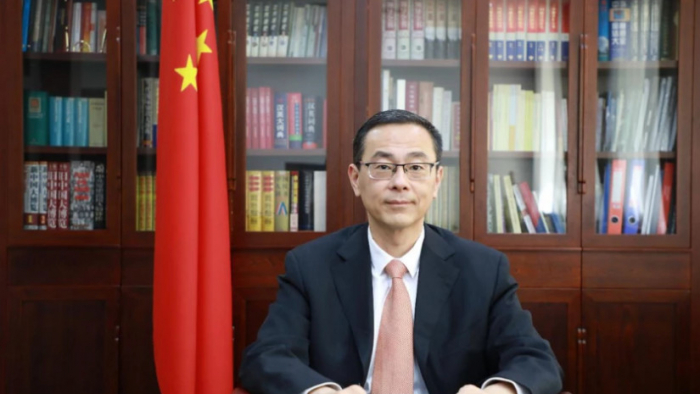
Zhou Qian
Ambassador of China to Georgia
https://www.resonancedaily.com/index.php?id_rub=11&id_artc=249007

