
 Home
HomeThe Trump–Xi Meeting Amid the War with Iran: Will the Conversation Take Place?
-
 15 Mar 2026 13:41
-
 372
372
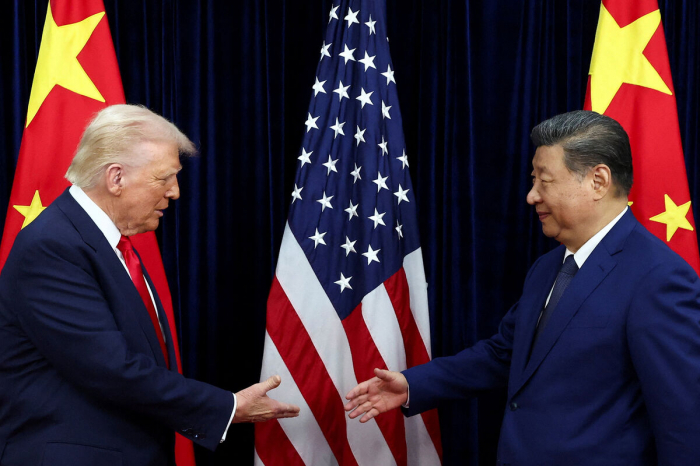
The U.S.-Israeli war against Iran has caught Sino-American diplomacy at a moment of cautious thaw. The Trump-Xi summit, scheduled for March 31–April 2 in China, appeared to be in jeopardy — yet it has not been canceled.
Chinese Foreign Minister Wang Yi, speaking at a press conference on the sidelines of the annual session of China's national legislature in Beijing, stated that the war "should not have happened" and "benefits no one," while simultaneously signaling that the anticipated meeting between President Donald Trump and Chinese leader Xi Jinping may still take place later this month. Wang Yi noted that China is open to dialogue with the United States and that 2026 could prove "significant" for bilateral relations, provided both countries approach the negotiations in good faith. Western media paid close attention to Wang Yi's remarks, noting that it was a rare opportunity to hear directly from one of China's most senior officials how Beijing perceives its position in the world and its relations with other countries, including the United States.
The last high-level contact between the Chinese and American leaders took place in February, by telephone. Should the late-March meeting go ahead and prove successful, Xi Jinping is expected to reciprocate with a visit to the United States and may also attend the G20 summit in Miami in December. Trump, for his part, may attend the Asia-Pacific Economic Cooperation summit that China is hosting in Shenzhen in November.
All of this suggests that relations between the two powers have shifted from the intense trade-war escalation of 2025 toward pragmatic de-escalation — though experts continue to disagree on long-term stability. Persistent challenges remain: rare earth minerals, technology restrictions and supply chains, trade imbalances, security concerns, and third-party conflicts. In October, the two sides agreed on a temporary "trade truce," suspending the most punishing tariffs, but the underlying structural contradictions never went away. The war with Iran now adds yet another layer of tension on top of all the existing ones.
It is increasingly clear that the escalating Middle East conflict poses a direct threat to China's diplomatic and economic strategy. Citing various expert assessments, it has been noted that in 2025 Tehran exported more than 80 percent of its oil to China. Beijing maintains a "comprehensive strategic partnership" with Tehran, and in 2021 the two sides signed a "25-Year Comprehensive Cooperation Agreement." At the time, it was reported that China could invest tens of billions of dollars in the Iranian economy — spanning energy, infrastructure, transportation, banking, IT, and healthcare — in exchange for long-term discounted Iranian oil supplies. Now, following U.S. and Israeli strikes against Iran, many Chinese projects are at risk. Beijing's interests in Saudi Arabia, the UAE, and other Gulf states — which have also been drawn into the conflict — face similar exposure. It is worth noting that China has invested considerably more in those countries than it has in the Islamic Republic of Iran.
Against this backdrop, many analysts were quick to advance the theory that the U.S. strikes on Iran serve, among other purposes, as part of Washington's broader strategy to constrain China through its energy supply. Proponents of this view point out that the United States is seeking to contest Chinese strategic assets in other parts of the world as well — in Latin America, Africa, and Central and Southeast Asia. This inevitably raises the question: what does China intend to do to protect its extensive overseas interests, and should Beijing reconsider its commitment to the principle of "absolute non-interference"?
Wang Yi offered a partial answer when he observed that "President Trump is hurting himself as well." "This is hitting European countries, hitting the G7. The entire global economy is interconnected," the Chinese foreign minister said. Indeed, as observers argue, a fuel shortage will, at the very least, push Beijing itself toward expanding its imports of Russian energy — an outcome that is least advantageous to the Western countries that maintain sanctions on Moscow. Meanwhile, Wang Yi also emphasized that "China has become the most valuable source of stability for a turbulent world." This statement carries a transparent implication: Beijing now has additional leverage in the contest for its global image. A prolonged war in Iran opens greater opportunities for China to present itself to the world as a relatively stable and peaceful superpower — a counterpoint to the United States, which has recently distinguished itself by detaining Venezuela's president, waging a trade war against the entire world, and even employing harsh rhetoric against its traditional European allies. It is worth recalling, incidentally, that in recent months Beijing has received the leaders of traditionally pro-American countries — French President Macron, British Prime Minister Starmer, and German Chancellor Merz.
Against this background, the concept of the "G2" is particularly noteworthy. First proposed in 2005 by American economist C. Fred Bergsten to underscore the importance of coordination between the world's two largest economies, the term was used repeatedly by Trump last autumn. For Beijing, this represents, on one hand, an acknowledgment of its growing power. On the other hand, such a framework sits uneasily with China's diplomatic posture toward the Global South, which is grounded in the principle that major powers should not dictate terms to smaller ones. Beijing also consistently calls for respect for an order based on the principles of the United Nations and advocates for "an equal and orderly multipolar world."
There is little doubt that Beijing is closely monitoring the course of military operations in the Middle East, and Chinese military planners are already drawing lessons from them. In parallel, the strategic implications are being weighed: if the United States becomes mired in a prolonged war, its military mobility across the Indo-Pacific will be temporarily diminished. It has been noted that Beijing could gain a strategic advantage in the Taiwan Strait as American military assets are redirected to the Middle East — including, for instance, the redeployment of elements of the THAAD missile defense system and Patriot air defense batteries from South Korea to the region. This factor will, of course, add its own nuances to the forthcoming meeting between the American and Chinese leaders. Beijing, however, is not drawing attention to it — at least not yet. China is signaling a readiness for mutual compromise.
The optimistic arguments circulating in the West regarding the Trump-Xi meeting rest on the conviction that the American president, despite all the disagreements, views Beijing as a partner with whom he can do business. At the same time, Trump’s administration is openly and quite seriously preparing his country for a long-term competition with China — something Beijing sees clearly, understands fully, and is responding to in kind. Perhaps no one has captured this dynamic better than Trump himself: "We're doing everything we can against China, and they're doing everything they can against us." It is therefore quite likely that the truce will hold by the end of March. At this moment, both sides have their reasons — if nothing else, each wants to focus on managing its own domestic challenges. At the same time, if the Beijing-Washington relationship can be steered away from confrontation toward managed coexistence, the broader international environment will benefit enormously — given the unmatched power and influence that both countries wield.
Irina Khalturina

