
 Home
HomeChina Defines Its Future at the “Two Sessions”
-
 09 Mar 2026 11:07
-
 556
556
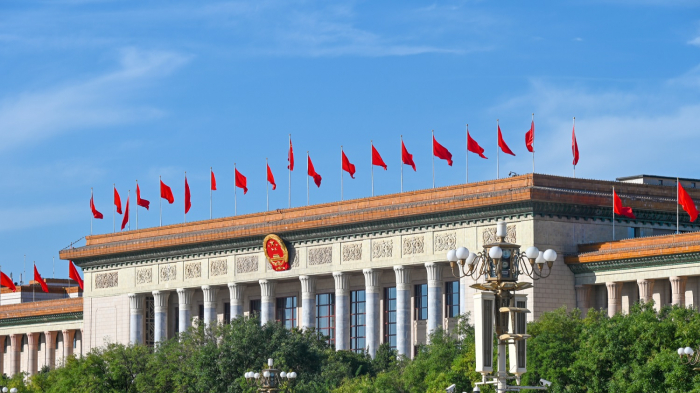
Political and Economic Outcomes of the Annual Meetings of the NPC and CPPCC
One of the most important political events of the year for the People’s Republic of China took place in Beijing from March 4 to March 12, 2026. These annual meetings are known as the “Two Sessions,” when the country’s highest legislative body and its main consultative political advisory body convene simultaneously.
During these days, sessions of the National People's Congress (NPC) and the National Committee of the Chinese People's Political Consultative Conference (CPPCC) were held. It is within these meetings that China outlines its political and economic agenda for the coming period. The sessions review the results of the past year while discussing the key directions of domestic policy, social development, and China’s international engagement.
At the 2026 sessions, the main priorities for the development of the Chinese economy were outlined, alongside the key directions of social policy and foreign policy strategy. Deputies and members of the consultative body also approved a new medium-term development plan intended to define the strategic framework for China’s economic and institutional growth in the coming years.
What the “Two Sessions” Are and Who Makes the Decisions
To understand the scale of these events, it is important to look at the structure of China’s political system. The central institution is the National People’s Congress, often referred to simply as the Chinese parliament. It is considered the highest organ of state power. The NPC passes laws, approves the national budget, and formally appoints the country’s top officials.
About 2,900 delegates representing different regions and social groups of China took part in the current session. Alongside it operates the Chinese People's Political Consultative Conference. This body serves as a consultative platform that discusses major policy directions and reflects the views of various social, professional, and political groups. Approximately 2,170 members participated in its work.
At the same time, it is important to understand the political architecture of the system. Both the National People’s Congress and the consultative conference function under the leadership of the Communist Party of China.
Chronology of Events
The sessions followed a dense schedule and traditionally served as a platform where key signals for the economy, society, and foreign policy are articulated.
On March 4, the fourth session of the 14th National Committee of the CPPCC opened. Its chairman, Wang Huning, presented a report on the work of the Standing Committee. On the same day, the preparatory meeting of the National People’s Congress approved the agenda for the parliamentary session.
On March 5, the fourth session of the 14th National People’s Congress officially opened. Premier Li Qiang delivered the Government Work Report, summarizing the results of the previous year and outlining economic priorities for the near future.
On the same day, President Xi Jinping met with a delegation of provincial representatives and highlighted several key development priorities. Among them were the development of so-called “new quality productive forces,” deepening reforms, and addressing the phenomenon known in Chinese discourse as “involution,” meaning excessive internal competition.
On March 6, Xi Jinping met with groups of CPPCC members, emphasizing the importance of unity and consultative democracy. On the same day, representatives of the government’s economic agencies held a press conference where the ministries of finance, foreign affairs, and commerce clarified the country’s economic and foreign policy directions.
On March 7, attention shifted toward security issues. Xi Jinping met with a delegation of the People’s Liberation Army and outlined priorities for the modernization of China’s armed forces. On the same day, Foreign Minister Wang Yi presented the key directions of China’s diplomacy for 2026 at a major press conference.
Deputies also heard reports from the Supreme People’s Court and the Supreme People’s Procuratorate. On March 10, the CPPCC session concluded with the adoption of a political resolution. One of the key outcomes was the approval of the new five-year development plan that will define China’s strategic direction for the coming years.
Economic Targets and the Budget: A Shift Toward Quality
In his annual Government Work Report, Premier Li Qiang outlined China’s key economic targets for 2026. The overall approach reflects the consolidation of a strategy focused on “high-quality growth,” where sustainability and structural development take priority over maximum growth rates. One of the most notable signals was the adjustment of GDP growth targets. For the first time in three years, the growth range was set at approximately 4.5–5 percent. For comparison, China’s actual growth in 2025 was about 5 percent. This reduction is not seen as a sign of economic weakness but rather as a strategic choice in favor of more balanced and sustainable development. Fiscal policy also reflects moderate expansion. The budget deficit is projected at around 4 percent of GDP, compared with approximately 3.8 percent previously. This suggests the government is willing to support economic activity while avoiding overly aggressive stimulus measures. Inflation also received attention. The consumer price index target was set at around 2 percent. Against the backdrop of near-zero inflation in the previous year, this indicates an attempt to gently stimulate economic activity and counter deflationary pressures.
Employment remains a key indicator of social stability. Authorities aim to keep urban unemployment below 5.5 percent, compared with about 5.2 percent last year. At the same time, creating new jobs remains a major priority. The plan for 2026 includes the creation of around 12 million new jobs.
Budget parameters also show that Beijing is focusing not only on economic growth but also on technological and defense resilience. China’s defense spending in 2026 increased by about 7 percent, reaching roughly 1.9 trillion yuan, or approximately 277 billion dollars. The pace of growth in the military budget exceeds the growth rate of the economy and reflects the country’s continued modernization of its armed forces and investment in advanced technologies.
Spending on science and technology has also increased significantly. Overall expenditures in this sector grew by 10 percent to 426 billion yuan. Funding for fundamental research is set to increase by more than 16 percent, while spending on research and development is projected to grow by about 7 percent. To support these objectives, the government is deploying large fiscal instruments. Ultra-long special bonds worth about 1.3 trillion yuan will be issued to finance strategic projects and national security priorities. The borrowing limit for local governments has also been raised to 4.4 trillion yuan, mainly to support infrastructure development and manage regional debt obligations. At the same time, authorities are seeking to stimulate domestic demand. A special fund of about 100 billion yuan has been created to support consumption.
Another 300 billion yuan from special bond issuance will be used to recapitalize banks, strengthening financial stability and reducing systemic risks.
The 15th Five-Year Program (2026–2030): Technological Sovereignty
The 2026 sessions also marked an important strategic milestone. For the first time in a decade, a new medium-term development plan was formally approved. Work on the plan began in 2024, while its final proposals were endorsed at the Fourth Plenum of the Central Committee of the Communist Party of China in October 2025. The program is built around the idea of technological breakthroughs and reducing dependence on external supply chains. The document identifies several priority areas that will shape China’s industrial and scientific development in the coming years.
Social and Demographic Priorities
Social and demographic issues also occupy an important place in the new policy framework. Authorities increasingly emphasize the need to create a society supportive of childbirth. This includes expanding support for young families, improving reproductive health services, and creating economic conditions that make having children less financially risky.
At the same time, the government is responding to rapid population aging. Particular attention is being paid to developing care systems for the elderly, especially in rural areas where social infrastructure is weaker.
By 2030, life expectancy in China is expected to reach approximately 80 years. For comparison, it stood at about 79.25 years in 2025.
Education also remains a long-term priority. Government spending in this sector has been fixed at no less than 4 percent of GDP in order to ensure sustainable development of the education system and workforce training.
Economic policy also focuses on building a unified national market aimed at reducing regional protectionism and removing barriers between provinces. At the same time, antimonopoly regulation is being strengthened, while policymakers increasingly emphasize the need to combat what Chinese discourse calls “involution,” referring to excessive competition in mature industries where companies lower prices and margins without real technological progress. This phenomenon is particularly visible in sectors such as electric vehicles and solar energy.
Another important direction is the green transition. Beijing is gradually shifting its focus from quotas to technological solutions, including the development of green hydrogen, carbon capture technologies, and material recycling systems. This approach is intended to align environmental goals with industrial development.
During the sessions, lawmakers also reviewed draft legislative initiatives including the Environmental Code, the Law on Promoting National Unity and Progress, and the Law on National Development Planning.
Foreign Policy Context
Foreign policy also received significant attention. At the traditional press conference, Foreign Minister Wang Yi outlined the main directions of Chinese diplomacy for the coming period.
Beijing confirmed its readiness for dialogue with the United States, while emphasizing that such dialogue must be based on mutual respect and recognition of sovereignty. China made clear that it intends to maintain open channels of communication while firmly defending its national interests. Another important theme was the development of a multipolar world order. China reaffirmed its commitment to a model of international relations in which no single country dominates others.
At the same time, Beijing plans to deepen cooperation through major international platforms such as the Belt and Road Initiative, the expanding BRICS+ format, and the Shanghai Cooperation Organization. China also reiterated its readiness to create more favorable conditions for international business, including strengthening Hong Kong’s role as a global financial center and expanding opportunities for foreign investors in the Chinese market.
Conclusions and Significance of the 2026 “Two Sessions”
Several key conclusions can be drawn from the March meetings.
First, in economic policy China is moving toward more moderate but sustainable growth. The emphasis is shifting from large-scale stimulus to improving the quality of development and expanding domestic demand.
Second, the new 15th Five-Year Plan reinforces the strategy of technological sovereignty, focusing on critical sectors ranging from semiconductors to biomanufacturing.
Third, demographic change, population aging, and education are becoming central pillars of long-term social stability.
Fourth, the political system continues to show signs of institutional consolidation around the policy direction associated with the leadership of Xi Jinping, reflected in both legislative initiatives and the evolving structure of governance.
Finally, China’s foreign policy seeks to maintain a balance between openness and security. Dialogue with Western countries remains an important element of diplomacy, while at the same time Beijing is actively strengthening cooperation with countries of the Global South.
Gulnara Safarli

