
 Home
HomeThe issue of water sustainability in the South Caucasus
-
 09 Apr 2026 18:22
-
 434
434
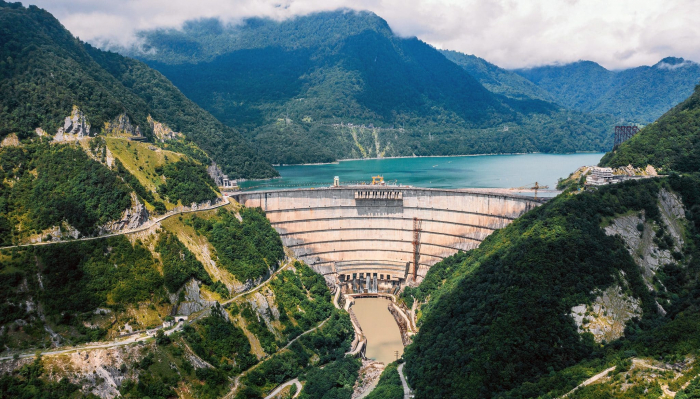
The world is entering a phase that is increasingly being described within UN structures as an era of global “water bankruptcy.” According to experts, this is no longer about temporary disruptions or cyclical crises. As emphasized by Kaveh Madani, who heads the UN Institute for Water, Environment and Health, the familiar term “crisis” is no longer sufficient to describe what is happening. The scale and depth of the processes are such that we are dealing with a systemic and, to a large extent, irreversible loss of freshwater reserves.
The report he presented highlights an alarming trend: humanity consumes and pollutes more water than the planet is able to restore through natural renewable sources. This means not just a temporary imbalance, but an undermining of the very foundations of water sustainability. In essence, as Madani notes, strategic natural reserves are being destroyed—reserves upon which both ecosystems and human life directly depend.
Statistics confirm the extent of the degradation. Since the 1990s, the volume of water in many of the world’s largest lakes has decreased by more than half. During certain periods of the year, dozens of rivers no longer reach the seas they historically flowed into, indicating a critical shift in the water balance. Another alarming factor is the loss of glacial mass: since the 1970s, approximately one-third of the world’s glaciers have disappeared — these are natural freshwater storage systems that feed rivers and maintain seasonal balance. Agriculture remains the largest consumer of freshwater, accounting for around 70% of global reserves. In many regions, particularly in Asia, farming is oriented not only towards domestic consumption, but also towards export, which puts further pressure on water resources. Consequently, situations in which there is simply not enough water to sustain previous levels of production are becoming more frequent.
Similar challenges are faced by countries in the Middle East and North Africa, where freshwater scarcity has long been a factor of social and economic instability. Climate change further complicates the situation. According to Madani, global warming intensifies existing imbalances, triggering more frequent droughts, changes in precipitation patterns, and accelerated glacier melt. Taken together, these factors are shaping a new reality in which access to freshwater becomes not only an environmental issue, but a strategic challenge for the entire global community.
All of these alarming global signals may seem distant—until one realizes that the same logic is gradually beginning to operate in the Caucasus as well. The South Caucasus is not isolated from global processes: the climate is changing here too, rivers are becoming shallower, and pressure on water resources is increasing. The scale may be smaller, but the problems are already visible. And if the world is speaking of “water bankruptcy,” then for our region the question increasingly arises: will we have enough water tomorrow, and will we be able to agree on it today?
This is the reason why the water agenda is gradually moving to the centre of state attention in the countries of the region. In Georgia, this issue is already being considered a strategic element of development and sustainability. This week, the Georgian Prime Minister, Irakli Kobakhidze, held a series of meetings with representatives of Aqualia and the Global Water Partnership. During the meeting, it was noted that Georgia, as a key hub of the Black Sea–Caspian region, has the potential to become a leader in water resource management. The Prime Minister emphasised the necessity for comprehensive infrastructure modernisation, encompassing the replacement of obsolete pipelines, the construction of new treatment facilities, and the implementation of contemporary technological solutions. Particular emphasis was placed on cooperation with Aqualia, a global leader in water technologies, in order to develop the country's water sector in accordance with European standards.
As Kobakhidze noted, the parties discussed a fundamental upgrade of the water supply system, expansion of treatment capacity, and the introduction of modern technologies. The head of government expressed gratitude for the investments made and reaffirmed state support for the development of water infrastructure.
Environmental experts unanimously state that climate change, growing water consumption, and the lack of coordinated water policy in the Caucasus are creating preconditions for a regional water crisis. Given that regional rivers are transboundary, competition for limited resources may intensify both domestic political tensions and interstate frictions.
The water situation in the Caucasus is gradually becoming a serious challenge, and it is not only an environmental issue but also a factor of socio-economic stability directly affecting the well-being of millions of people. In contemporary circumstances, any disruption to the management of water resources has the potential to engender consequences of a complex nature. Even minor alterations in flow regimes, infrastructure failures, or environmental incidents have the capacity to elicit significant public response. Concurrently, the identification of the underlying causes of such situations is frequently arduous, thereby engendering an environment conducive to distrust and mutual suspicion. A review of global experience indicates that in the absence of coordination and transparency in water policy, the risk of deteriorating interstate relations increases, along with internal social tensions, especially in rural and irrigation-dependent areas. It is imperative to recognise the necessity of systemic cooperation, data exchange, and joint management in order to transform potential vulnerabilities into the foundation of sustainable partnerships.
In the South Caucasus, water scarcity is increasingly becoming not only a climatic but also a human problem. Agriculture still widely uses outdated irrigation methods, leading to inefficient water use, especially during dry years. The situation is aggravated by pollution of rivers from industrial and agricultural runoff and by worn-out infrastructure: old canals and networks lose up to 40–60% of water before it even reaches consumers. As a result, the region faces systemic vulnerability in its water management system. The solution lies not in isolated measures, but in comprehensive modernization and a more careful, responsible approach to water as a strategic resource.
Analysis by leading environmental experts presented at COP19 suggests that by 2030–2040, a critical reduction in the flow of mountain rivers is expected due to glacier loss, which will lead to an increase in conflicts between regions and countries. In the South Caucasus, water scarcity is already being felt due to climate change, inefficient use, and losses in irrigation systems, as well as increasing demand driven by population growth and urbanization. For example, in Georgia—traditionally considered water-rich—agricultural water demand is growing rapidly each year. However, Georgians are already speaking of a serious crisis.
A reduction in water availability in Azerbaijan may have sensitive socio-economic consequences, especially for rural areas where the well-being of the population directly depends on stable water supply and functioning irrigation systems. Under conditions of water scarcity, farmers face declining yields and incomes, which objectively increases social vulnerability and places additional strain on state institutions.
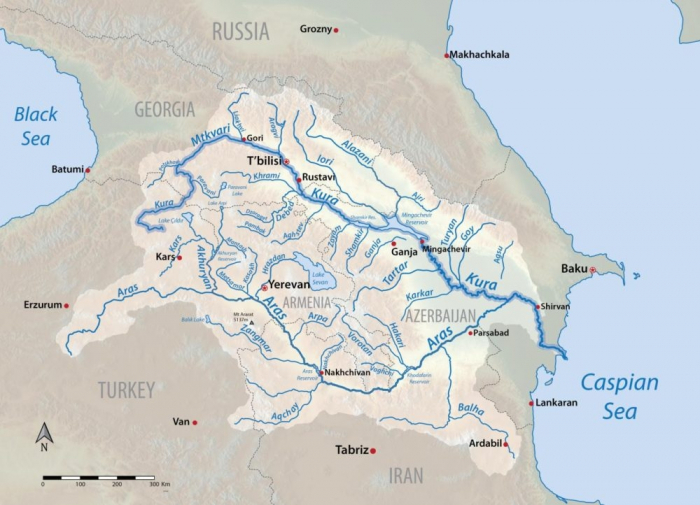
The decline in water levels in the Kura River basin, which plays a key role in supplying Azerbaijan’s agricultural regions, is already becoming a matter of serious concern. In some summer periods, cases have been recorded where the river’s flow was so low that it failed to reach the Caspian Sea, indicating significant changes in the hydrological regime. If the situation worsens further, increased concern can be expected in Azerbaijan’s agricultural regions, especially during dry years, when dependence on stable water supply becomes critical. In such conditions, social sensitivity to resource distribution issues increases, objectively raising the importance of interstate coordination and transparent dialogue.
Water scarcity in the Kura basin can no longer be perceived as purely an environmental or economic issue. It is beginning to affect more sensitive areas—social stability, the nature of bilateral relations, and the overall atmosphere of regional stability. That is why it is so important not to leave this issue at the level of isolated statements.
In order to address these issues, there is a necessity for coordinated steps, open data exchange, and functioning cooperation mechanisms. It is only within this specific format that the water agenda can transform into a source of collaboration, thereby fostering trust and establishing long-term partnerships. During periods of drought, such processes may be accompanied by rising public tension, as water becomes a key factor of survival and economic stability. In the absence of adequate coordination in the management of transboundary resources, this can also have an impact on interstate interaction, particularly if public discourse begins to frame water as a potential instrument of influence. It is therefore vital that dialogue is conducted in a timely manner and that regulatory mechanisms are transparent. A further consequence of water scarcity is the potential for internal migration from the most affected rural areas, as well as increased external labour migration, which is driven by deteriorating living conditions and shrinking economic opportunities. In the long term, this has the effect of increasing a country's sensitivity to external factors, thereby reinforcing the importance of cooperation with states in which transboundary rivers originate.
Azerbaijan depends on transit rivers such as the Kura and Aras, whose sources lie in Armenia, Georgia, and Turkey. Up to 70% of Azerbaijan’s freshwater comes from abroad, and the Kura River is strategically important for Baku. The main rivers of the region include the Kura and its major tributaries—the Alazani (Ganikh), Iori (Gabirri), Khrami (Ehram), Aras, Debed, and others. Georgia and Armenia control the sources but themselves face shortages during dry years and suffer from inefficient irrigation systems.
According to Georgia’s power grid development plan, 217 hydropower plants will be built in the country over the next 10 years. Currently, Georgia’s installed power capacity stands at 4,621 MW, and according to the plan, total capacity will increase to 10,336 MW within a decade. The share of hydropower in total installed capacity is expected to reach up to 70% by 2034. This allows the use of water accumulated during periods of deficit, reducing dependence on imported fuel for thermal power plants. It is also noted that by 2034, the share of wind and solar power plants will reach around 15%.
In accordance with a separate plan devised by the Georgian State Electrosystem, 123 new hydropower plants are under consideration for construction between 2021 and 2031. Georgia has been implementing measures to develop its hydropower potential, including in the Kura River basin. The country views hydropower as an important element of energy sustainability and economic development. Simultaneously, in view of the transboundary nature of the river and Azerbaijan's position in relation to other riparian countries downstream, such projects objectively engender heightened sensitivity with regard to issues of coordination and information exchange between the parties concerned. Consequently, the advancement of hydropower in the Kura basin necessitates the establishment of transparent communication channels and the implementation of a collaborative approach, ensuring the consideration of the interests of all states engaged in the utilisation of its water resources. The introduction of hydropower projects in Georgia is projected to result in a decline in water flow, as hydropower plants are known to retain water, particularly during the summer months. It is important to note that this will also result in specific alterations to the river regime. It is possible that sudden water releases may cause damage to infrastructure located downstream. Furthermore, environmental risks are also increasing.
It is not impossible to conceive that, in due course, Azerbaijan may opt to elevate this matter to a formal level in order to engage in a constructive dialogue regarding the situation. In the context of Baku, the primary concern pertains to the protection of its strategic interests in accordance with international law and existing agreements. Such a measure would almost certainly attract the attention of the country's expert and environmental community, as well as the broader public. The issues of transparency and compliance with prior consultation procedures in hydropower projects would be given particular emphasis. Consequently, the subject may evolve from a restricted discourse amongst professionals to a subject of public discourse. It is therefore vital to emphasise openness, the regular exchange of information, and timely interstate consultations as the cornerstones of trust and predictability.
A further geopolitical dimension to this issue is the potential for interested parties to instigate an escalation of tensions between Azerbaijan and Georgia. It is inevitable that external forces will seek to interfere in the strategic partnership between Azerbaijan, Georgia and Turkey, with a view to weakening this alignment. It is reasonable to hypothesise that analytical and expert structures in the respective countries have already assessed the emerging situation and prepared internal materials on the possible consequences of a water crisis in the South Caucasus. In expert discourse, such issues are frequently evaluated through the lens of potential risks to regional stability and trust, thereby emphasising the significance of timely consultations and coordinated decisions in the context of transboundary water management.
In the contemporary global context, it is imperative to acknowledge that the majority of sensitive issues are no longer confined to the domain of bilateral relations between nations. In the event of tensions arising over water between Georgia and Azerbaijan, it is not inconceivable that external actors may seek to exploit this issue for their own interests. It is evident from past experience that in circumstances where strategic resources and critical routes are present, there is invariably a propensity to exploit disagreements for one's own benefit. In the context of Georgia and Azerbaijan, water is not merely a natural resource; it is a fundamental element of their existence and identity. The key issues under discussion are agriculture, energy, the stability of border regions, and trust between neighbours. Within a broader context, it constitutes a component of the overarching infrastructure architecture of the region, through which oil, gas, and transport corridors pass, including the Middle Corridor. In the context of the establishment and consolidation of the Middle Corridor, the South Caucasus is emerging as a pivotal strategic region, thereby prompting a heightened focus on issues pertaining to resource sustainability. In this context, the water agenda may acquire an additional geopolitical dimension. It is imperative to approach this matter not as a field of competition, but rather as a domain of collaboration with the potential to fortify trust and mitigate risks, particularly in the context of its escalating regional significance.
The water crisis in the South Caucasus has already transitioned from a hypothetical scenario to a tangible reality. It is gradually becoming a factor that can increase social vulnerability, stimulate migration processes, and place additional strain on interstate relations. In such circumstances, the requirement lies not in a reaction to consequences, but rather in the implementation of a proactive regional strategy founded upon trust and the modernisation of infrastructure. The effective management of water resources is becoming increasingly important for achieving long-term stability. In the absence of coordinated decision-making processes, the potential for water to become a source of tension rather than a unifying resource is a distinct possibility.
In the context of evolving hydrological regimes in the Kura basin, transboundary water management is evolving beyond a purely technical agenda, acquiring a dimension of regional security and sustainable development. A transition is required from fragmented steps to a systemic institutional and technological architecture. The necessity to consider more sustainable formats of cooperation is becoming increasingly apparent. It may be worthwhile to examine the experience of Central Asia, where countries have previously confronted analogous challenges. This could entail the establishment of a regional water consortium under the auspices of the United Nations, as well as the formation of a South Caucasus Commission on Transboundary Waters. The latter would be responsible for continuous monitoring, expert coordination, and timely risk forecasting. The crux of the matter is that interaction should not be considered as a one-off event, but rather as a systemic phenomenon, characterised by clearly defined rules and a distribution of responsibility among the parties involved.
The necessity for updated bilateral and trilateral accords on the Kura basin is evident, with consideration given to the modified water balance and the requirements of agriculture, energy, and ecosystems. The principles of equitable and rational use, prevention of harm, and mandatory data exchange must form the basis of such agreements. The integration of the water agenda into multilateral diplomatic formats will facilitate its incorporation into the broader framework of regional stability, in conjunction with transport and energy concerns. In the event of a delay in dialogue, there is always a risk that the issue may be subject to information manipulation, political interpretation, or attempts to artificially escalate tensions. It is imperative that water-related issues are addressed in a composed and professional manner, devoid of emotional influences and safeguarding against potential manipulation. It is therefore vital for the Georgian and Azerbaijani governments to engage in enhanced levels of coordination, in order to minimise the likelihood of external forces exploiting the potential for discord arising from the utilisation of water as a resource.
Elbrus Mamedov

