
 Home
HomeThe South Caucasus Expects Pragmatic Cooperation Between Beijing and Washington
-
 04 Mar 2026 08:18
-
 285
285
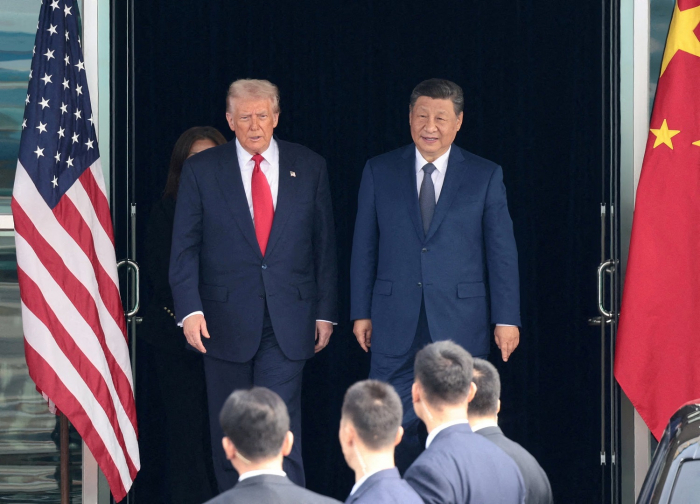
Donald Trump has confirmed that he will visit China in April to meet with President of the People’s Republic of China Xi Jinping. He noted that he looks forward to this meeting, as well as to Xi Jinping’s visit to the United States later this year: “Yes, I will visit Chairman Xi in April. I am looking forward to that. He will come here later this year, and I very much look forward to that meeting. No, our relations with China right now are very good. And what we are announcing today, you know, does not have much to do with China. But my relationship with Chairman Xi is very good.” The South Caucasus, in turn, expects that this meeting may lead to pragmatic cooperation between Beijing and Washington.
The South Caucasus is gradually ceasing to be merely a local issue and is becoming a visible element of a broader Eurasian transformation. Against the backdrop of intensifying competition between the United States and China, the region has acquired a new meaning. Today, the South Caucasus is no longer simply a zone of great-power rivalry. It is increasingly turning into a space where countries can actively create new economic opportunities, develop infrastructure, and integrate into global trade and transport networks.
For the South Caucasus, it is important that rivalry and competition gradually cease to be a source of threats and instead become a stimulus for economic modernization, investment attraction, and the strengthening of the region’s strategic importance on the international stage. Such an approach would allow the countries of the South Caucasus not only to react to external challenges but also to transform them into real opportunities for development and for enhancing their influence within the Eurasian economy.
It is clear that for China the South Caucasus is primarily an important link in ensuring the sustainable connectivity of Eurasia. Within the framework of the Belt and Road Initiative, Beijing has consistently developed land and maritime routes connecting Asia with Europe. Amid geopolitical turbulence and complications affecting northern logistics routes, the Trans-Caspian route has become particularly significant.
In this context, the South Caucasus plays the role of a natural bridge between Central Asia, the Caspian region, and the Black Sea. Unlike traditional geopolitical models of influence, China’s approach emphasizes infrastructural integration. This includes the construction of roads, modernization of ports, development of railways, and digital logistics platforms. Such a format of cooperation allows the countries of the region to maintain sovereignty while gaining access to investment and modern technologies.
Georgia, thanks to its strategic position, has every opportunity to become an important logistical hub of a new Eurasian route connecting Central Asia, the Caspian region, and Europe. The country’s ports, roads, and railway lines can become an effective crossroads of cargo flows, opening new opportunities for trade and transport businesses.
Azerbaijan today largely shapes the economic dynamics of the region thanks to its energy potential and well-developed transport infrastructure. Key supply routes linking East and West, as well as North and South, pass through its territory. This is not merely geography; it is the daily operation of ports, railways, and pipelines. It represents investments, jobs, and a sense of participation in major international processes. That is why Baku is perceived as a reliable partner for both Europe and Asia.
In this context, the Zangezur corridor is viewed by Azerbaijan not only as an infrastructure project but also as a matter of long-term stability and internal connectivity. It concerns direct communication between different parts of the country, the reduction of vulnerabilities, and greater predictability of logistics and economic flows. For Azerbaijan, it represents an element of stability and an opportunity to strengthen its transport architecture, which would simultaneously create additional conditions for regional interaction.
Armenia, for its part, is also searching for new economic opportunities, striving to diversify its external relations and reduce dependence on a limited circle of partners. Participation in new transport initiatives could become not only a tool for economic development but also a step toward building a more stable and interconnected regional environment. Ultimately, the issue is not only about corridors and routes but about whether the countries of the South Caucasus can turn their geography into a source of predictability, development, and mutual benefit.
In all three cases, the Chinese model of cooperation offers a flexible and pragmatic framework. It does not require rigid political alignment and allows countries to maintain independence while simultaneously using opportunities for economic growth and infrastructure modernization. Such an approach creates space for mutual benefit and encourages the region’s active integration into emerging global supply chains.
Today, more than ever, the South Caucasus is interested in seeing the competition between the United States and China manifest primarily in the economic sphere. The region is carefully observing how this competition will unfold locally while also hoping to derive practical benefits from it.
For Washington, priorities remain the development of institutions, support for reforms, and the building of stable political partnerships. Beijing, meanwhile, focuses on trade, investment, and infrastructure construction. These approaches do not necessarily contradict one another, and the countries of the South Caucasus have a unique opportunity to benefit from both frameworks.
For the region, it is particularly important to preserve a multi-vector foreign policy and the ability to cooperate simultaneously with different partners, diversifying economic and political ties in order not to depend on a single center of power and to make the most effective use of emerging global opportunities.
A special role in this process is played by the development of the Middle Corridor. For China, it represents a way to enhance the resilience of export routes, reduce risks, and ensure continuity of supply chains. For the countries of the South Caucasus, the Middle Corridor offers the opportunity to transform from a peripheral region into an active transit hub generating revenue, attracting investment, and benefiting from technological transfer.
It is important to note that China’s presence in the region is not associated with military obligations or demands for political loyalty. This creates a calmer and more comfortable environment for countries seeking to preserve strategic autonomy. In conditions of global instability and fragmentation of the world economy, such a pragmatic approach to economic cooperation can become an important factor of stability and development.
Today, the South Caucasus faces a much more complex choice than it might appear at first glance. The region does not necessarily have to choose between Beijing and Washington as opposing sides in a rivalry. The real dilemma is whether the South Caucasus wishes to remain a passive object of global competition or to become an active player capable of turning the interests of major powers into real advantages for itself.
In this sense, cooperation with China should not be perceived as an alternative to Western partnerships but rather as an important component of a comprehensive diversification strategy. The ability to flexibly combine different directions of partnership and to benefit from investments, technologies, and infrastructure projects allows the countries of the region not merely to respond to external challenges but to shape their own independent position within the Eurasian landscape.
Only such an approach can transform the South Caucasus from a zone of competition into a space of opportunity, where each country can use global trends to strengthen its economic and political resilience.
If the countries of the South Caucasus succeed in building a truly balanced model of interaction — where strategic infrastructure partnership with China is harmoniously complemented by institutional and economic ties with Europe and the United States — the region will be able to establish itself as an independent and significant hub of the Eurasian economy.
Such an approach will allow the countries of the Caucasus not merely to respond to external challenges but actively to shape their own opportunities, turning potential risks into advantages. It is precisely here that the fine line runs between external geopolitical pressure and real geo-economic opportunity.
Skillful management of partnerships, investments, and logistics could transform the South Caucasus from a zone of competition into a space of strategic initiative, where each country gains the chance to strengthen its economic stability, expand its influence, and increase its international significance.
Elbrus Mamedov

