
 Home
HomeXi Jinping and Donald Trump Supported the Course Toward Stable Relations Between the Two Powers
-
 16 May 2026 21:09
-
 432
432
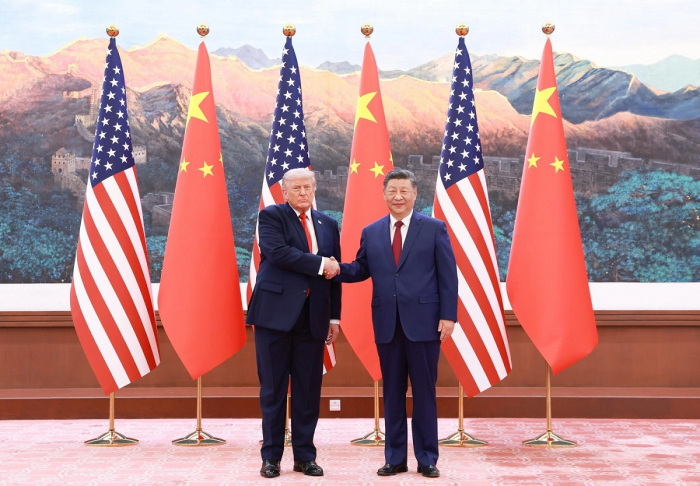
The meeting between Chinese President Xi Jinping and U.S. President Donald Trump in Beijing became the first visit by an American leader to China since 2017. It effectively opened a new stage in relations between the world’s two largest economies, logically continuing the dialogue that had begun on the sidelines of the APEC summit in Busan in October 2025. It was in South Korea that the leaders agreed to suspend the exhausting trade war during which the United States imposed triple-digit tariffs on Chinese goods, while Beijing in response signaled its readiness to restrict global supplies of rare earth elements. The current May meeting in Beijing became something significantly greater than another “symbolic” summit. It was a conscious attempt by the two superpowers to agree on how to coexist while the world remains in turbulence. There was no talk of any sudden friendship and the main goal proved to be both simpler and more important at the same time - to ensure that harsh rivalry would not escalate into open confrontation.
At the same time, Beijing and Washington soberly assess reality and there is no discussion about the complete removal of contradictions. The United States still views China as its main strategic competitor, while the Chinese side continues to perceive American tariffs and technological restrictions as an attempt to contain its economic and technological rise. Nevertheless, both sides fully understand that a new large-scale escalation of the trade war could inflict serious damage not only on themselves, but also on the global economy, which is already facing high geopolitical turbulence. It was precisely in this context that Xi Jinping built his diplomacy and his speech around the idea that can be described as “stability through dialogue.” For Beijing, this means that China and the United States have the right to hold different views, compete and defend their positions, but it is important to do so in a way that disagreements do not turn into confrontation that would harm both sides and the entire international community. On trade issues, the Chinese President noted that there are no winners in confrontations and that the only constructive path forward is dialogue on equal terms. Such an approach reflects China’s desire to move economic disagreements away from the sphere of pressure and retaliatory measures into the format of calm and manageable negotiations.
A special place in Xi Jinping’s speech was occupied by the Taiwan issue, which China continues to regard as the most sensitive element in relations with the United States and the most important factor of regional stability. Beijing made it clear that preserving peace and predictability in the Taiwan Strait is directly linked to a cautious and balanced approach to this issue. The Chinese side proceeds from the understanding that trade disagreements, technological competition and diplomatic disputes may remain subjects of negotiations, however any steps affecting the principle of China’s territorial integrity are capable of sharply increasing the level of tension.
Donald Trump, for his part, placed emphasis on personal diplomacy and economic pragmatism. His words about a “great summit,” a “beautiful future,” and a special working relationship with Xi Jinping were addressed both to Chinese partners and the American public. President Trump sought to demonstrate the ability to build direct dialogue with Beijing, find common ground and create new opportunities for American business. At the same time, behind the constructive and friendly rhetoric there was a clear commitment to U.S. national interests. Trump gently but persistently called on China to expand access for American companies, noted the important role of the business delegation and highlighted the connection between political stability and the deepening of trade and economic cooperation. For Washington, the summit became an opportunity to reduce the risks of escalation.
A key feature of the meeting was the mutual recognition of the risks of uncontrolled escalation. Beijing, referring to the concept of the “Thucydides Trap,” emphasized the importance of overcoming the historically established scenario in which interaction between an established power, the United States, and a rising power, China, often leads to tension. There was a general unifying idea that China and the United States are connected by such deep interdependence that a complete rupture would be extremely undesirable for both sides, while at the same time the level of rivalry no longer allows a simple return to the previous model of partnership.
The global significance of this meeting is determined by the fact that relations between China and the United States have long gone beyond the framework of an exclusively bilateral agenda. Global trade, financial stability, technological chains, security in the Asia-Pacific region and the ability of the international community to jointly respond to challenges largely depend on the stability of these relations. Of course, one meeting is not capable of instantly resolving all accumulated issues, however it is capable of outlining clear guidelines within which competition will remain predictable and manageable. In essence, Beijing and Washington are in the process of searching for a new model of interaction.
The meeting in Beijing clearly demonstrated that relations between the world’s two largest economies are entering a new phase where the priority is not the search for an ideal partnership, but the construction of reliable mechanisms for preventing direct confrontation. Behind the constructive tone of the negotiations and the attention to detail there was a sober understanding that the global security architecture is passing through one of the most difficult periods since the end of the Cold War, and that the stability of the world order in the coming years will depend precisely on the willingness of the parties to engage in consistent dialogue.
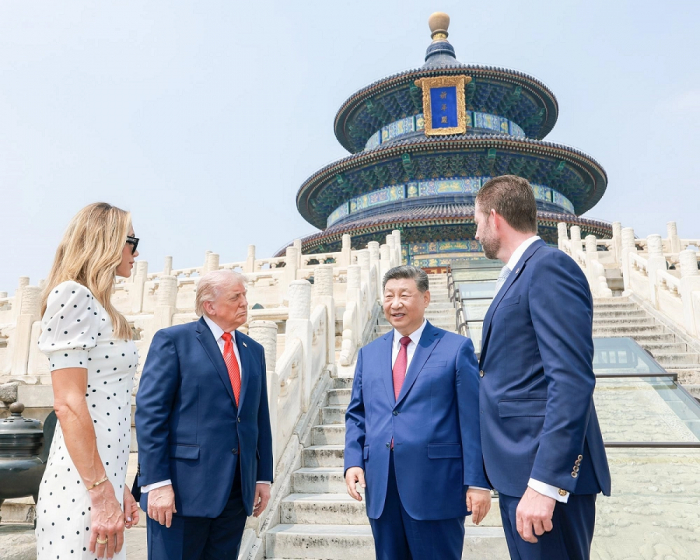
China approached the negotiations from more confident positions compared to 2017. Over this period, Beijing significantly strengthened its technological sovereignty, expanded the geography of its trade partnerships, increased the resilience of its economy to external challenges and developed additional instruments of interaction with Washington, including in the sphere of rare earth material supplies that have strategic significance for global production chains. One of the central issues of the negotiations once again became rare earth metals, which are gradually turning into one of the main instruments of global technological and geoeconomic influence. According to Reuters, the parties are discussing the extension of the current agreement allowing the supply of Chinese rare earth elements to the United States. For Washington this is critical because of the dependence of the defense industry, electronics and AI infrastructure on Chinese processing of rare earth elements. The very fact that the topic of rare earth elements was elevated to the level of negotiations between the leaders of the two powers demonstrates how critically important this sector has become for the global economy and the international security system.
The United States, for its part, approached the summit with a pragmatically formed agenda. The focus of the American delegation included specific economic priorities. These included prospects for cooperation with Boeing, the development of agricultural exports, the expansion of access to the Chinese market and the improvement of mechanisms for mutual investment.
Even before the summit began, it became clear that Beijing might attempt to form a so-called “purchase package,” which China traditionally uses as an instrument for stabilizing relations with Washington and reducing political pressure from the United States. This refers to possible large-scale purchases of American products and the launch of new economic cooperation mechanisms that would demonstrate the willingness of the sides for pragmatic interaction even under conditions of strategic competition. Already on the sidelines of the summit it became known that China would purchase 200 aircraft from Boeing. Donald Trump told Fox News: “Today he agreed to one thing - he is going to order 200 airplanes, this is a very important event for Boeing. 200 major projects. That is a lot of jobs, a lot. Boeing wanted 150, but got 200.”
For Donald Trump, relations with China remained first and foremost an area for seeking mutually beneficial agreements rather than ideological confrontation. That is why special importance was attached to the composition of the business delegation. It included executives of leading American companies from the fields of technology, finance, aviation, the agro-industrial complex, semiconductor manufacturing, payment systems and biotechnology. The participation of figures such as Elon Musk, Tim Cook, Larry Fink, Stephen Schwarzman, Kelly Ortberg, Jane Fraser, David Solomon, as well as representatives of Qualcomm, Micron, Visa, Mastercard, Boeing and Cargill, gave the visit not only a diplomatic but also a pronounced economic dimension. American business was interested in maintaining and expanding access to the Chinese market, searching for flexible solutions in the field of export regulation, concluding new contracts, obtaining technological approvals, developing financial services and minimizing risks associated with a possible rupture of economic ties.
For Xi Jinping, the presence of American business representatives at the negotiations also carried substantial significance. Beijing views the interest of major U.S. corporations as an additional factor contributing to a balanced dialogue with Washington. The Chinese logic is based on demonstrating that American business still sees important opportunities for growth in the Chinese market, production chains and consumer potential. Unlike the American side, China did not emphasize the public presentation of its business delegation. Beijing preferred to operate through state institutions, specialized agencies, major corporations and industry platforms, which reflects the systemic features of the Chinese approach to interaction between business and government. While in the United States business circles traditionally act through independent initiatives, in China the business agenda is organically integrated into the overall strategy of state development.
The Iranian crisis became one of the most difficult topics of the summit. Both the United States and China were interested in maintaining stability in the Strait of Hormuz region and preventing energy shocks, however their approaches toward Tehran and its nuclear program differed substantially. For Beijing, the Middle East is important as a major source of energy resources and a space for expanding diplomatic presence. For Washington, China’s growing role in the region represents both a challenge and a potential opportunity for joint de-escalation efforts.
For Europe, the results of the summit became a signal of the need to prepare for a complex multidirectional reality. For the South Caucasus and Central Asia, the significance of the meeting acquired particular sharpness in the context of rare earth metals and critical minerals. As the United States and its partners seek to diversify supply sources, interest is growing in Kazakhstan, the Trans-Caspian region, the East-West International Transport Corridor, Turkey and the countries of the South Caucasus as potential hubs of alternative logistics and future processing. Rare earth metals have finally transformed from purely industrial raw materials into a significant instrument of geoeconomic interaction.
Xi Jinping called Donald Trump’s visit “historic and significant,” emphasizing that the sides defined China-U.S. relations as constructive, strategic and stable. As reported by Xinhua News Agency, the Chinese President stated that the sides had reached important consensus on maintaining the stability of trade and economic ties, expanding practical cooperation in various fields and properly resolving issues of concern to each side. According to Xi Jinping, China and the United States also agreed to strengthen contacts and coordination on international and regional issues. He noted that the visit contributes to strengthening mutual understanding, deepening mutual trust and improving the well-being of the peoples of the two countries. “This once again demonstrates that finding the correct path of interaction, peaceful coexistence and mutually beneficial cooperation based on mutual respect corresponds to the shared aspirations of the peoples of China and the United States as well as the expectations of people around the world,” the Chinese leader emphasized.
“President Trump hopes to make America great again, while I am directing efforts toward leading the Chinese people to national rejuvenation,” Xi Jinping stated, expressing confidence that strengthening cooperation would contribute to the development and rise of both countries, while also calling on both sides to conscientiously implement the agreements reached, preserve the current positive momentum, adhere to the correct direction and eliminate obstacles to the sustainable development of bilateral relations.
U.S. President Donald Trump, for his part, thanked Xi Jinping for the invitation to visit Zhongnanhai and noted that the visit to China attracted the attention of the entire world and proved to be very successful and unforgettable. As reported by Xinhua News Agency, the American leader stated that the sides reached a number of important agreements, signed several deals and managed to resolve many issues, which, according to him, is beneficial both for the two countries and for the entire world. Calling Xi Jinping his old friend, Donald Trump emphasized that he has great respect for him and believes that good personal relations have developed between them. He also stated that U.S.-China relations are of enormous importance and will only continue to improve in the future.
In the end, the summit did not mark the beginning of a new era of partnership between the United States and China. It became an attempt to buy time, stabilize the most vulnerable areas and prevent rivalry from moving beyond a manageable format. Washington and Beijing were negotiating not about a strategic alliance, but about temporary yet workable rules of coexistence in a world where competition has become a permanent reality, while a complete rupture would be excessively costly for all sides. The Beijing summit is unlikely to become the end of the strategic confrontation between the United States and China. The accumulated contradictions are too deep - from trade and technology to issues of security, logistics and global influence. Rather, the current meeting represents an attempt by the world’s two largest powers to prevent competition from entering an uncontrollable phase capable of destabilizing the global economy and the international system as a whole.
Elbrus Mamedov

