
 Home
HomeWhy the World Is Rerouting Its Learning Pathways - An Introduction to the Xinhua Institute Analysis
-
 29 Apr 2026 11:57
-
 369
369
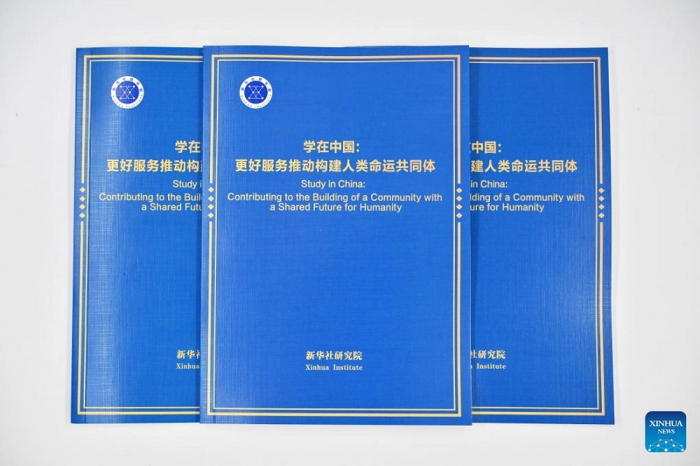

The global higher education market is undergoing a profound structural transformation, and in this context the analytical report of the Xinhua Institute, “Study in China: Contributing to the Building of a Community with a Shared Future for Humanity,” emerges not merely as a collection of data, but as an important reference point for understanding new vectors of academic mobility.
Traditional hubs that have attracted international students and set global standards for decades are now facing a complex set of challenges, including the rapid rise in tuition and living costs, political instability, concerns over the safety of foreign nationals, and the search for more balanced models integrating science, education, and industry. In response to these shifts, a new geography of knowledge is taking shape, with China confidently emerging as a leading destination, offering an alternative grounded in accessibility, quality, digital infrastructure, and tangible career prospects. The document captures this macro-level shift, yet its value extends far beyond a simple acknowledgment of current trends.
The report reveals the logic behind China’s policy of educational openness as a coherent system, where university modernization, the development of joint programs, language initiatives, and multilateral humanitarian platforms all contribute to long-term international partnerships. Education here is viewed not as a commercial service, but as a strategic resource for mutual understanding, a tool for sharing development opportunities, and a practical platform for dialogue between civilizations. When reading this material, it is essential to look beyond the figures and program descriptions to grasp the systemic approach—how academic exchanges are synchronized with national development strategies, how standards for supporting international students are established, and how universities evolve into bridges connecting labor markets, research ecosystems, and cultural traditions.
The document will be particularly valuable for university leaders shaping international partnerships, analysts tracking global academic mobility trends, specialists managing student programs, as well as prospective students and their families seeking transparent and well-balanced pathways for studying abroad. Ultimately, this report is not merely a record of current achievements, but a compass pointing toward the future architecture of the global educational landscape, where knowledge, openness, and academic dialogue form the foundation of sustainable international development.
Below is the full text of the document, offering a deeper immersion into the logic, metrics, and prospects of China’s educational openness.
GSR

