
 Home
HomeThe “New Oil” of the 21st Century - A Chance for the Caucasus and Central Asia
-
 06 May 2026 07:23
-
 465
465
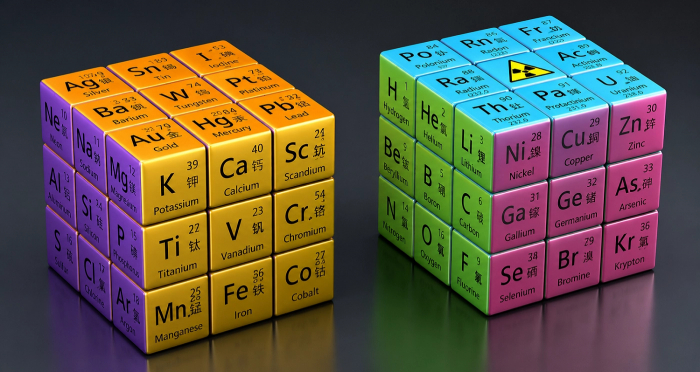
Rare earth metals are gradually taking the place that oil occupied in the 20th century. They are invisible to the end consumer, yet they underpin everything—from electric vehicles to wind turbines, from smartphones to defense technologies. Control over them means control over the industry of the future. Analysts at Tsinghua University predict and assert that rare earth elements are not merely a commodity, but the foundation of technological sovereignty.
A new industrial map of Eurasia is now taking shape. And whether the region remains on the periphery of the global economy or becomes a full-fledged participant depends on the decisions made today—specifically in licensing, industrial policy, and international agreements. Rare earth metals offer a rare opportunity to break out of the привычной trajectory. The only question is whether the countries of the South Caucasus and Central Asia will seize it.
According to estimates by BRGM, the Caucasus holds up to 1.2% of the world’s rare earth resources associated with copper-molybdenum ores. If the region is considered in a broader Central Asia–Caucasus context, its subsoil contains a potential capable of influencing the rules of the game—provided it avoids the “resource appendage” trap.
In the South Caucasus, the mining sector in Armenia accounts for about 5% of GDP and roughly 30% of industrial output. At Kajaran and Teghut, traces of rare earth elements—neodymium, lanthanum, rhenium, and tellurium—have been identified, although industrial reserves have not yet been confirmed. In Abovyan, concentrations of light rare earth elements have been recorded, indicating a potential base for developing sectors related to electric vehicles and wind energy.
In Georgia, concentrations of rare earth elements have been identified in kaolin tailings, opening opportunities for their recovery. At the same time, the existing logistics for exporting copper and molybdenum through the ports of Poti and Batumi can be adapted for rare earth exports with the creation of specialized infrastructure, which may also be taken into account in the construction of the new deep-water port of Anaklia. In Azerbaijan, more than 1,100 deposits have been identified, including sites with potential critical mineral content. In Central Asia, Kazakhstan ranks 4th globally in titanium production (around 16,000 tons in 2023), 2nd in chromium reserves (about 95% of global reserves), and possesses significant manganese reserves (around 600 million tons). The country is also among the world’s top three producers of beryllium (approximately 25% of global output). Commercially promising rare earth elements such as cerium, lanthanum, and yttrium have been identified in uranium tailings and polymetallic ores. Uzbekistan produces mineral resources worth approximately $11 billion annually, with 32 critical minerals identified, a significant portion of which has not yet been developed industrially.
Today, the South Caucasus stands on the threshold of a new role—not merely as a transit space, but as a key link in delivering processed rare earth materials from Central Asia to Europe. The emerging Middle Corridor is gradually transforming from an alternative route into a strategic artery, capable of linking the region’s resource base with European industry through high value-added chains.
But for this potential to become reality, geography alone is not enough. Deep institutional and infrastructural synchronization is required. First and foremost, the unification of customs regimes among the countries along the route. Without accelerated border crossings, transparent procedures, and harmonized standards, even the most advanced logistics capacities will operate at half strength. When it comes to strategic materials, the speed and predictability of deliveries become just as important as their volume. Ultimately, the South Caucasus has the opportunity to secure its place in the global supply architecture not as a transit corridor in the classical sense, but as an integrated part of the industrial chain. The faster the region synchronizes its rules, modernizes infrastructure, and creates specialized logistics solutions, the stronger its position will be in the new geo-economics of rare earth elements.
For the region, this is a window of opportunity that opens rarely and for a short time.
Historically, the Caucasus and Central Asia have already gone through “resource cycles,” remaining suppliers of oil, gas, or metals with minimal added value. But rare earth elements are a different story. Their value lies not so much in extraction as in processing, separation, refining, and ultimately in the production of high-tech components—magnets, batteries, electronics. This is where the main profit and strategic influence are generated. The transition from a “extract and sell” model to an “extract, process, and manufacture” model implies not only attracting investment, but also consistent state policy and the presence of strategic will to implement such transformations.
Resources already exist in the region, but will it be possible to build full-fledged production around them? “From ore to magnets” is not a metaphor, but a practical roadmap. It implies the construction of processing plants, the introduction of modern technologies, the creation of industrial clusters, and ultimately entry into global markets with finished products. In the April 2025 Commodity Markets Outlook report, the World Bank offered the following recommendation: countries with significant natural resources should avoid the “resource appendage” model, and the key factors of sustainable development are vertical integration, transparency, and investment in human capital. For the countries of Central Asia and the South Caucasus, rare earth metals represent a chance to redefine their role in the global economy. This potential can only be realized through a transition from simple extraction to systemic industrialization.
Today, the key player in the rare earth market remains China, which controls about 90% of global processing. However, the logic of global supply chains is changing, and Beijing is actively seeking new sources of raw materials beyond its borders, increasingly turning its attention to Central Asia and the South Caucasus. For the region, this opens direct access to capital, advanced technologies, and large-scale markets. In partnership with China, the focus is not merely on access to deposits, but on the joint development of processing and metallurgical capacities. Contrary to the stereotype of “resource dependence,” the Chinese model of cooperation implies a transition toward deeper participation in the value-added chain. In 2025, China’s Ministry of Commerce stated that “China is ready to share technologies and investments, but cooperation must be based on the principles of mutual benefit, respect for sovereignty, and joint development.” This means that Chinese investments in mining will be accompanied by the mandatory transfer of processing technologies. Without this, the region will remain at the lower end of the value chain. Investments in extraction alone do not change an economic trajectory—knowledge does. Therefore, China’s participation in rare earth projects in the Caucasus and Central Asia will be structured in such a way that technologies and competencies accompany capital into the region. Without this, even the largest investments will reinforce the familiar model in which value added is created outside the region.
Chinese investments can become a driver of regional development only when accompanied by the creation of real infrastructure, including the construction of beneficiation plants, industrial parks, and logistics hubs, and when they are flexibly adapted to national priorities. It is precisely the combination of capital, technology, and localization that transforms a resource project into an industrial one, ensuring that export revenues remain within the region in the form of new industries, competencies, and high-tech jobs.
The extraction of rare earth metals is associated with serious environmental risks—from water pollution to the generation of toxic waste. For the Caucasus and Central Asia, which seek “green” integration with the European Union, this is not a technical detail but a foundation of competitiveness, and the key factor becomes not the volume of extraction, but how it is organized. Any investment, including partnerships with China, is inevitably tied to international sustainability standards, which implies the use of modern purification technologies, closed water cycles, safe waste disposal, and transparent monitoring. In this model, environmental considerations act as a strict filter, eliminating projects that do not meet responsibility criteria. Compliance with these standards provides the region with an important advantage, as the European market is increasingly assessing not only the origin of raw materials, but also their “carbon footprint.” Certified “clean” rare earth elements become a premium product, ensuring higher margins and long-term contracts.
Rare earth deposits in the South Caucasus and Central Asia naturally complement each other, and geography itself encourages cooperation among countries. By acting in a coordinated manner, investments can be directed more efficiently, infrastructure duplication can be avoided, and negotiations with external partners can be conducted from a stronger position. Therefore, it is logical to develop cross-border production and logistics linkages, where each country focuses on the stage where it has the greatest advantage—for example, one on extraction, another on processing, and a third on logistics. In this way, the region builds a unified value chain—from ore to finished products—and transforms fragmented resources into a shared strategic asset.
For this model to work, an institutional “backbone” is needed—for example, a “Caucasus–Central Asia platform” for critical minerals. A successful model can be drawn from the EU–Kazakhstan memorandum of 2022, adapted to regional realities. Support from the Asian Development Bank can also serve as a catalyst, helping to align environmental standards, simplify investment rules, and establish transparent monitoring. In this way, fragmented national projects can be transformed into a unified regional strategy that is predictable for investors and sustainable in the long term. As a result, the Caucasus and Central Asia can secure their place in the global market not as raw material suppliers, but as producers of high value-added materials. This reduces the risks of resource dependency and opens access to new industrial value chains, where not only resources are valued, but also technology, standards, and reliability.
Elbrus Mamedov

