
 Home
HomeCentral Asia and the South Caucasus Gradually Forming a Unified Space of Strategic Partnership
-
 28 Jun 2026 17:41
-
 387
387
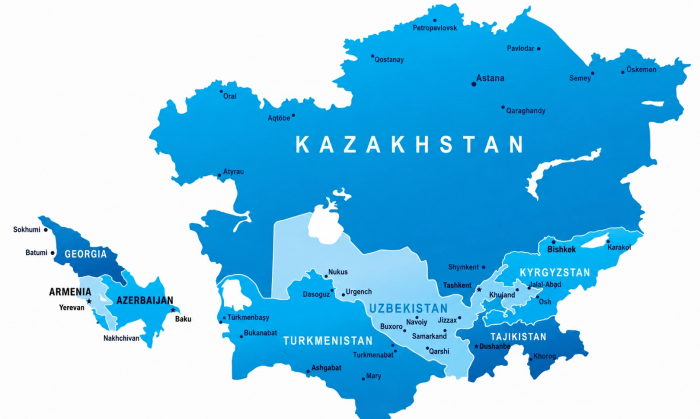
The recent state visit of the President of Turkmenistan to Baku has once again confirmed that the countries of Central Asia and the South Caucasus are transitioning from episodic cooperation to the systematic building of a new regional architecture. Today we are witnessing not isolated diplomatic events but a massive process of mutually aligning national interests, transport routes, energy projects, investment programs, and foreign policy positions. Official delegations from Kazakhstan, Uzbekistan, Kyrgyzstan, and Turkmenistan regularly visit Azerbaijan and Georgia, with official visits by the presidents of Uzbekistan and Turkmenistan to Tbilisi expected in July 2026. In turn, the leaders of Azerbaijan and Georgia have significantly increased the intensity of their political and economic contacts with the Central Asian states. The recent official visit of the Prime Minister of Georgia to Tajikistan also serves as important evidence of this same trend. All this indicates the aspiration of each country to secure the most advantageous positions in the emerging system of Eurasian transport, trade, and energy communications. A series of mutual visits by the leaders of the Central Asian and South Caucasus states shows that a new center of economic activity in Eurasia is taking shape before our eyes. We are no longer talking merely about the development of bilateral relations but about the creation of a broad space of strategic partnership capable of becoming one of the key elements of global trade, logistics, and energy. Central Asia and the South Caucasus are gradually turning into a single strategic space between East and West, the importance of which for the global economy will inevitably grow.
Today the countries of the region are working across multiple fronts simultaneously. They are developing transport and energy, improving logistics, and creating modern digital infrastructure. Among the main priorities are also attracting investment, ensuring food security, and formulating common positions on key international issues. Each country strives to maximize the use of new geoeconomic opportunities that have opened up against the backdrop of serious changes in global trade and politics. At the same time, the countries of the region are acting without haste, step by step. First, they build relations with their neighbors, clarify their national interests, and agree on specific projects. In parallel, the very trust and mutual understanding without which it is simply impossible to launch serious long term plans are being built. As ties strengthen, the countries of the region begin to agree on how to engage jointly with the largest global players. First and foremost, these are China, the European Union, Turkey, the Gulf states, India, and other influential centers of power. A very simple logic is at work here. The more cohesive the actions of these states, the weightier their common voice becomes, and the stronger their positions in any negotiations with external partners. In essence, Central Asia and the South Caucasus are gradually merging into a single space of strategic partnership. The interests of individual states here increasingly do not clash but rather perfectly complement each other. This is exactly why we are now witnessing such incredible diplomatic activity. This has long gone beyond ordinary protocol visits and polite conversations. Before our eyes, the foundation of a completely new economic and political architecture of the entire Eurasian space is being laid.
Each state strives to strengthen its own position in the new regional architecture. Azerbaijan is enhancing its significance as the leading transport and energy hub of the region. Georgia is cementing its role as the main gateway for Central Asia to the Black Sea and European markets. Kazakhstan is diversifying its export routes and expanding its presence in the European direction. Uzbekistan is actively integrating into international production and trade chains. Turkmenistan is gaining additional opportunities for energy resource exports. Kyrgyzstan and Tajikistan are opening new channels to global markets and attracting investment. At the same time, all participants understand that the implementation of such massive tasks is impossible alone. Therefore, alongside the competition for cargo, investments, and infrastructure projects, regional cooperation of an unprecedented scale is developing. States strive to coordinate their interests, eliminate transport and administrative barriers, and jointly increase the attractiveness of the region for international business.
In the emerging system of Eurasian ties, a special role is assigned to Azerbaijan. Its favorable geography makes this country a natural bridge between Central Asia, the South Caucasus, Turkey, and European markets. That is exactly why Baku is working tirelessly to become the main transport and energy hub of the entire region. Partnership with the Central Asian countries goes far beyond ordinary economics for Azerbaijan and has immense strategic importance. Baku strives to become one of the main nodes of the Middle Corridor, along which growing flows of goods between East and West are moving today. The calculation is absolutely clear. The more cargo that goes through the Caspian Sea and Azerbaijani territory, the higher the role of the country in global trade and logistics will be. Baku now faces an extremely clear task. It needs to attract as much cargo as possible from Kazakhstan, Turkmenistan, and other Central Asian countries. And we are literally talking about everything. This includes raw materials and agricultural products, as well as industrial goods, which are then sent to the markets of Europe and the Middle East. Moving such volumes requires truly powerful logistics. In addition to purely economic tasks, Azerbaijan is also seriously strengthening its political weight in the South Caucasus.
A truly unique window of opportunity has now opened for Georgia. How the country takes advantage of it will determine its place in the Eurasian economy for decades to come. The Middle Corridor is rapidly gaining weight, and Tbilisi wants to become the main transit bridge between Central Asia and the Black Sea. On top of that, the Georgian capital is aiming to become a key logistics center on the route from Asia to Europe. Tbilisi perfectly understands that transport and logistics can become the most powerful engine of economic growth. That is why the authorities are placing a huge bet on increasing transit. Active work is underway on infrastructure that must seamlessly handle the growing volumes of cargo from Kazakhstan, Uzbekistan, Kyrgyzstan, Turkmenistan, and other countries in the region. The sea gates of Georgia are at the center of all these plans. And this is not just about modernizing the old ports in Poti and Batumi. The main and most ambitious bet is placed on the deep sea port in Anaklia. This project is capable of literally turning the transport map of the entire Black Sea region upside down. Tbilisi is confident that Anaklia will become a key hub for global trade between Asia and Europe. The Baku Tbilisi Kars railway line also plays a special role in this system, becoming one of the key elements of international transport chains.
For Kazakhstan, cooperation with the South Caucasus countries goes far beyond ordinary neighborly friendship and is part of a grand pragmatic strategy. Astana wants to diversify its foreign economic ties and gain broader access to global markets. The main goal is extremely clear. It is necessary to reduce dependence on traditional export routes and open new paths for supplying its goods to Europe, the Middle East, and other regions.
Over the past few years, the role of the South Caucasus for the Kazakh economy has grown noticeably. Global trade and geopolitics have changed dramatically, forcing many countries to seek completely new logistics solutions. Under these conditions, the Transcaspian International Transport Route is turning into one of the most promising directions for Kazakhstan. It is through this corridor that Astana sees its future in foreign trade. The ports of Georgia and Azerbaijan play a key role in these plans. Active rapprochement with Baku and Tbilisi gives Astana excellent chances to strengthen its position on the international stage. This allows it to significantly expand the geography of its exports and create a reliable system of trade ties that will not suffer from sharp changes in the global economy.
The economy of Uzbekistan is growing at an impressive pace. Industry and exports are expanding, but a landlocked country vitally needs reliable routes to external markets. The South Caucasus is coming to the fore for Tashkent. Azerbaijan and Georgia are becoming the main gateways to the Black Sea and Europe, and contacts with Baku and Tbilisi are developing rapidly. At the same time, the very structure of exports is changing. Uzbekistan is moving away from simple raw materials and increasing the supply of high value added goods such as textiles, automobiles, and electronics. Such cargo requires flawless container logistics. The Middle Corridor through the Caspian Sea and the Caucasus perfectly meets this need by speeding up delivery and freeing Tashkent from dependence on traditional routes. But it is not just about transit. Closer ties with the South Caucasus help Uzbekistan attract foreign capital and modern technologies. In a global sense, Tashkent is building its place in the new Eurasian system of communications. Partnership with Azerbaijan and Georgia has become the foundation of a long term strategy, effectively changing the geoeconomic destiny of the country.
Turkmenistan occupies a completely special place in this new regional alliance. The country sits on some of the largest natural gas reserves in the world and possesses colossal export potential. Therefore, it is vital for Ashgabat to find as many routes as possible to bring its products to international markets and reliably insure itself against dependence on any single route. Modern geoeconomic realities dictate new rules. Now it is necessary not just to extract more gas but also to create a powerful transport infrastructure that will connect Central Asia with the Caucasus, Europe, Turkey, and the Middle East. Caspian routes play a key role here. A favorable geographical location allows Turkmenistan to become one of the main players in the transportation system between East and West. That is exactly why Ashgabat is so actively engaged in developing sea transport across the Caspian Sea, modernizing its ports, and building logistics bridges with Azerbaijan and Georgia. But the main priority remains unchanged. It is the increase in the supply of Turkmen gas abroad. Global demand for energy is only growing, and Turkmenistan wants to sell it to as many buyers as possible. And for this, maximally reliable partners are needed, through whose territory the key pipelines and transport arteries will run. In this context, the recent visit of the Turkmen leader to Baku looks much deeper than just a protocol meeting. The parties are clearly aiming to coordinate their plans for decades to come. In fact, we are talking about the creation of a strong strategic partnership capable of becoming one of the main load bearing elements of the new economic architecture across the vast territory from Central Asia to the Black Sea and further into Europe.
China plays a key role in the ongoing processes. Almost all major transport, logistics, and infrastructure projects being implemented today in Central Asia and the South Caucasus are linked to one degree or another with the Belt and Road Initiative. For Beijing, political stability in the South Caucasus, the security of Transcaspian routes, the development of the Middle Corridor, and the creation of modern infrastructure ensuring sustainable growth in trade between Asia and Europe are of particular importance. That is exactly why China consistently supports the expansion of economic cooperation between the states of Central Asia and the South Caucasus, viewing these regions as the most important link in the emerging Eurasian logistics system. As a result of these processes, a new economic axis of Eurasia is gradually taking shape, connecting Central Asia, the Caspian region, the South Caucasus, the Black Sea, and European markets.
Elbrus Mamedov

