
 Home
HomeThe South Caucasus Network of Special Economic Zones: A Model for Regional Economic Integration
-
 27 Jul 2026 18:50
-
 421
421
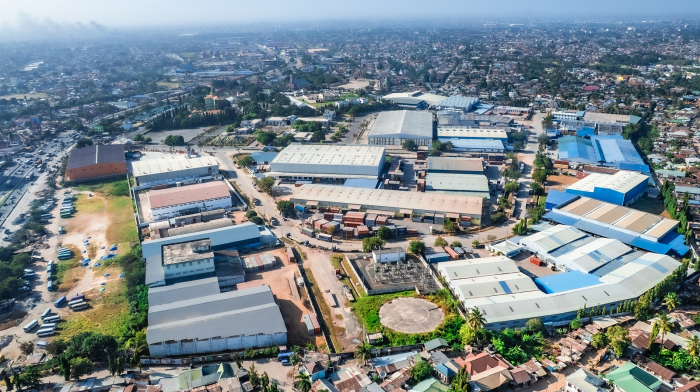
In the 21st century, interstate competition is increasingly decoupled from territorial size or demographic scale. At the forefront is the capacity to foster efficient investment, production, and logistics ecosystems. Special Economic Zones (SEZs), free industrial zones, and technological and industrial parks have emerged as paramount instruments for capital attraction, technology transfer, and integration into global markets.
The South Caucasus already possesses a developed network of such territories. Georgia, Azerbaijan, and Armenia have established their own models of free economic zones oriented toward export, industry, logistics, high technologies, and international investment. However, to date, virtually all of these operate as isolated national initiatives. Meanwhile, contemporary macroeconomic shifts, the accelerated development of the Middle Corridor, the surge in trade turnover between Europe and Central Asia, and the global reorientation of supply chains create unprecedented prerequisites for transitioning to a qualitatively novel model: namely, the network integration of the Special Economic Zones of the South Caucasus. Today, each South Caucasus nation possesses its own successfully functioning free economic zone infrastructure; however, their profiles and competitive advantages differ. Georgia boasts one of the most liberal investment frameworks in the region. The primary centers of capital attraction are the Poti Free Industrial Zone, the Kutaisi Free Industrial Zone, the Tbilisi Free Zone, and the Hualing Free Industrial Zone in Kutaisi. Their key advantages include the absence of most corporate taxes, radically simplified customs procedures, proximity to the Black Sea ports, and a clear orientation toward exports to Europe, Central Asia, and the Middle East. Azerbaijan is concurrently advancing its industrial infrastructure, which is closely tied to its transport and resource policies. Key sites include the Alyat Free Economic Zone, the Sumgait Chemical Industrial Park, the Mingachevir Industrial Park, and the Aghdam Industrial Park. The Alyat Free Economic Zone acquires particular strategic significance, as it is physically and technologically integrated with the Baku International Sea Trade Port and serves as the primary hub of the Middle Corridor. Armenia prioritizes high value-added sectors. Its most prominent zones are the Meghri Free Economic Zone, the Alliance Free Economic Zone, the Meridian Free Economic Zone, and the ECOS Free Economic Zone. Their specialization encompasses information technology, microelectronics, pharmaceuticals, and jewelry manufacturing.
The region has established free economic zones of diverse specializations, covering industrial production, logistics, high technologies, raw material processing, and export-oriented industries. Thus, the South Caucasus already possesses virtually all the foundational elements of a contemporary investment architecture. Collectively, these sites are capable of forming a robust regional production and logistics system that ensures the integration of the South Caucasus into global value chains. Nevertheless, the existing potential remains underutilized, as each of these zones develops predominantly as an independent national project rather than as an element of a unified regional economic network.
Currently, despite impressive infrastructure, the special economic zones of the South Caucasus often evolve in parallel, focusing primarily on their respective national priorities. Each state formulates its own strategy for capital attraction and independently promotes its sites on the global stage. While this is a natural stage of development, it inadvertently leads to countries competing for the attention of the same investors rather than pooling their efforts. Consequently, the region has yet to fully harness its synergistic potential, missing the substantial competitive advantage that renders such cohesive macro-regions such as Southeast Asia or Eastern Europe so attractive to global business. Transitioning from parallel trajectories to complementary partnerships would enable the Caucasus not merely to divide the existing market, but to jointly create new, far more expansive opportunities for investment. The region already possesses an excellent foundation in the form of developed free economic zones, and we are now presented with the opportunity for a fundamentally new format of cooperation. This does not entail launching yet another set of isolated national projects, but rather the intelligent integration of already functioning infrastructure into a single, dynamic ecosystem. Crucially, the framework of such integration must be clearly defined. This model strictly precludes the establishment of any supranational bodies, does not require the unification of laws, and in no way restricts state sovereignty. It is based exclusively on voluntary and pragmatic coordination among the zones of Georgia, Azerbaijan, and Armenia. The countries can harmoniously align their investment policies, leverage each other's strengths, develop joint production, and collectively promote the region in global capital markets as a single, attractive space. This approach gently redirects competition into the channel of mutually beneficial partnership, where the success of each individual zone is exponentially amplified by the strength of the entire regional network. This prospective paradigm of interaction may be conceptualized as the South Caucasus Network of Economic Zones.
A logical subsequent step would be the transition from competition among economic zones to their harmonious functional specialization. Today, many sites strive to attract the same investors by offering similar tax and administrative incentives. While this naturally intensifies internal rivalry, it fails to forge sustainable, long-term advantages for the region as a whole. A far more effective model involves the rational distribution of functions predicated on the unique comparative strengths of each state. For instance, Georgia could emerge as a key hub for maritime logistics, re-export, warehousing and distribution capacities, and financial services. Azerbaijan could consolidate its position in petrochemicals, large-scale industrial production, and multimodal trans-Caspian transport. Armenia, in turn, is well-positioned to focus on high-tech industries, pharmaceuticals, jewelry manufacturing, and innovative research and development.
Under such a framework, economic zones would cease to compete and instead organically complement one another, creating unified cross-border production chains. This approach would enable the construction of a holistic regional production and logistics system, substantially reduce costs for investors, and enhance the overall competitiveness of the South Caucasus. The Middle Corridor naturally serves as the integrative foundation for this model, gradually transforming from a mere transit route into a comprehensive space for forging new production, investment, and cooperative ties.
The establishment of a unified network of special economic zones is inconceivable without a common digital architecture. It is this architecture that will ensure the coordinated operation of all participants, process transparency, and the competent management of cross-border production chains. The foundation of this process could be a unified digital platform linking all sites in the South Caucasus. Such integration would pave the way for transitioning from simple transit to full-fledged production chains, where individual stages of product creation are logically distributed among countries according to their unique industrial specializations. For example, the production of raw materials and base components could be concentrated within Azerbaijan's industrial sites. High-tech processing and the manufacture of high value-added products would find their place in Armenia's specialized zones. Final assembly, packaging, certification, and cargo consolidation for export via the ports of Poti and Batumi would be handled by Georgia's infrastructure.
This approach enables each state to maximize its competitive advantages without duplicating the functions of its neighbors. Consequently, unified regional value chains would be formed. This would substantially expand industrial cooperation, attract new investments, reduce dependency on external suppliers, and render the economy of the entire region far more resilient to external shocks. Ultimately, the South Caucasus would be positioned to compete on the global stage not through fragmented national zones, but as a robust, integrated production system capable of offering investors a full cycle of finished product creation.
An indispensable component of this network integration is the rational coordination of foreign direct investment attraction policies. Today, Georgia, Azerbaijan, and Armenia independently organize forums, conduct presentations, and promote their zones, often inadvertently competing for the same pool of potential partners. Such a fragmented approach necessitates substantial financial expenditures but does not always yield maximum benefit for the region as a whole. It would be far more effective to pool efforts and present the world with a single, attractive investment brand for the South Caucasus.
A more forward-looking model involves joint promotion, wherein the object of investment marketing is not an individual economic zone or country, but the South Caucasus as a unified production and logistics space. In this scenario, the investor is offered a complex of interconnected opportunities across the three states, combining industrial infrastructure, transport corridors, free economic zones, skilled labor, and access to diverse external markets. This paradigm cultivates a novel regional investment brand predicated on complementarity rather than competition. The South Caucasus begins to be perceived as a single economic system allowing for the flexible distribution of production processes among countries based on their respective advantages. This will enhance the region's investment attractiveness, expand the geography of attracted capital, increase the number of cross-border projects, and strengthen the position of the South Caucasus in the global competition for foreign direct investment.
The proposed concept of the South Caucasus network does not emerge in a vacuum but is informed by global practices. Over the past few decades, various regions worldwide have developed models based on the integration of economic territories, cross-border production cooperation, and the shared use of transport infrastructure. The most pertinent examples include the Greater Bay Area in China, which integrates Hong Kong, Macao, and the cities of Guangdong Province; the SIJORI Growth Triangle (Singapore–Malaysia–Indonesia); the IMT-GT (Indonesia–Malaysia–Thailand); BIMP-EAGA (Brunei–Indonesia–Malaysia–Philippines); as well as the cross-border industrial clusters of the European Union and the economic corridors of the TEN-T network. Despite differences in institutional frameworks, all these models are grounded in the functional specialization of territories, the distribution of production processes, the development of shared logistics infrastructure, and joint investment attraction.
The concept of the South Caucasus Network of Special Economic Zones represents not merely a theoretical construct, but a vital strategic paradigm that sets the only viable vector for the region's long-term prosperity. By transforming the South Caucasus from a vulnerable transit corridor into a powerful Eurasian hub with cross-border value chains, this idea demonstrates that functional specialization and economic interdependence can serve as the most effective mechanisms for the sustainable development of Azerbaijan, Georgia, and Armenia. Although the short-term realization of this network remains utopian due to a deficit of political trust, this theory fulfills a critical role as an ideological compass, as it can shape the vision of a desirable near future in which pragmatic economic integration becomes the primary instrument for consolidating peace, ensuring the region's sustainable development and a worthy place in the global architecture.
Elbrus Mamedov

