
 Home
HomeDoes the competition for the development of the Middle Corridor strengthen the role of the European Union in the South Caucasus?
-
 10 Jul 2026 11:49
-
 417
417
The visit of European Commission President Ursula von der Leyen to Baku on July 1, 2026, signals a new stage in the European Union policy in the South Caucasus based on an updated approach to peace, transport connectivity, and regional cooperation. The announced Peace through Connectivity package of initiatives shows that Brussels no longer views the region exclusively through the prism of unresolved conflicts. Today the South Caucasus is taking center stage as a crucial element of the future architecture of Eurasian transport and energy corridors.
In fact, the European Union is for the first time linking the achievement of sustainable peace with infrastructure development at such a high level. Peace is ceasing to be merely a political or humanitarian goal and is becoming a necessary condition and economic resource for large scale regional development.
For decades the South Caucasus was perceived by the EU primarily as a zone of heightened vulnerability. However, today Brussels proceeds from a pragmatic understanding that without long term stability it is impossible to implement any major project connecting Europe with Central Asia and China.
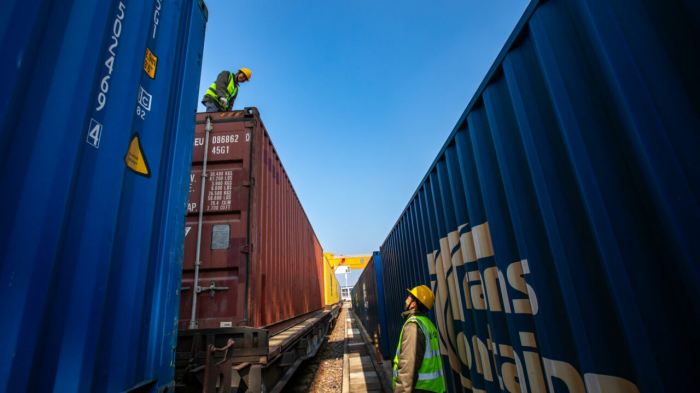
For the European Union, sustainable peace in the South Caucasus is becoming an important factor in the economic development of the entire Eurasian space and primarily the EU itself. Regional stability allows accelerating the development of the Middle Corridor which is gaining increasing importance for diversifying trade routes, enhancing the resilience of supply chains, and expanding mutual trade between Europe, the South Caucasus, and Central Asia. This is exactly why the EU intends to invest not only in diplomatic formats but also in roads, energy facilities, digital networks, healthcare, and demining.
The financial parameters of the new strategy are significant. Brussels announced the allocation of 200 million euros in grant financing under the Global Gateway initiative which should act as a catalyst to attract up to 2 billion euros in public and private investments. At the same time a significant portion of the funds including 20 million euros to support local communities is focused on humanitarian and social projects. Europe is offering a model in which economic development and improved quality of life act as the main guarantees for preserving peace.
If until recently the EU policy was built around bilateral relations with individual states today the South Caucasus is beginning to be viewed as a single interconnected economic space. In this new architecture each country in the region acquires a clear and strategically important role.
The visit to Baku and the rhetoric of Ursula von der Leyen indicate the recognition by the European Union of the special role of Azerbaijan as a strategic anchor of regional stability and a key logistics hub connecting Europe, the South Caucasus, and Central Asia. For the first time at such a level the European Commission publicly called Baku one of the central elements of the future architecture of the region. According to the head of the European Commission Azerbaijan possesses a unique combination of geographical location, economic potential, and political influence which allows it to act as a factor of regional stability. Brussels confirmed support for the railway project in Nakhchivan and the creation of a permanent mechanism for cooperation in transport and digital connectivity. Moreover, Baku will host a large scale Ministerial Regional Investment Conference which effectively consolidates the status of Azerbaijan as a key logistics and diplomatic hub of the Middle Corridor.
Although the focus of the visit was centered on the process of normalizing relations between Azerbaijan and Armenia, the new strategy of the European Union actually enhances the role of Georgia as well. The geographical position of the country makes it an indispensable transit bridge between the Caspian region, the South Caucasus, the Black Sea, and European markets. Almost all routes of the Middle Corridor pass through Georgian territory. Any increase in cargo traffic and stability in the region automatically means growth in transit through Georgian railways, highways, and ports. The development of logistics in Azerbaijan directly increases the load on the ports of Poti and Batumi and also creates prerequisites for the implementation of the Anaklia deep sea port project. The more stable the South Caucasus, the more attractive it is for international carriers which translates into direct economic dividends for Tbilisi.
In the European strategy Armenia is viewed as one of the participants in the emerging space of regional cooperation. Brussels proceeds from the understanding that sustainable peace must be accompanied by specific socioeconomic changes tangible for the population. Therefore the emphasis is placed not only on diplomatic efforts but also on investments in the development of border territories, infrastructure, healthcare, humanitarian demining, and entrepreneurship support. This approach is designed to create conditions for closer involvement of Armenia in regional economic and transport processes. Investments in demining, small business, and vocational education create the very economic foundation for long term reconciliation. It is indicative that the EU views economic ties as a tool for building trust and in Baku they highly appreciated the initiative to build and develop regional energy networks which turns energy into an additional mechanism for rapprochement.
A separate but critically important dimension of the new strategy has become energy. Ursula von der Leyen emphasized that it was Azerbaijan that became a reliable partner for Europe during the energy crisis and the Southern Gas Corridor played a key role in ensuring the security of the EU. However Brussels is already looking further. A new emphasis is placed on the development of renewable energy, the construction of wind farms in the Caspian Sea, and the creation of the Green Energy Corridor which will connect the region with the European market. The development of regional electrical grids and green projects creates an additional base for the interdependence and cooperation of all countries in the South Caucasus.
The global significance of the Peace through Connectivity initiative lies in the fact that the EU is inviting the Central Asian states to dialogue and investment processes. The South Caucasus is being removed from an isolated context and integrated into a single transport system connecting Europe, the Black Sea region, the Caspian, and Central Asia.
For the European Union itself this policy is dictated by pragmatic reasons primarily the EU cares about the diversification of transport routes between Europe and Asia. Another key direction of the European strategy is strengthening energy security through reliable supplies of traditional energy resources and accelerated development of projects in the field of renewable green energy. And of course, the EU is trying to successfully implement its global Global Gateway program amid growing international competition for infrastructure.
The statements made in Baku show that the European Union views the South Caucasus as a single space of economic cooperation where sustainable peace becomes an important condition for the development of transport connectivity, trade, and investments. In this system Azerbaijan acts as a key logistics and energy center, Georgia as the main transit bridge to European markets, and Armenia gets a chance to become an active participant in regional economic processes. The architecture being formed by Brussels is based on the deep interconnection of peace, infrastructure, and trade. And it is this economic interdependence, according to the European design, that should become the most reliable foundation for the long term stability and prosperity of the entire South Caucasus.
Gulnara Safarli

