
 Home
HomeDoes the Future of the Global Economy Begin in Central Asia and the Caucasus?
-
 07 Jun 2026 12:41
-
 445
445
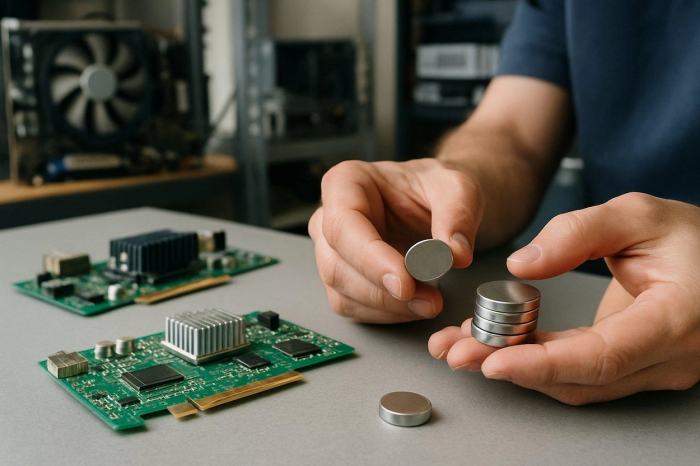
Quiet but profound shifts are underway in the global economy, already reshaping the familiar rules of the game in global markets. China, long the primary supplier of strategically vital materials, is now acting with greater prudence, gradually restricting the export of valuable resources such as gallium, germanium, and graphite. These decisions reflect a mature and balanced approach to development, where economic mechanisms serve not only immediate gains but also help build a reliable technological future, ensuring the country's sustainable growth and long-term self-reliance.
Western capitals are acutely aware of how vulnerable their dependence on a limited number of suppliers is, and are ready to invest heavily in diversifying commodity flows. This risk-reduction policy is rapidly becoming one of the top priorities for the economic security of leading powers. A striking example of this search for new footholds was the recent stage of the strategic dialogue between Azerbaijan and the European Union. In early June 2026, Baku hosted a crucial round of negotiations, where the parties preliminarily agreed on a document outlining partnership priorities for the coming years and officially resumed discussions on a comprehensive agreement. The European Union sees Azerbaijan not only as a vital link in the Eastern Partnership initiative but also as a strategic ally in diversifying energy and resource supplies. The dialogue between Baku and Brussels, which began in 2009 and gained new momentum following the signing of the energy memorandum in 2022, is now reaching a qualitatively new level, encompassing not only energy but also transport, the digital economy, and ecology.
If oil formed the foundation of global prosperity and geopolitics in the last century, today metals—without which the modern energy transition is simply impossible—are confidently taking over this key role. Among them, copper occupies a special, truly central place. This indispensable material surrounds us everywhere. No modern electric vehicle, no powerful data center, no solar or wind farm can do without it. Any high-voltage grid requires colossal volumes of copper components. That is why it is increasingly being said that copper is becoming the "new oil" upon which the era of universal electrification and technological progress will rest. In parallel, the consumption of other strategic materials is also surging. The digitalization of our daily lives and the rapid development of artificial intelligence are multiplying the need for uranium, lithium, and rare earth elements. Without these components, the creation of modern processors and reliable communication systems is simply unthinkable today. The demand for such resources is growing much faster than new deposits can be developed, creating a noticeable deficit in global markets and essentially laying the foundations for the new resource geopolitics of our time.
It is precisely under these global conditions that the Caucasus and Central Asia are acquiring a completely new, truly historical significance. These regions are gradually moving away from the role of a mere transit corridor between East and West, confidently transforming into an independent and full-fledged resource and industrial hub. Countries like Kazakhstan and Uzbekistan possess impressive proven reserves of non-ferrous metals and other critically important resources. These natural wealth reserves are becoming absolutely essential elements for building the technological future of all humanity, making the region a key and reliable player on the world stage.
Armenia, for instance, boasts substantial reserves of copper and molybdenum, while Azerbaijan is systematically and on a grand scale developing its mining sector. Georgia, relying on this renewed and reliable transport artery, is turning into a key gateway for the supply of metals and deep-processed products directly to European markets. A symbol of this transformation was the recent full-scale opening and activation of the Baku-Tbilisi-Kars railway. This modern route has become more than just a new line on the map; it is a true steel bridge connecting the region's natural wealth to global markets. Thanks to such coordinated interaction, the Caucasus is ceasing to be merely a place where goods are transported and can confidently assert itself as a full-fledged production and resource hub on a Eurasian scale, where real value is created and long-term economic ties are forged.
In this context, an important shift is taking place that changes the very essence of regional cooperation. The famous Middle Corridor is taking on a completely new face. If previously most experts viewed this route exclusively through the prism of container volumes and port capacities, now the internal economic logic of the route is noticeably transforming. New projects are increasingly discussed not just as transport initiatives, but as large-scale industrial and resource endeavors. Today, this corridor is beginning to link into a single living organism: natural deposits, modern processing facilities, metallurgical plants, logistics hubs, and the end markets of Europe. In other words, we are no longer talking about the simple mechanical movement of cargo from one point to another, but about the birth of full-fledged cross-border production chains that unite countries with common economic interests and mutual benefit.
On this basis, a completely new format of Eurasian partnership is gradually emerging. If just twenty years ago these lands were seen only as a convenient transit road, today a fundamentally different pattern of movement for goods and capital is taking shape here. The natural wealth of Central Asia and the Caucasus is now organically intertwined with Chinese investments and advanced technologies. The baton is carefully taken up by the growing processing enterprises and streamlined logistics of the Caucasus, which, in turn, connect with the industrial might of Turkey, paving a direct and reliable path to European markets. Individually, these are just resources and factories, but together they form a single living organism that creates real value. It is precisely this coordinated work that becomes the reliable foundation of the new economic architecture of Eurasia, where each region has its own important place and special contribution to the common prosperity.
Perhaps the most profound change lies in how the countries of the region now view their own economic future. If their main goal used to be the simple sale of unprocessed raw materials, today the leaders of these states confidently speak of deep processing, the development of domestic metallurgy, and the creation of full-fledged manufacturing facilities on their own territories. This is truly a new turning point in the history of development. The overarching message now sounds clear and confident: Eurasia no longer wishes to remain just a supplier of raw ore. It strives to offer the world finished metals, reliable components, and high-quality industrial products, the value of which is multiplied many times over by its own labor, investments, and the introduction of modern technologies.
It is impossible not to note that in this large-scale transformation, China acts as one of the main creative engines. China is building a reliable and long-term partnership, striving to ensure stable access not only to natural wealth but also to modern processing plants and integrated production chains. It is in this context that Central Asia and the Caucasus acquire special value for China. These regions offer not just resources, but a solid and mutually beneficial basis for close cooperation and the creation of joint high-tech enterprises. Today, Uzbekistan is boldly carrying out large-scale economic reforms, Kazakhstan is methodically building up its potential in metalworking and mechanical engineering, and Azerbaijan is focusing on green energy and advanced logistics hubs. As a result, the region is harmoniously integrating into both the European and Asian vectors of development, finding an ideal balance between them.
In parallel, other influential players are confidently asserting themselves on this stage. Turkey, Saudi Arabia, and the United Arab Emirates are actively engaging in the processes of new industrialization, generously sharing their capital and advanced technological solutions. This diversity of partners opens up a wonderful opportunity for the countries of the region to engage in flexible and balanced dialogue. They get the chance to skillfully build relationships with the world's major powers, deriving maximum benefit from their truly unique geographical and political position.
Undoubtedly, there are serious obstacles along this path. The region still needs to address the shortage of top-tier specialists, overcome certain technological barriers, and find a balance amidst internal competition. Nevertheless, the very formation of a new resource architecture gives the Caucasus and Central Asia a truly historical chance. From a simple transit corridor, these lands are transforming into a full and active participant in the global economy. Now they have a real opportunity to influence the global rules of the game, and this unique prospect must be realized in the coming decades.
Elbrus Mamedov

