
 Home
HomeThe Evolution of China's "Smart Cities": From Digital Modernization to Sustainable Development
-
 26 May 2026 10:56
-
 390
390
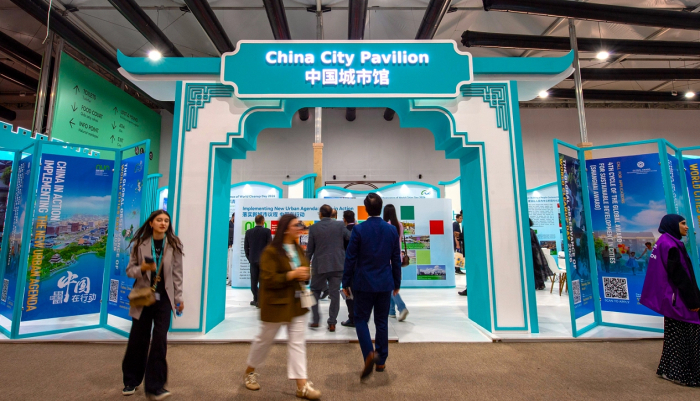
The Thirteenth UN World Urban Forum, held in Baku, proved to be much more than just a gathering of urbanists. It became a large-scale global platform where presidents, mayors, architects, environmentalists, business representatives, and representatives of international organizations jointly sought answers to the challenges of rapid urbanization, climate change, and social inequality. The Forum transformed into a living laboratory of urban innovations, a birthplace of concrete partnerships and policy decisions capable of defining the appearance of cities for decades to come.
China was represented at the forum exceptionally broadly — not only as a participant but also as one of the key drivers of the global urban agenda. As Xinhua notes, the Chinese delegation brought to the Baku platform the National Report on the Implementation of the New Urban Agenda, a document systematizing the country's policy approaches and practical results in the field of sustainable urban development. This presentation became not merely a showcase of national experience but a claim to the role of a methodological center for countries of the Global South. According to the Executive Director of UN-Habitat, Anaclaudia Rossbach, the report demonstrates how a people-centered approach enables the combination of urban renewal, "smart" innovations, and ecological transformation. Rossbach emphasized that China's experience in "green," inclusive, and digital urbanization holds particular value for countries of the Global South seeking adaptable development models. "I was impressed by how 'green' and 'blue' Beijing, Shanghai, and Weihai have become, from nature-based solutions to the large-scale deployment of renewable energy," she noted, referring to her trip to China in October 2024.
An important outcome of the Baku session was also the announcement of a series of upcoming UN-Habitat global events in China: World Cities Day 2026 will be held in Fuzhou (Fujian Province), World Cleanup Day in Shaoxing (Zhejiang), and the Global Conference on SDGs in Cities in Shanghai. As noted by Xinhua News Agency, these platforms, together with the Shanghai Award for Sustainable Urban Development, are designed to strengthen international knowledge exchange and the replication of proven solutions.
The People's Republic of China occupies a leading position in the world in terms of the scale of digital technology implementation in urban management and infrastructure. Particular attention is being paid to the transition from a technology-oriented model to human-centered and ecologically sustainable development.
In the context of rapid urbanization and growing urban populations, the concept of the "smart city" has become a crucial tool for modernizing the urban environment. According to international estimates, more than half of the world's population lives in cities, which creates significant pressure on transportation systems, the environment, housing and communal services, and public administration. Under these conditions, the use of information and communication technologies makes it possible to increase the efficiency of urban resource management and improve the quality of life for residents.
A "smart city" is generally understood as a comprehensive system for managing urban infrastructure based on the application of digital technologies, the internet, artificial intelligence, cloud computing, and big data analytics. The main goal of such a model is to create a safe, environmentally sustainable, and comfortable urban environment. China is one of the world leaders in implementing smart city projects. As of 2024, more than 900 pilot projects of various levels are being implemented across the country, making the PRC the largest platform for deploying digital urban technologies.
The systematic development of smart cities in China began after 2012, when the Ministry of Housing and Urban-Rural Development initiated a program of national pilot projects. State support became a crucial factor in the rapid development of digital infrastructure. During 2013–2015, the first three groups of pilot projects were approved, covering approximately 290 cities and districts. At this stage, the main emphasis was placed on implementing basic digital platforms, monitoring systems, and modernizing urban infrastructure. After 2015, smart city construction was integrated into China's key national strategies, including programs for the digital economy and innovative development. During this period, the active introduction of artificial intelligence, cloud technologies, 5G networks, and big data analytics systems began. The state began to view "smart cities" not only as a technological project but also as a tool for socio-economic transformation.
The Chinese model of the smart city is based on the large-scale use of digital technologies and centralized data management. One of the key elements has been intelligent monitoring and video surveillance systems that enable real-time situation analysis. Transportation management systems have acquired particular significance. One of the most well-known projects is "City Brain" in Hangzhou, implemented jointly with Alibaba. The system uses big data technologies and artificial intelligence to analyze traffic conditions, which has reduced traffic congestion by approximately 15%.
An important area of development has been the creation of digital twins of cities. In Shanghai and Xi'an, virtual models of the urban environment are used for predicting emergencies, planning development, and monitoring infrastructure. In Xi'an, AI systems are capable of monitoring the condition of bridges and road surfaces in real time. Simultaneously, telecommunications infrastructure is being actively developed. Shanghai is practically fully equipped with fiber-optic connectivity, and the central districts of the city have complete 5G network coverage. This creates the foundation for intelligent transportation systems, autonomous vehicles, and digital services.
Research shows that the level of smart city development in China remains uneven. The highest indicators are demonstrated by the country's largest economic centers, which possess a developed innovation base and significant investment resources. Beijing leads the rankings, distinguished by its high level of scientific and technological potential and concentration of research centers. Shanghai occupies second place, having received international recognition for the development of digital infrastructure and intelligent services. Among the most dynamically developing cities, Shenzhen also stands out, where energy-saving technologies, intelligent security, and automated urban environment management are being actively implemented. Suzhou and Guangzhou are also among the leaders.
The main factors for successful development are the availability of qualified personnel, investment in digital infrastructure, and state support. At the same time, less developed cities face a shortage of specialists, limited financial resources, and insufficient technological readiness. The current stage of development of Chinese smart cities is characterized by a transition from an exclusively technological model to the concept of sustainable and human-centered development. Increasing attention is being paid not only to management efficiency but also to the quality of life of residents. An important direction is the development of digital public services. In Shanghai, a unified public services portal provides access to more than 3,500 online services, which significantly simplifies citizens' interaction with government structures and helps reduce bureaucratic procedures. Significant attention is also being paid to environmental sustainability. Within the framework of the "sponge cities" concept, intelligent drainage, water purification, and permeable paving technologies are being implemented. One example is the "Lingang Starry Sky" park in Shanghai, capable of purifying up to 15,000 cubic meters of rainwater per day. The development of feedback channels between citizens and municipal structures is also becoming an important element of the "smart city." In Xi'an, an integrated public service platform processes millions of citizen appeals annually, ensuring a high level of user satisfaction.
China's experience demonstrates that the successful development of smart cities requires a comprehensive approach that combines technological innovation, state planning, and a focus on the needs of residents. The Chinese smart city model demonstrates high effectiveness in modernizing urban infrastructure, developing digital services, and improving management quality. At the same time, further development will depend not only on technological capabilities but also on the ability to ensure environmental sustainability, protection of personal data, and social inclusiveness. The future of the smart city is linked to the formation of an urban environment in which technology becomes a tool for improving the quality of human life, rather than an end in itself.
Gulnara Safarli

