
 Home
HomeFrom Termez to the Black Sea. Uzbekistan, Azerbaijan, and Georgia as Architects of New Eurasian Connectivity
-
 17 Jul 2026 16:02
-
 381
381
In recent years, the concept of international connectivity has become one of the key ideas defining the transformation of the geoeconomic architecture of Eurasia. If until relatively recently the development of transport corridors was viewed primarily as the construction of highways, railways, ports, and logistics terminals, today we are talking about the formation of a significantly more complex system of economic relations. Modern connectivity includes transport infrastructure, trade, investments, industrial cooperation, energy cooperation, digitalization, financial mechanisms, and coordinated state policies, turning individual states into mutually complementary elements of a single economic space.
Just a few years ago, the Middle Corridor was viewed mainly as an alternative route for cargo delivery between Asia and Europe. Today, it is gradually acquiring a qualitatively new significance, turning into the foundation for the formation of a unified geoeconomic space. This is the key meaning of the modern concept of connectivity, which lies not in the construction of individual transport facilities, but in the creation of a comprehensive system of sustainable development, where transport infrastructure, economy, energy, investments, and industrial cooperation form an interconnected architecture of the future Eurasia. The development of the Middle Corridor is gradually moving beyond the framework of an exclusively transport and logistics project. The competitiveness of the route is determined not only by the speed of cargo delivery between Asia and Europe, but also by the ability of the participating states to create joint value chains, coordinate investment policies, synchronize customs procedures, and form favorable conditions for the development of industry and international trade. Under these conditions, transport becomes merely the foundation for deeper economic integration.
In fact, a new geoeconomic axis is taking shape today, linking Tashkent, the Caspian Sea, Baku, Tbilisi, the Black Sea, and Europe. It is along this line that one of the most promising spaces of connectivity in Greater Eurasia of the 21st century is being formed. Central Asia gains a stable and diversified access to global markets, the South Caucasus strengthens its position as a key transit and investment region, and Europe acquires additional opportunities for developing trade and economic cooperation with the dynamically growing economies of the East.
Uzbekistan is one of the most consistent initiators of this approach. Tashkent pursues an active policy of forming an open Eurasian space, viewing Central Asia not as a peripheral region of the global economy, but as an independent center of international connectivity. This strategy is based on the idea of turning the region into a space of cooperation that unites the East and the West through modern transport, trade, investment, and production links. This approach received conceptual development within the framework of the Termez Dialogue, which is gradually becoming one of the leading international platforms for discussing regional connectivity issues. Today, it is no longer just a meeting place for politicians, experts, and business representatives, but a platform where a new vision of regional cooperation is being formed. It is based on the understanding that connectivity means not just building roads, railway lines, or ports, but creating an enduring model of sustainable economic development based on expanding trade, attracting investments, developing industrial cooperation, and forming a unified economic space.
In this new geoeconomic configuration, Azerbaijan and Georgia are no longer viewed exclusively as transit states. They are becoming crucial elements of a unified Eurasian system connecting Central Asia with European markets. Azerbaijan occupies a special place in this system. Thanks to its geographical location and extensive modernization of transport infrastructure, Azerbaijan has turned into the central link of the Middle Corridor. The international sea trade port in Alyat, the development of the railway network, the expansion of logistics terminals, and a consistent state policy on the development of Transcaspian transportation ensure the connection of Central Asia with the South Caucasus. Alongside its transport function, Azerbaijan is gradually strengthening its role as one of the key energy centers of the region. The development of international energy projects, natural gas and electricity exports, and cooperation in renewable energy create additional prerequisites for strengthening the role of the South Caucasus in the new architecture of Eurasian connectivity.
Georgia plays an equally important role. It provides one of the western exits of the Middle Corridor to the Black Sea, European markets, and global maritime communications. The ports of Poti and Batumi are already vital elements of the Transcaspian transport system, and the construction of the deepwater port of Anaklia has the potential to qualitatively change the logistics capabilities of the entire region. It is indicative that the Georgian government today views Anaklia not merely as an infrastructure facility of national importance. The new implementation model of the project presented in July 2026 provides for keeping the port in full state ownership while attracting international operators to manage individual terminals on the basis of extended leases. This approach reflects the desire to simultaneously maintain state control over strategic infrastructure and ensure the participation of leading global operators in the development of one of the key facilities of the Middle Corridor.
Thus, Uzbekistan, Azerbaijan, and Georgia are gradually forming a mutually complementary system where each country performs its own strategic function. Uzbekistan is becoming the largest generator of industrial growth and export cargo flows in Central Asia. Azerbaijan provides the central transit and energy link of the route, connecting the Caspian and Caucasian segments of the Middle Corridor. Georgia, in turn, opens the entire system to the Black Sea, European markets, and global maritime shipping. It is this combination that makes it possible to form not just separate transport routes, but a unified space of connectivity between Central Asia, the South Caucasus, and Europe.
No matter how large the infrastructure projects are, their enduring effectiveness is largely determined by the level of trust between states, the consistency of foreign policy priorities, and the presence of sustainable mechanisms of interstate cooperation. This is why the consistent strengthening of strategic relations between Uzbekistan, Azerbaijan, and Georgia has acquired particular importance in recent years. The totality of signed agreements allows us to speak about the formation of a new political architecture of regional cooperation. Strategic relations between Uzbekistan, Azerbaijan, and Georgia are already moving beyond the framework of bilateral interaction, gradually forming a system of trilateral connectivity that provides the political foundation for the development of the Middle Corridor and the formation of a unified geoeconomic space. The first important step was the signing of the Treaty on Allied Relations between Uzbekistan and Azerbaijan in Tashkent on August 23, 2024. The document established the highest level of political interaction between the two states and significantly expanded the framework of cooperation in the fields of economy, transport, energy, industrial cooperation, security, and international politics. A special place in the treaty is occupied by the development of the Middle Corridor, which is viewed not only as a transport route but also as one of the key factors of enduring economic convergence between Central Asia and the South Caucasus.
The next stage was the further strengthening of the strategic partnership between Azerbaijan and Georgia. On May 18, 2026, in Baku, the parties confirmed the strategic nature of their bilateral relations by signing a package of agreements in the fields of transport, energy, economy, and connectivity. The joint communiqué pays special attention to the development of the Middle Corridor, the modernization of transport infrastructure, the expansion of energy cooperation, and the enhancement of the role of the railway connecting Baku, Tbilisi, and Kars as one of the key elements of Eurasian transportation.
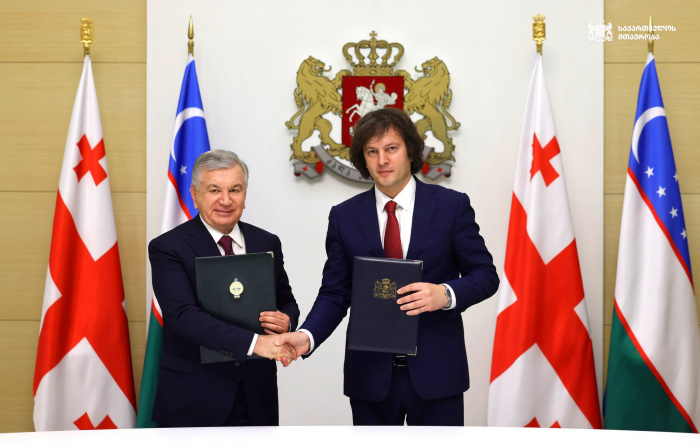
The logical completion of the formation of this political architecture was the signing of the Declaration on the Establishment of a Strategic Partnership between Uzbekistan and Georgia on July 3, 2026, during the state visit of the President of Uzbekistan, Shavkat Mirziyoyev, to Tbilisi. The document provides for deepening cooperation in the fields of transport, trade, investments, digitalization, logistics, and customs administration. Of particular importance is the consolidation of the course toward the active use of Georgian transport infrastructure and Black Sea ports to expand the trade ties of Uzbekistan with European markets.
If we consider these documents collectively, it becomes obvious that we are not talking about three independent bilateral agreements. They form a unified political foundation for a new regional model of cooperation, uniting Central Asia and the South Caucasus into a single space of strategic partnership. Within this model, each country performs a mutually complementary function. Uzbekistan acts as the largest economic and demographic center of Central Asia, forming a significant part of the cargo base of the Middle Corridor thanks to the sustainable growth of industry, the development of exports, and the expansion of the domestic consumer market. Azerbaijan is the central transport and energy hub of the route, ensuring transit across the Caspian Sea, the functioning of modern logistics infrastructure, and the development of international energy projects. Georgia, in turn, becomes the western gateway of this system, providing access to the Black Sea, European markets, and global maritime shipping. It is the interaction of these three states that is gradually turning the Middle Corridor from a set of separate transport projects into a unified logistics system covering the route from Central Asia to the Caspian Sea, Azerbaijan, Georgia, the Black Sea, and Europe.
A characteristic feature of the current stage of the Middle Corridor is the growing alignment of interests of leading external players. The European Union views transport connectivity as a tool for deepening economic cooperation with Central Asia and the South Caucasus. China is consistently developing Eurasian routes within the framework of the Belt and Road Initiative. Turkey is strengthening the Transcaspian direction as one of the priorities of its regional policy, while the Persian Gulf states are actively investing in the transport, energy, and logistics infrastructure of Eurasia. However, in essence, a new geoeconomic configuration of Eurasia is being formed today, and its distinguishing feature is the transition from the competition of individual transport routes to the creation of a unified space of connectivity, where transport, energy, industry, investments, digital technologies, and trade are viewed as mutually complementary elements of a common system of sustainable development. This is the main content of the current stage of development of the Middle Corridor and the strategic partnership of Uzbekistan, Azerbaijan, and Georgia.
GSR

