
 Home
Beijing Shapes a New Agenda for International Media Cooperation
-
 10 Nov 2026 11:13
-
 97
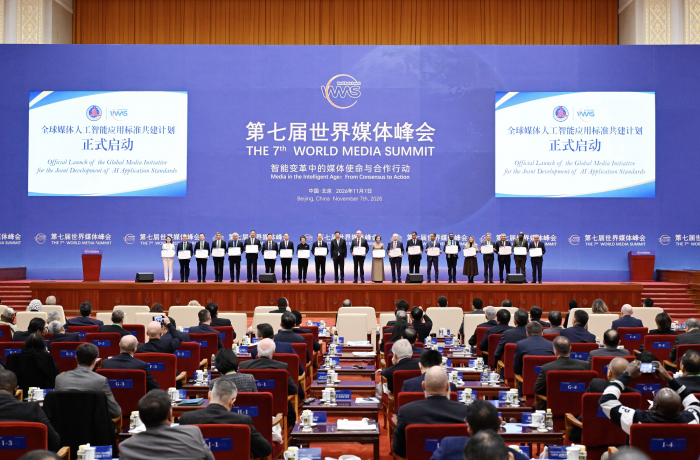
From November 5 to 8, 2026, Beijing became the center of an international dialogue on the future of global journalism. The Chinese capital hosted the 7th World Media Summit, bringing together leaders of major news agencies, representatives of media organizations, think tanks, government institutions, and international organizations. The official opening ceremony took place on November 7 at the Great Hall of the People. The summit was jointly organized by Xinhua News Agency and the Beijing Municipal People's Government. The event brought together nearly 500 representatives from almost 330 organizations across 112 countries and regions, including representatives of the United Nations and other international institutions.
The scale of the forum and the composition of its participants demonstrate that the World Media Summit has long moved beyond the format of a traditional professional gathering of journalists. Today, it serves as an international platform for discussing not only information dissemination technologies but also trust between nations, information security, mutual understanding among peoples, and the role of the media in shaping the contemporary system of international relations. For the Caucasus, where public opinion is often influenced by complex historical, political, and geopolitical circumstances, such an agenda is particularly significant.
The World Media Summit was established in 2009 at the initiative of nine leading international media organizations. Its inaugural meeting was also held in Beijing, while the previous, sixth summit took place in Urumqi in 2024. Over the past seventeen years, this initiative has developed into one of the most representative international forums dedicated to cooperation among the world's media organizations. Notably, this year's summit coincided with the 95th anniversary of Xinhua News Agency, which over the decades has become one of the world's largest news agencies and an important participant in the international media landscape.
The presence of leaders from major media organizations representing different political and cultural environments added particular significance to the event. Beijing brought together representatives of China's Xinhua News Agency, the American Associated Press, Britain's Reuters, France's Agence France-Presse, the American television network CNN, Russia's TASS, and numerous news agencies from Asia, Africa, the Middle East, and Latin America. Their participation in a common professional dialogue is important in itself. At a time of growing international tensions, leaders of organizations representing very different information and political traditions had an opportunity to discuss common challenges facing the industry and explore areas for cooperation.
At the opening ceremony, Li Shulei, a member of the Political Bureau of the Communist Party of China Central Committee and head of its Publicity Department, delivered a keynote address. Yin Li, also a member of the Political Bureau and secretary of the CPC Beijing Municipal Committee, attended the event. Xinhua News Agency President Fu Hua emphasized the need to deepen professional cooperation and make broader use of modern technologies while maintaining public trust in the media.
The central theme of the summit focused on the role of the media in the intelligent age and the transition from agreement on common principles to concrete joint action. This approach reflects the profound changes taking place in global journalism. Artificial intelligence is already widely used in information processing, translation, analysis of large datasets, preparation of multimedia content, and news distribution. At the same time, the development of these technologies creates entirely new challenges related to information reliability, the spread of fabricated images and videos, personal data protection, and the preservation of journalists' professional responsibility.
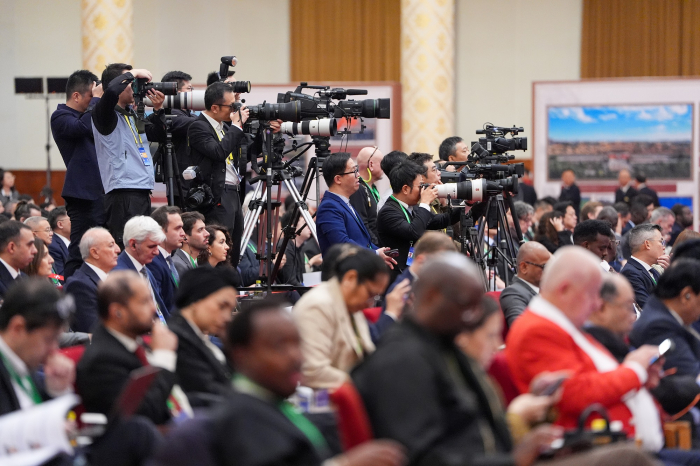
The forum featured plenary sessions, thematic discussions, meetings of international news agency executives, technology presentations, and events highlighting China's modernization experience. Discussions addressed access to artificial intelligence for countries at different levels of technological development, media cooperation in strengthening international security, the use of digital technologies in dialogue between civilizations, and prospects for improving global information governance. Participants were also introduced to Beijing's latest achievements and emerging technological innovations.
One of the notable demonstrations was Xinhua News Agency's presentation of humanoid robotic news presenters developed using artificial intelligence technologies. Such innovations illustrate how rapidly the technological capabilities of modern journalism are evolving. However, summit participants repeatedly emphasized that no technological solution can fully replace professional responsibility, critical thinking, or a journalist's independent work with information sources.
Against this background, the adoption of the Beijing Consensus of the 7th World Media Summit became one of the most important outcomes of the gathering. The document reflects the participants' shared interest in developing international media cooperation, promoting the responsible application of artificial intelligence, expanding access to modern technologies, and improving the quality of information exchange. Particular attention was given to combating misinformation, preserving journalistic objectivity, and creating conditions for constructive dialogue between different societies and cultures.
The Beijing Consensus is based on the recognition that technological advances should not be accessible only to the largest international media corporations with substantial financial and technical resources. Opportunities to use artificial intelligence, advanced analytical tools, and digital platforms should also be expanded for media organizations in smaller countries. Otherwise, the technological divide risks developing into even deeper information inequality, in which a limited number of major organizations determine a significant part of the international information agenda.
Another important practical initiative was the announcement of an international mechanism for the joint development of standards governing the use of artificial intelligence in the media. Xinhua News Agency initiated the project, with the initial group bringing together 22 Chinese and foreign organizations. These included Russia's TASS, Malaysia's Bernama news agency, South African media organizations, China's People's Daily and China Media Group, as well as representatives of international news agency associations.
Over approximately two years, participants in the initiative are expected to jointly develop and test standards for the use of artificial intelligence in journalism. The work will address the protection of information authenticity, data security, compliance with professional ethics, and the preservation of public trust in news reporting. The creation of an international database on the application of artificial intelligence in the media industry is also envisaged. Importantly, the initiative currently concerns the development of cooperation mechanisms rather than the introduction of already established, binding international regulations.
For the countries of the Caucasus, the significance of these decisions extends far beyond the technological modernization of newsrooms. The region is characterized by considerable ethnic, linguistic, cultural, and political diversity. Its information environment is closely connected with issues of national security, territorial integrity, historical memory, and international relations. Under such circumstances, journalism can either contribute to greater mutual understanding or intensify existing disagreements.
The reliability of information is becoming particularly important. Modern technologies make it possible to create realistic video recordings, imitate the voices of political figures, circulate fabricated statements, and construct misleading impressions of actual events. In regions that have experienced armed conflicts and prolonged periods of political confrontation, such tools may pose a serious threat to public stability. Even a single falsified piece of content that spreads widely on social media can provoke a strong public reaction and complicate relations between countries.
In the broader international context, the World Media Summit demonstrated China's intention to play a prominent role not only in the global economy and technological development but also in discussions concerning the future principles of international information exchange. Beijing proposes using international media platforms to expand dialogue, share professional experience, and jointly seek responses to the challenges of the digital age. At the same time, the participation of representatives from major Western news agencies shows that, even amid serious political disagreements, the shared professional interests of global journalism can provide a foundation for cooperation.
For the countries of the South Caucasus, this approach creates additional opportunities to strengthen their international presence. Developing direct contacts with Chinese and other foreign media organizations can help national media reach wider audiences, provide more comprehensive coverage of economic and humanitarian projects, and participate in shaping new professional standards. It is particularly important that the countries of the region act not merely as consumers of international information but also as independent participants in global information exchange.
The World Media Summit demonstrated that the future of journalism is no longer determined solely by the speed of news delivery or the size of its audience. Information reliability, the quality of analysis, technological accessibility, the ability to engage in professional dialogue, and readiness for international cooperation are coming to the forefront. These principles are universal, but they are especially relevant to the Caucasus, which is undergoing an important period of political and economic transformation.
The Beijing Consensus and the initiatives presented at the summit could provide a foundation for further cooperation among media organizations worldwide. However, their real significance will be measured not by the number of declarations adopted but by the concrete results of joint efforts. For media organizations across the Caucasus, this means an opportunity to draw on international experience to improve professional standards in journalism, develop modern technologies, expand international contacts, and foster a more responsible information environment.
Ultimately, the significance of the 7th World Media Summit for the South Caucasus lies in the opportunity to reconsider the role of information in regional development. While political agreements create conditions for cooperation between states, and transport and economic projects connect their material interests, professional journalism can help societies understand these processes. Without trust, reliable information, and continuous dialogue, even the most promising regional initiatives may encounter misunderstanding and mutual suspicion.
Therefore, the central message of the Beijing forum, the transition from common principles to practical action, has very concrete implications for the Caucasus. The region needs not only new roads, ports, and trade routes but also modern information networks that enable societies to better understand one another and recognize the real opportunities offered by cooperation. If the achievements of China's technological modernization, international professional expertise, and the intellectual potential of the Caucasian countries can be brought together within a framework of sustainable cooperation, the information sector could become an important factor in strengthening trust, regional stability, and long-term development.
GSR

