
 Home
HomeSCO and the Belt and Road Initiative as a New Architecture of Eurasian Cooperation
-
 04 Sep 2026 09:52
-
 289
289
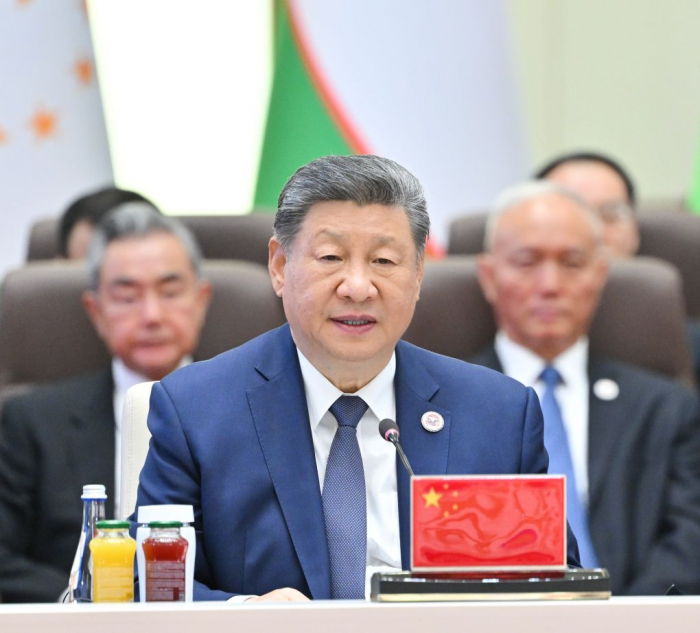
In his speech at the 26th meeting of the Council of Heads of State of the SCO in Bishkek, Xi Jinping outlined an important direction that could significantly influence the further evolution of the organization. The discussion focuses on closer alignment of the SCO mechanisms with the Belt and Road Initiative and the Global Development Initiative. Essentially, China proposes gradually integrating the political, economic, and infrastructural capabilities of these formats within a broader model of Eurasian cooperation. Special attention is deserved by the fact that Xi Jinping named the SCO space as one of the priority directions for high quality construction of the Belt and Road. This is an important moment, since until now the SCO and the Belt and Road were more often perceived as parallel developing formats of Chinese policy. Now the aspiration of Beijing to combine their capabilities is becoming increasingly noticeable.
Such alignment can significantly expand the practical content of the SCO. The organization provides an already established multilateral political platform uniting a significant part of Eurasia, while the Belt and Road possesses an extensive set of transport, infrastructural, investment, and production mechanisms. Their closer interaction potentially allows moving from political coordination to the implementation of specific projects directly linking the economies of the SCO states. The Belt and Road already has a huge practical base. These are railways and highways, ports, energy facilities, industrial zones, logistics centers, investment projects, and trade routes connecting China with Central Asia, the South Caucasus, the Middle East, and Europe. The SCO, in turn, can provide this cooperation with what a separate infrastructural project cannot give. It is a permanent political platform where states can coordinate interests, discuss problems, form common approaches, and gradually create mechanisms for long term interaction. As a result, an interesting structure begins to take shape, in which the Belt and Road provides infrastructure and economic content, the SCO creates the political and institutional environment, and the Global Development Initiative sets a broader understanding of the goals of such cooperation.
For China, this opens the opportunity to gradually link separate projects into a single system. A railway, port, or logistics center ceases to be an isolated object and becomes part of a larger economic network, around which production, processing, trade, digital services, energy, and new technological projects can emerge. That is exactly why it is important that, alongside transport and infrastructure, Xi Jinping speaks about the SCO Digital Economy Forum and the SCO Agricultural Exhibition. This shows the aspiration of China to gradually fill the cooperation with specific sectoral directions. If this approach receives further development, a whole network of specialized platforms can form around the SCO, linking states not only at the level of presidents, governments, and ministries, but also at the level of enterprises, technological companies, the agricultural sector, universities, research centers, and regions. This is perhaps where the most interesting prospect of combining the SCO and the Belt and Road lies. Eurasian integration in the Chinese understanding is gradually ceasing to be reduced to building routes from China to the West. The next stage could be the economic saturation of these routes and the creation of sustainable production, technological, and trade ties around them. And then the significance of a specific country will be determined not only by whether Chinese cargo passes through its territory. It will be much more important what place this country can take in the economic system forming around these routes.
One of the most interesting and perhaps most profound proposals by Xi Jinping was the creation of an international cooperation center for the implementation of artificial intelligence for the SCO countries. The very fact of the emergence of such an initiative deserves special attention. Artificial intelligence is ceasing to be a secondary technological topic for the SCO and is gradually turning into an independent direction of cooperation. And this is happening right now, when AI is becoming one of the main factors of global economic and technological competition. For China, which is actively developing its own technological base and strives to expand the practical application of artificial intelligence, the creation of such a center can become an opportunity to form a broader system of technological interaction around the SCO. For many other states of the organization, the interest can be even more practical. Not all SCO countries have their own large technological companies, computing capacities, specialists, and financial resources necessary for the independent development of complex artificial intelligence systems. Cooperation within the SCO can give them access to technologies, personnel training, and practical solutions that can be used in industry, agriculture, logistics, energy, medicine, education, public services, and digital trade. Moreover, the significance of such an initiative should not be measured only by the number of joint projects. In the long run, the formation of a common technological space may turn out to be much more important, where countries gradually begin to use compatible digital solutions, exchange data, train specialists, and develop approaches to the application of new technologies.
No less interesting is the proposal to create a center for economic cooperation of border crossing points between China and the SCO in Tianjin. At first glance, this initiative is significantly more modest than the project in the field of artificial intelligence. In practice, it concerns one of the most painful problems of land trade in Eurasia. It is possible to build new railways, highways, and logistics terminals, but if the cargo is then delayed at the border for hours or days due to various documents, procedures, standards, and the lack of preliminary information exchange, a significant part of the advantages of the new infrastructure is lost. Therefore, work with border crossing points can have strategic significance for the entire Eurasian space. If the new center engages in the digitalization of customs procedures, preliminary exchange of information about cargo, electronic documents, compatibility of information systems, unification of certain procedures, and the introduction of modern logistics technologies, this can directly affect the speed and cost of transportation between countries. This is especially important for land routes between China and Europe, where a single cargo can sequentially cross several state borders. In such conditions, the win is given not only by a new railway but also by reducing the time of passing each border. For Central Asia, the Caspian region, and the South Caucasus, this issue is of particular importance. The competitiveness of the route from China through Central Asia and the Caspian to Azerbaijan, Georgia, Turkey, and Europe depends not only on the kilometers of railway tracks and the capacity of ports. It depends on how quickly and predictably the cargo can pass the entire chain from the Chinese sender to the final recipient.
Xi Jinping also noted that China is ready to jointly implement one hundred scientific and technological cooperation projects with the SCO countries over the next three years. And here, the most important thing will not be the number of projects themselves, but their content and geography. If they are connected with industry, energy, artificial intelligence, agriculture, logistics, digitalization, and green technologies, the SCO states will receive a unique opportunity to gradually move from trading finished goods to the joint creation of technologies and productions.
In total, these three proposals clearly show a change in the very nature of the Chinese approach to the SCO. It is no longer just about statements on the need to develop cooperation. China proposes creating specific institutions through which this cooperation should work in practice. The artificial intelligence center can be responsible for the technological direction. The center for cooperation of border crossing points is capable of dealing with practical issues of goods movement and border digitalization. One hundred scientific and technological projects can fill this system with specific content. If these mechanisms actually start working, then one of the main results of the next stage of SCO development could be the emergence within the vast Eurasian space of not only new transport routes but also a gradually forming common technological infrastructure. And then the question for each state will no longer be whether it wants to cooperate with China in the field of new technologies. Much more important will be something else. What place it can take in the system being created and whether it can use access to Chinese technologies to develop its own economy, personnel, and production, rather than remaining exclusively a market for finished technological solutions.
GSR

