
 Home
HomeChina's Environmental Code: From Xi Jinping's Vision to a New Model of Global Environmental Governance
-
 18 Aug 2026 11:10
-
 474
474
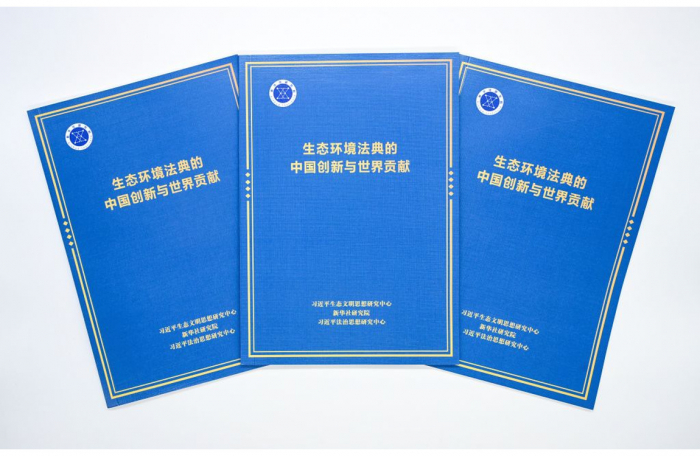
On August 15, 2026, the Environmental and Natural Resources Code of the People's Republic of China came into effect. On the very same day, the National Analytical Center of the Xinhua News Agency released a special report titled "Chinese Innovations and Global Contributions of the Environmental Code." The coincidence of these two events is highly symbolic. China aims to demonstrate that this is not merely the adoption of yet another environmental protection law, but the culmination of a prolonged transition: from an ecological vision to a national strategy, from strategy to an institutional framework, and finally, from a fragmented system to a unified, codified body of law. The new report was prepared by a joint research team comprising the Research Center for Xi Jinping Thought on Ecological Civilization, the Xinhua Institute, and the Research Center for Xi Jinping Thought on the Rule of Law. The authors examine the historical prerequisites and significance of the Code, its legislative innovations and Chinese characteristics, as well as its global value and potential contributions to global environmental governance.
The report emphasizes a crucial point: this new document is the world's first code explicitly named the "Environmental and Natural Resources Code," and its adoption marks the transition of China's environmental legal system into an era of codification. However, the true significance of this development is difficult to grasp if one looks at the Code in isolation. Its ideological foundation has been taking shape in China for over two decades and is inextricably linked to President Xi Jinping's concept of ecological civilization. The key to understanding China's ecological approach lies in Xi's words: "We need both lucid waters and lush mountains, and gold and silver mountains. We would rather have lucid waters and lush mountains than gold and silver mountains, for lucid waters and lush mountains are themselves gold and silver mountains." It was with this very quote that the previous foundational Xinhua report, "Lucid Waters and Lush Mountains Paint a Beautiful Picture: China's Innovations and Global Significance in Building an Ecological Civilization," began.
This concept was first articulated by Xi Jinping on August 15, 2005, during his visit to Yucun Village in Anji County, Zhejiang Province, while he was serving as the Party Secretary of the province. Yucun has since become a quintessential model of China's ecological transformation. The village once derived its income from exploiting mountain resources, but the economic gains came at the cost of devastated mountains, polluted streams, and severe dust pollution. After abandoning the old model and undertaking ecological restoration, the area began to develop new industries based on its natural and recreational assets. It was here that the principle was born, which later became the cornerstone of China's entire environmental policy: nature is not an obstacle to economic development, and properly utilized natural capital can itself become a source of growth.
The new Xinhua report explicitly states that the Environmental Code elevates the successful practices of building an ecological civilization, institutional innovations, and China's accumulated governance experience to the level of a legal system. This is perhaps the most vital thesis of the document. In practice, this process has unfolded sequentially—from the formulation of the idea itself to its transformation into state policy, then to the creation of economic mechanisms and institutions, the development of relevant legislation, and finally, the consolidation of key norms into a single Environmental Code. Therefore, it should be viewed not as the starting point of China's environmental reform, but as the logical outcome of its long-term institutional evolution.
At the heart of the Code is the aspiration to reconcile the interests of humanity and nature, economic development and environmental protection, and the improvement of public welfare with China's international environmental responsibilities. Xinhua directly links this approach to Xi Jinping's thoughts on ecological civilization and the rule of law.
One of the key principles of the Chinese model was articulated by Xi Jinping: "Protecting the ecological environment means protecting productivity, and improving it means developing productivity." This approach overturns the traditional view of ecology as an additional cost to the economy. A favorable environment can attract investment, technology, and skilled talent, while environmental requirements push enterprises toward modernization and innovation. This is closely tied to China's concept of "new quality productive forces," which are largely becoming green thanks to low-carbon technologies and new production models. Consequently, ecological and industrial modernization in China are viewed as a unified process, where environmental protection and economic development mutually reinforce each other.
Xinhua cites a substantial array of indicators demonstrating the scale of the ongoing changes. Since 2012, China's economy has grown at an average annual rate of over 6.1%, while energy consumption has increased by only about 3.3% per year. In the first four years of the 14th Five-Year Plan, energy consumption per unit of GDP fell by a cumulative 11.6%, which, according to the report, corresponds to a reduction in CO2 emissions of approximately 1.1 billion tons. Around 930 million tons of China's steelmaking capacity have undergone comprehensive or key upgrades to achieve ultra-low emissions—accounting for roughly 80% of national crude steel capacity. China has also established the world's largest emissions trading market for greenhouse gases. By 2024, the share of non-fossil fuels in the country's energy consumption reached 19.7%, while the share of coal dropped to 53.2%. By the end of May 2025, installed renewable energy capacity had reached 2.09 billion kW, more than doubling the figure at the end of the 13th Five-Year Plan. In fact, every third kilowatt-hour of electricity generated in the country now comes from green sources.
China's ecological transformation is already reflected in concrete metrics. In 2024, the average concentration of PM2.5 in major cities dropped to 29.3 micrograms per cubic meter, and the proportion of surface water of good quality reached 90.4%. The Yangtze River has maintained Class II water quality for five consecutive years, and the Yellow River for three. The proportion of high-quality coastal waters has risen to 83.7%, and the country's forest coverage has exceeded 25%. According to the report, China accounts for about a quarter of the global increase in greened areas, and since 2012, the carbon intensity of its economy has decreased by more than 35%. Beijing presents these results as confirmation of one of the core principles of its environmental policy: economic growth and environmental improvement need not contradict each other, but can be mutually reinforcing.
China is gradually shifting from combating specific types of pollution to comprehensive environmental management. Instead of addressing air, water, waste, and industrial emissions in isolation, environmental policy now encompasses the entire natural and economic system. This approach integrates industry, energy, climate policy, and ecosystem restoration, extending to urban and rural areas, rivers, forests, seas, and agricultural land. Environmental requirements now accompany the entire economic cycle—from planning and construction to production, consumption, waste recycling, and liability for environmental damage. It is this comprehensive principle of environmental management that is now being systematically enshrined in the Environmental Code.
One of the most intriguing features of the Chinese model is the attempt to make nature conservation economically viable. To this end, three interconnected mechanisms are utilized. The first is based on ecological compensation. Regions that preserve forests, water resources, and other ecosystems receive financial support. Between 2013 and 2023, such transfers from the central budget grew from 42.3 billion to 109.1 billion yuan, with the total volume approaching 790 billion yuan. Over 20 provinces have already implemented inter-regional compensation mechanisms, including in the Yangtze and Yellow River basins. The second mechanism allows ecological advantages to be converted into a source of income through organic farming, eco-tourism, regional brands, geographical indications, and the processing of natural raw materials.
By 2024, China had about 78,000 green, organic, and specialized agricultural products with geographical indications, and 1,597 villages and towns had been designated as key rural tourism destinations. The third mechanism links ecology directly to the financial market through green loans and bonds, investment funds, carbon credits, and natural resource rights. By the end of 2024, the volume of green loans had reached 36.6 trillion yuan, and the cumulative issuance of green bonds had exceeded 4.1 trillion yuan. Thus, in the Chinese model, natural resources are gradually acquiring economic and financial value. Nature conservation is no longer viewed solely as a state expenditure, but as a source of investment, income, and regional development.
The Chinese model views ecological civilization not only as a system of laws and economic mechanisms but also as an integral part of societal culture. This approach draws on the traditional Chinese philosophy of harmony between humanity and nature, positing that sustainable environmental behavior cannot be fostered through prohibitions and fines alone. Therefore, environmental policy is gradually permeating daily life through water and energy conservation, the reduction of food waste and excessive packaging, the restriction of single-use products, and the development of green transportation. In 2024, the number of new energy vehicles in China reached 31.4 million, more than a fivefold increase compared to the end of the 13th Five-Year Plan, and the share of new energy buses exceeded 80%. Thus, ecological modernization in China entails not only industrial and legislative changes but also a gradual shift in societal lifestyles and consumer habits.
In the Xinhua report, the Environmental Code is viewed not merely as domestic legislation but as part of a broader Chinese concept of global environmental governance. Its entry into force is presented as a contribution of "Chinese wisdom" to solving environmental challenges common to all humanity. Behind this lies a larger trend: China is gradually transitioning from absorbing international environmental experience to creating its own legal and institutional solutions, which it is ready to share with other countries. In this sense, the Code marks not a beginning, but a new stage in the already lengthy process of enhancing China's role in global environmental policy.
China is steadily seeking to move from participating in international environmental politics to playing a more active role in shaping its principles and mechanisms. Back in 2013, speaking at University in Kazakhstan, Xi Jinping introduced the concept that "lucid waters and lush mountains are invaluable assets" to an international audience, which subsequently became a prominent part of China's foreign environmental agenda. Today, Beijing links this approach to the UN Sustainable Development Goals, the Paris Agreement, South-South cooperation, and the Belt and Road Initiative. The Chinese model may be of particular relevance to developing countries, which are encouraged not to choose between economic growth and the environment, but to seek a model where green technologies, investment, and environmental protection themselves become drivers of development.
Xi Jinping's Role in China's Climate Diplomacy
Xi Jinping plays a pivotal role in shaping China's climate course. Beijing reaffirms its commitment to the Paris Agreement and its goals of peaking carbon emissions before transitioning to carbon neutrality. At the same time, China upholds the principle of "common but differentiated responsibilities and respective capabilities," which is especially crucial for the Global South. Its essence lies in the fact that developed countries and those still industrializing cannot bear the same climate burdens and obligations. China has already developed climate cooperation with more than 40 countries and actively participates in international negotiations, including the climate conferences in Dubai and Baku. Thus, the environmental agenda has become a vital component of Chinese diplomacy and a key avenue for Beijing's engagement with the developing world.
China's global influence in the environmental sphere is determined not only by diplomacy but also by the scale of its industry. According to data from the International Renewable Energy Agency cited in the report, of the 585 GW of new renewable energy capacity commissioned globally in 2024, nearly 64% was in China. For ten consecutive years, China has ranked first in the world in installed solar and wind power capacity, and its contribution to the global increase in non-fossil energy consumption exceeds 45%. Chinese companies are involved in green energy projects in over 100 countries and regions. A massive domestic market and mass production simultaneously drive down the cost of green technologies. Over the past decade, the global cost of wind power has fallen by more than 60%, and solar power by over 80%. The report attributes a significant portion of this progress to Chinese technology, manufacturing, and engineering solutions. Today, China's environmental and industrial policies are becoming ever more intertwined. The domestic green transition creates economies of scale, lower technology costs facilitate their entry into global markets, and this, in turn, accelerates the global energy transition.
China also aspires to play a more prominent role in shaping international environmental rules. One example is the COP15 Conference of the UN Convention on Biological Diversity, chaired by China, which resulted in the adoption of the Kunming-Montreal Global Biodiversity Framework. It mandates the protection of at least 30% of land and ocean by 2030. Beijing has also established the Kunming Biodiversity Fund with an initial contribution of 1.5 billion yuan, with its projects already covering 15 developing countries. China participates in the implementation of the Montreal Protocol, negotiations to combat plastic pollution, and international wetland conservation programs. Thus, China is gradually moving from merely complying with existing environmental norms to actively participating in the formulation of international rules and mechanisms for global environmental governance.
The Green Belt and Road
The environmental agenda is becoming an integral part of the Belt and Road Initiative, gradually shaping the concept of a Green Silk Road. It encompasses renewable energy projects, green finance, environmental infrastructure, conservation corridors, scientific cooperation, and technology transfer. To achieve this, China utilizes cooperation formats with ASEAN, the Lancang-Mekong countries, Africa, and South-South interaction mechanisms. According to the report, various Chinese environmental programs already cover more than 80 countries. Beijing intends to expand the transfer of green technologies and experience, raise environmental standards for overseas projects, and align this work with the implementation of the UN 2030 Agenda. As a result, the Green Belt and Road is gradually becoming one of the instruments through which China exports its own experience in ecological modernization to international economic cooperation.
The Chinese report views the EU's environmental transformation not merely as a source of competition. The authors draw parallels between the Chinese concept of ecological civilization and the European Green Deal. Despite differences in political and economic models, both sides link modernization to green technologies, the energy transition, and the strengthening of environmental standards. As noted by American economist Jeremy Rifkin, cited in the report, China's ecological civilization and the European Green Deal are taking different paths but are largely moving toward a common goal. Therefore, the green transition simultaneously creates space for China-EU cooperation and intensifies competition in technology, industry, and energy.
The significance of the Code is gradually extending beyond environmental protection policy.
Environmental requirements are increasingly influencing international trade, investment, and industrial competition. The carbon footprint of products, the origin of energy, raw material recycling, environmental certification, and the sustainability of supply chains are becoming crucial conditions for access to major markets. By creating a unified environmental legal framework for the world's largest industrial economy, China is simultaneously elevating the global importance of its own standards. Foreign companies must take them into account in the Chinese market, and Chinese enterprises will incorporate some of these requirements into their international investment and infrastructure projects. Consequently, the Environmental Code is not only of domestic importance. Along with the spread of Chinese technologies, investments, and green infrastructure, it has the potential to gradually enhance China's influence on the formation of environmental and technical standards for the global economy.
GSR

