
 Home
HomeChina and the Caucasus: From Transit Corridors to Economic Development and Social Well-Being
-
 15 Oct 2026 16:03
-
 173
173
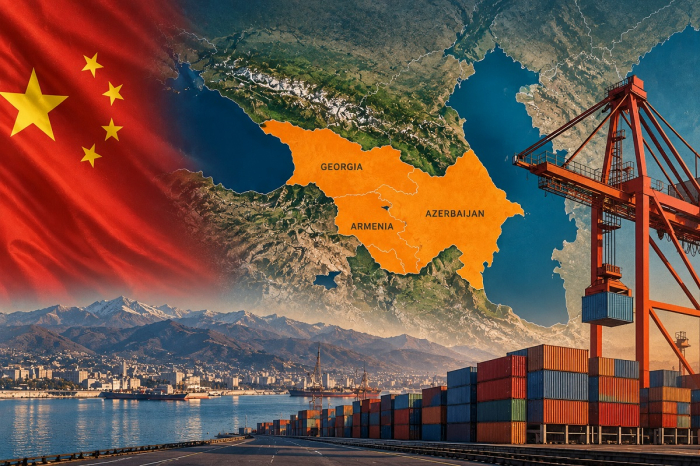
Amid the changing architecture of the global economy, the Caucasus is gaining increasing importance as a region connecting China, Central Asia, and Europe. The development of international transport routes, expanding trade relations, and growing interest from Chinese businesses are opening up new economic opportunities for the countries of the region. Yet beyond large-scale infrastructure projects and investment agreements lies a far more important question: will these developments fundamentally transform the economic structure of the Caucasus and, above all, deliver tangible benefits to its people?
Today, Georgia and other countries of the region face the challenge of doing more than simply capitalizing on their geographical location. They must turn this advantage into a foundation for long-term economic development. This means building domestic industries, introducing modern technologies, developing agriculture, creating new jobs, and improving living standards. In this respect, cooperation with China could become an important driver of economic transformation. Its success, however, will depend less on the volume of capital attracted than on the ability of the Caucasian countries themselves to define their own priorities and ensure that economic growth translates into greater prosperity for society.
Over the past several decades, China has demonstrated one of the most remarkable examples of socioeconomic transformation in modern history. A country that, until relatively recently, faced widespread poverty and significant constraints on industrial development has emerged as one of the world's leading economic and technological powers. According to official Chinese figures, approximately 800 million people have been lifted out of extreme poverty since the beginning of the country's reform and opening-up policies. This achievement was the result of sustained government policies and large-scale investment in infrastructure, industry, education, scientific research, and technological development.
A distinctive feature of China's experience is that economic growth was viewed not merely as an increase in production and capital accumulation, but also as a means of transforming society on a vast scale. The state retained an active role in setting strategic development priorities, combining market mechanisms with long-term planning and investment in the national economy.
This experience is particularly relevant to the Caucasus, where economic reforms over recent decades have not always been accompanied by comparable industrial development, reductions in regional inequality, or the creation of sufficient numbers of quality jobs. At the same time, the Chinese model cannot simply be transplanted into fundamentally different political, economic, and social environments. Its principal value lies in the opportunity to study and adapt the policy instruments that enabled China to link infrastructure modernization with the expansion of productive capacity and gradual improvements in living standards.
Today, one of the most promising areas of cooperation between China and the Caucasus is the development of the Middle Corridor, which connects China and Central Asia with the Caucasus, Türkiye, and European markets. For Georgia and Azerbaijan, both of which occupy important positions within this transport network, growing international freight flows offer additional opportunities to modernize railways, highways, port infrastructure, and logistics centers.
However, an increase in transit traffic does not, in itself, guarantee sustainable economic development. If the countries of the region confine their role to providing transport services, a substantial share of the added value will continue to be generated outside the Caucasus. Under such circumstances, the region risks remaining dependent on external trade flows without gaining sufficient momentum to develop its own industrial capacity. The strategic challenge, therefore, is to move gradually beyond a predominantly transit-based economy toward a model in which transport infrastructure provides the foundation for new manufacturing facilities, processing enterprises, industrial zones, and technology centers.
Chinese investment could play an important role in this transition, particularly during its initial stages. Joint ventures involving Chinese capital could accelerate industrial modernization, provide access to advanced equipment and technologies, and open new export markets. Foreign investment, however, must be complemented by consistent government policies aimed at strengthening domestic production, supporting entrepreneurship, and diversifying international economic relations.
Agriculture is another sector of particular importance to the Caucasus. Despite favorable climatic conditions and considerable potential for producing high-quality agricultural goods, many parts of the region continue to face shortages of processing facilities, cold-storage infrastructure, modern packaging capabilities, and efficient distribution channels. Cooperation with China in these areas could help establish integrated agro-industrial value chains, from cultivation and primary processing to the production of finished goods with higher added value. Such development would increase rural incomes, expand export opportunities, and create employment beyond major urban centers.
The development of small and medium-sized enterprises is equally important. Expanding trade and economic relations with China offers local businesses opportunities to enter new markets, participate in international production networks, and modernize their technologies. In particular, the existing free trade agreement between Georgia and China provides additional opportunities to promote Georgian products in the Chinese market. Nevertheless, taking full advantage of these opportunities requires compliance with rules of origin, technical standards, sanitary regulations, and other market-access requirements.
Chinese e-commerce platforms, including Alibaba and JD.com, could also serve as additional channels for promoting products manufactured in the Caucasus. Successful competition, however, requires more than high-quality goods. It also depends on modern certification systems, packaging, marketing, and logistics. The relatively small scale of local businesses remains a significant constraint. This challenge could be addressed through the development of producer cooperatives, industry associations, and business clusters capable of pooling resources, reducing costs, and fulfilling large international orders.
China's experience in regional development also deserves particular attention. Following the launch of Deng Xiaoping's reforms, economic modernization was initially concentrated primarily in coastal areas and special economic zones. Over time, the government devoted increasing attention to developing inland regions, constructing transport and energy infrastructure, establishing industrial enterprises, and reducing territorial disparities. Although significant differences between Chinese regions persist, this experience demonstrates the important role that long-term planning and targeted public investment can play.
For the Caucasus, such an approach is especially relevant. Economic activity in Georgia, Azerbaijan, and Armenia remains heavily concentrated in their capitals and a handful of major cities, while peripheral areas frequently face limited employment opportunities, inadequate infrastructure, and population outflows. The development of industrial enterprises, agricultural processing facilities, logistics complexes, and vocational training centers outside major urban areas could gradually change this situation. It is equally important that new investment projects take the interests of local communities into account and include opportunities for training and developing the domestic workforce.
Indeed, social outcomes should be among the principal measures of the effectiveness of cooperation with China. Job creation is meaningful only when it is accompanied by decent wages, opportunities for professional advancement, and the ability to maintain an acceptable standard of living. For many countries of the Caucasus, economic migration remains one of the most serious long-term challenges, particularly among young people. A shortage of attractive jobs, limited career prospects, and the gap between incomes and the cost of living encourage a substantial share of the working-age population to seek opportunities abroad.
Major investment projects could help reverse this trend if they focus not only on constructing facilities and generating commercial profits, but also on developing local human capital. Cooperation with Chinese companies should therefore be complemented by vocational education programs and training for engineers, technical specialists, managers, and entrepreneurs. Equally important is the ability of regional governments to pursue policies that ensure rising labor productivity gradually translates into higher wages and improved living standards. Without such measures, even substantial investment inflows may fail to produce the expected social benefits.
In the broader geopolitical context, the development of transport corridors and industrial cooperation could create additional incentives for strengthening regional stability. Georgia, Azerbaijan, and Armenia have different economic capabilities, foreign policy priorities, and historical experiences. Nevertheless, their geographical interconnectedness provides an objective foundation for expanding cooperation.
The reopening of transport links, the development of trade, and the implementation of joint infrastructure projects could contribute to the gradual emergence of a more integrated economic space in the South Caucasus. As economic interdependence deepens, the potential costs of political crises would also increase. The prospect of disruptions to freight transport, investment programs, and production chains would provide additional incentives to seek diplomatic solutions and compromises.
At the same time, economic interdependence alone does not guarantee peace. Turning shared commercial interests into lasting regional cooperation requires political will, mutual trust, predictable rules of engagement, and effective mechanisms for resolving disagreements.
Georgia could play a particularly important role in these processes. Its geographical position, access to the Black Sea, established ties with neighboring countries, and participation in international transport routes provide a foundation for its development as a regional economic platform. Additional opportunities arise from its free trade agreement with China and its existing Deep and Comprehensive Free Trade Area arrangement with the European Union. This combination of trade frameworks makes it possible to view Georgia not merely as a transit link between Asia and Europe, but also as a potential location for manufacturing and processing industries.
Chinese companies could use Georgian infrastructure to establish joint manufacturing operations, assembly facilities, and processing enterprises, followed by the export of finished products. However, preferential access to the European market depends on compliance with established rules of origin and EU product requirements. Simply bringing Chinese raw materials or goods into Georgia does not automatically confer preferential trade benefits.
The development of Black Sea ports, the prospects for the Anaklia deep-sea port, the modernization of railway infrastructure, and the establishment of modern logistics centers all occupy an important place in this strategy. Yet translating these advantages into tangible economic results requires a coordinated industrial policy that supports domestic producers, develops a skilled workforce, improves technical regulation, and creates favorable conditions for long-term investment.
Over the next 10 to 15 years, the Caucasus has the potential to significantly strengthen its position in the international economy. Under favorable circumstances, the region could evolve from a predominantly transit-oriented area into an important hub for industrial cooperation, trade, processing industries, and technological exchange between Europe and Asia.
The establishment of industrial zones along transport routes, the development of agricultural processing, energy and digital infrastructure, and the expansion of small and medium-sized businesses could generate substantial numbers of new jobs and gradually reduce economic disparities between different parts of the region. Such a transformation would open up new opportunities for younger generations, help strengthen the middle class, and reduce the dependence of national economies on labor migration and external sources of income.
The future of the Caucasus, however, should not be determined exclusively by the interests of major external economic powers. China's involvement could become an important driver of development, but the sustainability of its benefits will depend primarily on the ability of the region's own governments to establish their economic priorities, protect national interests, and ensure that the gains from international cooperation are distributed fairly.
The central question today is therefore not so much how much Chinese investment will flow into the Caucasus, but what kind of economy that investment will help create and how tangible its benefits will be for ordinary people.
If transport corridors stimulate domestic production, investment generates adequately paid jobs, and economic cooperation strengthens trust between states, the Caucasus will have an opportunity to enter a fundamentally new stage of development. In that case, the region could become more than a geographical bridge between East and West. It could emerge as an economic space in its own right, where international cooperation serves the interests of its states and the well-being of the people who live there.
Revaz Karanadze, Political Economist

