
 Home
HomeFrom Bishkek to New Delhi: China and the Shaping of a New Global South Architecture
-
 12 Sep 2026 11:54
-
 113
113
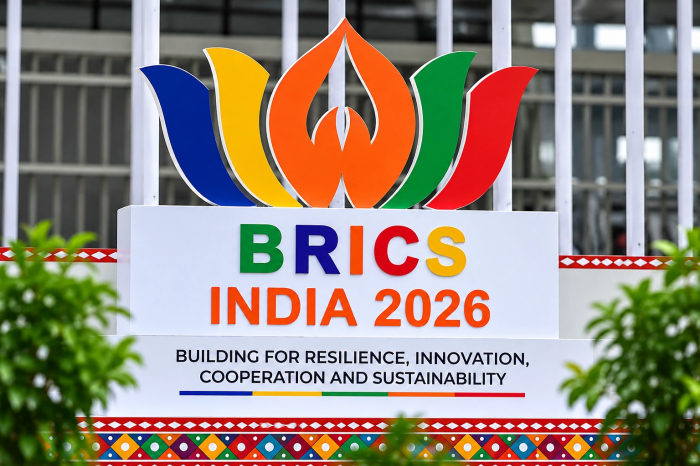
President of the People's Republic of China Xi Jinping arrived in New Delhi on Saturday to attend the 18th BRICS Summit. The visit comes shortly after the Shanghai Cooperation Organization (SCO) Summit in Bishkek, allowing the two events to be viewed as interconnected elements of China's active multilateral diplomacy. The Chinese leader's participation in these key multilateral formats reflects Beijing's efforts to promote closer cooperation among developing countries and strengthen the role of the Global South in international affairs. In this context, the SCO and BRICS are increasingly emerging as complementary platforms for political dialogue, economic cooperation, and the development of common approaches to global development issues.
The SCO and BRICS differ in their origins, membership, and initial objectives. The SCO was formed primarily around regional security and cooperation in the Eurasian space, while BRICS emerged as a format for interaction among the largest developing economies. However, as both structures have expanded, their functions have become significantly broader. Today, the agenda is no longer limited to security in the case of the SCO or economic coordination in the case of BRICS. Trade, investment, transport connectivity, energy, financial mechanisms, the digital economy, artificial intelligence, green technologies, and the reform of global governance are gradually becoming a common agenda. This is precisely why Xi Jinping's statement in Bishkek that the SCO traces its roots to the Global South and is tasked with promoting its further development and strengthening takes on special significance. This approach allows the SCO to be viewed not only as a vital platform for interaction in the Eurasian space but also as one of the mechanisms for broader cooperation among developing states. In this context, Beijing emphasizes the organization's potential in expanding dialogue, strengthening connectivity, and advancing the common interests of Global South countries.
One of the most notable processes in recent years has been the expansion of the SCO and BRICS and the formation of a circle of partners around them. As a result, these structures are gradually ceasing to be associations of a limited number of states. The member states of the two formats collectively represent more than half of the planet's population and about 30 percent of the global economy. However, the significance of this process is determined not only by the number of participants. The political space itself is expanding, within which states in Asia, Africa, the Middle East, Latin America, and Eurasia gain the opportunity to interact outside traditional Western institutions. China has played a prominent role in developing this model. The "BRICS Plus" format, support for the expansion of the grouping, the SCO concept of a community with a shared future, and the continuous engagement of new partners all reflect Beijing's aspiration to build a broader network of cooperation around existing organizations.
At the same time, China is not yet proposing the creation of a single political bloc for the Global South. Moreover, the vast differences among its member states make the emergence of such a bloc highly unrealistic. These countries have different political systems, economic models, foreign policy interests, and relations with the United States, the European Union, Russia, and China itself. Therefore, China's strategy looks different. Instead of a rigid alliance, it proposes a system of overlapping platforms where states can cooperate in areas where their interests align. It is precisely this flexibility that is potentially one of the advantages of the emerging architecture.
The second element of the Chinese approach is the attempt to make economic development the primary common denominator for the Global South. Xi Jinping regularly returns to this topic. In Bishkek, he once again called for putting development first, while also proposing to expand cooperation in both traditional areas, including trade, investment, energy, and transport connectivity, and in new sectors, primarily the digital economy, artificial intelligence, and green technologies. There is a clear political logic here. Countries typically classified as part of the Global South are too diverse to form a common ideological platform. However, most of them share a need for investment, infrastructure, industrialization, technology, energy, and access to international financing. Consequently, it is development that can serve as the foundation for building long-term cooperation.
This logic is consistent with China's Global Development Initiative. According to Chinese data, over the past five years, the initiative has mobilized over $23 billion, supported more than 1,800 small-scale socially significant projects, and funded vocational training for over 200,000 people. For Beijing, such programs have a dual significance. On the one hand, they demonstrate the practical component of China's presence in the developing world. On the other hand, they allow China to back the political concept of the Global South with concrete economic tools. This is a crucial point. If South-South cooperation remains purely political rhetoric, its potential will be limited. But if investment, financial, transport, and technological mechanisms gradually emerge around it, it can acquire a much more sustainable character.
Financial Infrastructure as the Next Stage
This raises another important issue: the creation of independent financial institutions. BRICS already has the New Development Bank, established after the grouping's leaders signed the relevant agreement in 2014. Its emergence was significant not only as a source of funding for infrastructure projects but also as a demonstration that developing states could create their own multilateral financial mechanisms. Now, a similar discussion is unfolding within the SCO. At the Bishkek summit, member states reaffirmed the importance of establishing an SCO Development Bank. If this project is realized and endowed with substantial capital and practical functions, it could become one of the most important elements of the SCO's economic institutionalization. The organization would then acquire an instrument to link political agreements with the financing of infrastructure, transport corridors, energy facilities, digital projects, and other areas of cooperation.
The Battle is Now Not Only for Markets, but Also for Rules
The third direction of China's strategy goes beyond economics. Beijing is increasingly vocal about the need to change the representation of developing states in the global governance system. Xi Jinping's formula that global affairs should be discussed by all states and international norms established jointly reflects a broader Chinese aspiration to present itself as a champion of a more multipolar model of international relations. Here, the SCO and BRICS take on additional significance. They are becoming platforms not only for economic cooperation but also for coordinating political positions. This is already evident in responses to international crises. SCO member states issue joint statements on international and regional security issues, including the situation in the Middle East and around Iran. Thus, a mechanism for a collective political voice is gradually taking shape. It is not always unified, as the interests of SCO and BRICS participants often diverge. However, the very existence of platforms where major non-Western powers can coordinate positions without the involvement of Western powers represents a significant shift in the international environment. At the same time, Beijing seeks to present these developments not as the creation of an anti-Western system, but as a demand to expand the participation of developing countries in global decision-making. This is an important distinction. For a significant part of the Global South, the appeal of BRICS or the SCO lies precisely in the opportunity to expand foreign policy maneuvering room, without necessarily severing ties with the US or Europe.
Artificial Intelligence Becomes Part of the Global South's
Geopolitics It is particularly telling that the Chinese concept is now extending to the realm of artificial intelligence. Xi Jinping's announced initiative to establish a World Organization for AI Cooperation shows that Beijing seeks to participate in shaping international rules even before the global governance system for this technology is fully established. Chinese arguments are built around the danger of a new digital divide. If access to advanced AI models, computing resources, data, and infrastructure remains concentrated in a small group of states and corporations, the technological gap between the Global North and South could widen significantly. Therefore, the proposal to help Global South states develop their own AI capabilities is simultaneously a technological and geopolitical initiative. In effect, competition is gradually shifting from the question of who produces more goods or controls more transport routes to who will participate in creating the rules for the future digital economy. Here, China is trying to form a coalition of states in advance, those interested in broader access to technology and participation in defining relevant international norms.
The SCO and BRICS as Parts of a Single System
The most interesting conclusion drawn from the sequence of summits in Bishkek and New Delhi is that China increasingly views international organizations not in isolation from one another. The SCO, BRICS, the Forum on China-Africa Cooperation, China-ASEAN interactions, and Beijing's global initiatives are beginning to form a network of complementary mechanisms. In this system, the SCO provides China with deep engagement primarily in the Eurasian space. BRICS offers a significantly broader global reach. China-Africa mechanisms form a separate track of interaction with Africa, while cooperation with ASEAN consolidates China's position in Southeast Asia. The Global Development and Global Governance Initiatives provide a common political framework, while infrastructure, financial, and technological projects are meant to fill it with practical substance. It is in the integration of these elements that the long-term strategy lies. The goal is not to create a single Global South organization. Rather, a multi-level network of institutions, partnerships, and initiatives is taking shape.
From Bishkek to New Delhi In Bishkek
China outlined the SCO's role in the development of the Global South. In New Delhi, this theme will likely be continued in the significantly broader format of BRICS. Ultimately, Beijing offers the Global South three interconnected things: development as the foundation for cooperation, broader participation in global governance, and the creation of its own institutional mechanisms to achieve these goals. How viable this model proves to be will depend not on the number of declarations or even the further expansion of the SCO and BRICS. The main criterion will be the ability of these groupings to translate the growing political weight of the Global South into functioning financial institutions, infrastructure projects, technological cooperation, and real influence on the formation of international rules.
GSR

