
 Home
Georgia’s China Strategy. Investment, Trade and New Transport Routes
-
 10 Nov 2026 09:43
-
 79
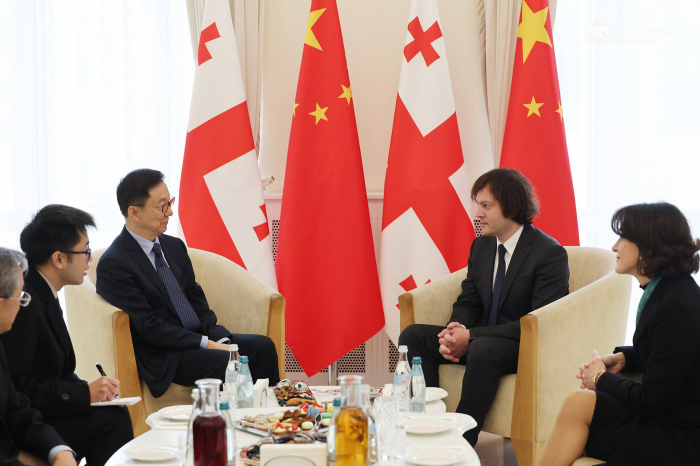
The official visit of Vice President of the People's Republic of China Han Zheng to Georgia from November 6 to 8, 2026, marked a significant event not only in the history of relations between the two countries but also in the broader context of political and economic developments in the South Caucasus. For the first time in the history of diplomatic relations, Tbilisi hosted a Chinese state official of such high rank. The visit itself reflects Beijing's growing attention to Georgia, its geographical location, economic potential, and opportunities to participate in the development of new transport and trade links between Asia and Europe.
The visit was particularly significant as it took place just five months after the joint decision made on June 9, 2026, by Chinese President Xi Jinping and Georgian President Mikheil Kavelashvili to elevate bilateral relations to the level of a comprehensive strategic partnership. Han Zheng's visit therefore represented a practical continuation of an established political course aimed at expanding cooperation and strengthening mutual trust. China has been consistently broadening its cooperation with countries interested in developing trade, infrastructure, and investment ties. Georgia occupies a special place in this context. According to the Chinese side, Georgia became Beijing's first strategic partner in the South Caucasus and the first country in Eurasia to conclude a free trade agreement with China.
During meetings with President Mikheil Kavelashvili and Prime Minister Irakli Kobakhidze, Han Zheng reaffirmed the Chinese leadership's commitment to further strengthening bilateral relations. One of the most important political outcomes of the talks was the reaffirmation of mutual support on matters of sovereignty and national interests. The Chinese side reiterated its respect for Georgia's sovereignty, security, and development interests, while Tbilisi reaffirmed its commitment to the one-China principle. For Georgia, which continues to face the challenge of restoring its territorial integrity, Beijing's position is of fundamental importance. Support from one of the world's leading powers broadens the country's diplomatic opportunities and strengthens its international standing.
Another important element of the negotiations was the discussion of the international agenda. Beijing positively assessed Georgia's attitude toward President Xi Jinping's four global initiatives, covering development, security, civilizational dialogue, and global governance. The Chinese side also emphasized the importance of an international system based on the central role of the United Nations, respect for international law, and multilateral cooperation. For Georgia, participation in such dialogue opens additional opportunities for diplomatic engagement on issues extending far beyond bilateral relations.
Economic indicators in recent years demonstrate the rapid development of cooperation between China and Georgia. According to Georgia's Minister of Economy and Sustainable Development, Mariam Kvrivishvili, bilateral trade reached $2.3 billion in the first nine months of 2026, representing a 41 percent increase compared with the corresponding period of the previous year. China became Georgia's second-largest trading partner, strengthening its position as one of the key participants in the country's foreign economic relations. Investment trends are equally revealing. Since 2002, cumulative Chinese investment in Georgia has exceeded $1 billion. In the first half of 2026 alone, investment from China amounted to $236 million, making it Georgia's largest foreign investor during that period. These figures reflect the growing interest of Chinese businesses in the Georgian economy. At the same time, it is particularly important for Tbilisi that further capital inflows contribute to the establishment of new production facilities, infrastructure development, technological modernization of enterprises, and the creation of additional jobs.
The Chinese market offers exceptionally broad opportunities for Georgia. This includes not only traditional exports such as wine and mineral water but also nuts, honey, tea, natural products, processed agricultural goods, and other commodities. However, entering this market requires systematic efforts, compliance with sanitary standards, stable production volumes, effective marketing, and cooperation with Chinese importers and retail networks. Therefore, it is essential to focus not only on statements about expanding trade but also on the mechanisms being developed to facilitate direct interaction between businesses in the two countries.
In this context, the modernization of the free trade agreement plays a significant role. The original agreement, which entered into force on January 1, 2018, established a favorable legal framework for the development of economic relations. The protocol on its modernization, signed in Beijing on April 22, 2026, provides for improvements in sanitary and phytosanitary procedures, technical standards, investment cooperation, and e-commerce. Following the completion of the necessary approval procedures, these changes could facilitate access for Georgian products to the Chinese market and create more transparent conditions for business activities.
The development of e-commerce appears particularly promising. China possesses one of the world's most advanced ecosystems of digital trading platforms, logistics services, and electronic payment systems. Access to these tools could transform traditional export practices for Georgian producers, enabling smaller enterprises to reach customers without having to establish extensive commercial infrastructure of their own in China. However, the successful realization of these opportunities will depend on product quality, effective supply arrangements, and the ability of Georgian businesses to adapt to the demands of Chinese consumers.
It is noteworthy that Han Zheng's visit was preceded by intensive diplomatic and economic engagement by a Georgian government delegation in China. In early November, Mariam Kvrivishvili held talks with Ding Xuexiang, Vice Premier of China's State Council, as well as meetings with representatives of major Chinese companies and trade organizations. Discussions focused on investment, transport infrastructure development, expansion of Georgian exports, and cooperation with Chinese retail chains. In particular, contacts with Meituan explored opportunities to promote Georgian products through e-commerce platforms. The first meeting of the joint working group on trade facilitation was also held, aimed at improving access for Georgian products to the Chinese market.
These negotiations coincided with the ninth China International Import Expo in Shanghai, where Georgia was represented by three thematic pavilions and dozens of companies. According to the Georgian side, 37 Georgian enterprises participated in the exhibition, while specially organized business meetings explored cooperation opportunities with nearly 50 Chinese companies. Such events are particularly valuable because they help translate political agreements into concrete commercial contacts. The China International Import Expo itself serves as an important instrument of China's policy to expand foreign producers' access to its domestic market.
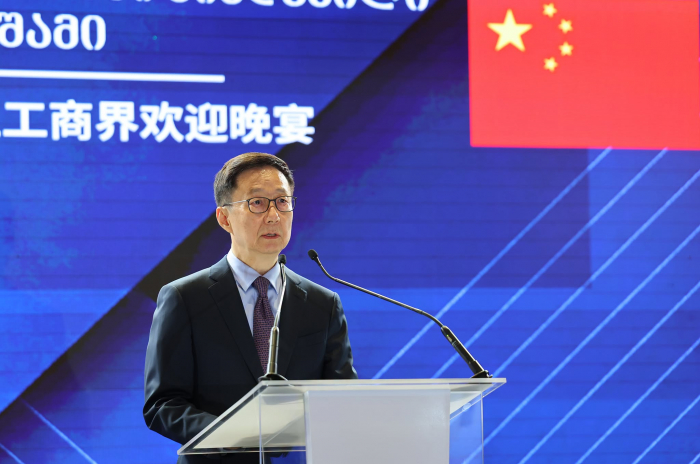
The participation of Ren Hongbin, Chairman of the China Council for the Promotion of International Trade, and Giorgi Pertaia, President of the Georgian Chamber of Commerce and Industry, in the business meeting held in Tbilisi also deserves attention. Their presence reflects both sides' interest in expanding direct business ties. During the event, Han Zheng reaffirmed China's willingness to increase imports of Georgian products and support competitive Chinese companies operating in Georgia. For the further development of the partnership, it is essential that such contacts become regular and lead to concrete export and investment agreements.
The Anaklia deep-sea port project occupies a special place in the development of Georgian-Chinese cooperation. During meetings with Chinese entrepreneurs, Mariam Kvrivishvili described it as the future maritime gateway of the Middle Corridor on the Black Sea. Implementation of the project would expand the capacity of Georgia's port infrastructure and strengthen the country's transit role in international freight transportation. The port development model envisaged by the Georgian government provides for continued state ownership of the core infrastructure while allowing the participation of international investors and operators. This approach creates favorable conditions for attracting Chinese capital and transforming Anaklia into an important logistics hub connecting Asian and European markets.
It is particularly important to emphasize that the Belt and Road Initiative, in its economic essence, seeks to enhance connectivity between countries, develop transport infrastructure, and expand trade and investment cooperation. Georgia's participation in these processes allows it not only to capitalize on its geographical position but also to gradually transform its transit potential into a genuine source of economic growth. The country's prospects, however, will depend not on any single major infrastructure project but on its ability to develop an integrated network of ports, railways, highways, modern terminals, and enterprises serving international freight flows.
Positive trends in tourism and air connectivity are equally noteworthy. During the first nine months of 2026, Georgia recorded 119,081 international visits from China, an increase of 23.6 percent compared with the corresponding period of the previous year. This indicates growing interest among Chinese travelers in Georgia as a destination. The existing visa-free regime and the expansion of direct air services create further opportunities. In July 2026, direct flights between Shanghai and Tbilisi were launched, complementing the existing air connection with Urumqi. Under an agreement reached with China Eastern Airlines, the frequency of weekly flights between Shanghai and Tbilisi is expected to increase from three to five in 2027. The possibility of establishing direct services from Beijing, Guangzhou, and Chengdu is also under discussion. The development of air connectivity has implications extending far beyond tourism growth. It facilitates business travel and supports the organization of exhibitions, investment forums, educational programs, and cultural events.
Humanitarian cooperation is also becoming an important component of bilateral relations. During the negotiations, the parties discussed academic programs, student exchanges, scientific research, and expanded cooperation in emerging technologies. The activities of the joint working group on artificial intelligence are of particular interest. For Georgia, cooperation with China in this field could create opportunities to acquire new knowledge, train specialists, and apply advanced digital solutions across various sectors of the economy.
The international context of Han Zheng's visit also deserves attention. His trip to Georgia formed part of a broader program of international engagements that also included participation in the United Nations climate summit in Türkiye as the special representative of Xi Jinping. This demonstrates that Chinese diplomacy views regional relations in connection with a wider international agenda encompassing sustainable development, economic connectivity, and global cooperation.
Han Zheng's visit can be seen as confirmation that Georgia is gradually assuming a more prominent position in China's Eurasian strategy. For Beijing, Georgia is an attractive partner due to its favorable geographical location, access to the Black Sea, developing transport infrastructure, and experience in free trade. For Tbilisi, China is becoming not only a major trading partner and source of investment but also a country whose cooperation can help expand Georgia's international economic opportunities.
At the same time, the most important objective of the current stage of cooperation should be to transform political agreements into sustainable economic ties. Growing bilateral trade, investment, improved air connectivity, and expanding contacts between business communities already demonstrate positive momentum. The next steps could include increasing Georgian exports, establishing joint production facilities, developing logistics centers, attracting Chinese technologies, and implementing infrastructure projects capable of generating long-term economic returns.
The year 2027, when Georgia and China will mark the 35th anniversary of the establishment of diplomatic relations, could become an important milestone for assessing the initial practical results of their comprehensive strategic partnership. Particular importance will be attached to the implementation of previously reached agreements, including modernization of the trade regime, expansion of transport links, and stronger cooperation between government institutions and business communities.
Overall, Han Zheng's November visit demonstrated that relations between Georgia and China are entering a stage in which political dialogue is becoming increasingly intertwined with practical economic interests. For both countries, this creates opportunities for long-term cooperation, while for the South Caucasus it opens additional prospects for participation in the development of new Eurasian transport and trade links.
The broader significance of these developments lies in Georgia's growing opportunity to strengthen its international position not merely through its geographical location but through active participation in economic processes connecting different regions of Eurasia. China, in turn, gains an interested partner along a strategically important route, capable of facilitating trade connections between Asia and Europe.
It is this mutual interest in economic development, respect for sovereignty, and commitment to long-term cooperation that can provide a solid foundation for further rapprochement between the two countries. The transformation of the South Caucasus from a region of geopolitical rivalry into an area of interconnected economies, trade, and transport cooperation could become one of the most significant outcomes of China's expanding engagement with the countries of the region. In this sense, Han Zheng's visit to Tbilisi carries significance extending far beyond an ordinary diplomatic event.
GSR

