
 Home
HomeFrom Development to Global Governance: China's Systemic Vision within the SCO
-
 07 Sep 2026 08:22
-
 236
236
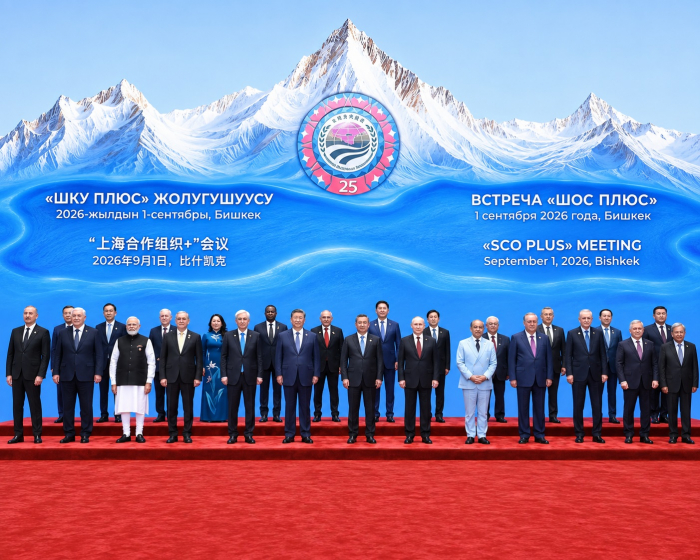
Speaking at events dedicated to the 25th anniversary of the Shanghai Cooperation Organization, President of the PRC Xi Jinping presented his vision for the further development of the organization and its place in the emerging system of international relations. Alongside issues of security, economic cooperation, connectivity, and humanitarian interaction, he paid special attention to the principles of dialogue, consultation, and the improvement of governance mechanisms. In essence, this is about a broader Chinese conception of the principles upon which relations between states should be built in the context of the ongoing transformation of the international system.
The proposed approach is based not on the domination of individual states or the imposition of universal political models, but on dialogue, consultation, equality, and the search for solutions that take into account the interests of all participants. In this sense, the SCO is viewed not only as a regional organization but also as a practical platform where new mechanisms of multilateral interaction can be developed and tested. Therefore, the priority outlined by Xi Jinping should be considered in a broader context. This is not just a matter of improving the SCO's own mechanisms, but part of China's vision for a fairer, more balanced, and more representative system of global governance.
Xi Jinping specifically emphasized the principle of equality among states, regardless of their size, economic potential, or political weight. Large and small countries, he said, must have an equal right to participate in the discussion of regional issues, and solutions must be sought through consultation and consensus-building. Contradictions between states are proposed to be resolved through dialogue, and problems affecting multiple countries through multilateral interaction. Behind these seemingly simple formulations lies a crucial question about the future of the international order. China proposes proceeding from the premise that the world will consist of sovereign states that may differ significantly in territory, population, political system, and economic and military power, but must nonetheless have the ability to participate in decision-making that directly affects their interests. This does not imply the creation of a supranational center to which states must cede a significant portion of their own sovereignty. Rather, the Chinese model is built around the continuous coordination of interests among the states themselves. It is precisely here that the SCO takes on special significance for Beijing. The organization becomes a kind of testing ground where this principle can be put into practice. It already includes states that differ greatly in size, capabilities, political systems, and foreign policy interests. Yet decisions are made through the search for consensus, not through the subordination of the minority to the majority. It is no coincidence that Xi Jinping directly linked this direction to the Global Governance Initiative. This makes the overall structure of his speech much clearer.
Xi Jinping's speech reflects a desire to view the further development of the SCO within the context of China's broader system of international initiatives. Economic development and expanding opportunities for joint growth align with the Global Development Initiative. Issues of stability, security, and countering modern challenges find their continuation in the Global Security Initiative. Humanitarian cooperation, strengthening mutual understanding, and expanding contacts between peoples are viewed through the prism of the Global Civilization Initiative. In turn, the principles of interstate interaction, equal dialogue, and state participation in international decision-making are being developed within the framework of the Global Governance Initiative.
Considered together, these four areas allow us to speak not so much of a set of separate foreign policy initiatives, but of the formation of an interconnected conceptual approach. In it, issues of development, security, inter-civilizational interaction, and global governance complement each other and form elements of a broader model of international cooperation.
In this context, the SCO takes on special significance for China. The organization can be viewed not only as a regional mechanism for interaction but also as one of the platforms where individual elements of this approach are given practical expression. Thus, we are talking about the gradual formation of China's vision of international relations for the coming decades, based on the principles of sovereign equality of states, multilateral dialogue, joint development, indivisible security, and respect for civilizational diversity. Economies must develop jointly and benefit from mutual openness. Security must be common and not ensured at the expense of other states. Differences between cultures, civilizations, and political systems must be recognized, not eliminated. International decisions must be made through dialogue, consultation, and broader state participation.
That is why the significance of the SCO for China is gradually extending far beyond the organization itself. The SCO is becoming one of the platforms where Beijing can not only talk about its global initiatives but also attempt to translate them into specific cooperation mechanisms. In a sense, the SCO is turning into a testing ground for the Chinese vision of a multipolar world. But it is precisely here that one of the main challenges arises. The larger the SCO becomes, the wider the circle of its partners, and the more diverse the interests of the participating states, the more difficult it is to make decisions exclusively by consensus. What worked relatively easily in a small organization becomes significantly more complex in a grouping that covers a vast part of Eurasia and includes states with very different interests.
Therefore, Xi Jinping's call to improve the functional mechanisms of the SCO and increase the efficiency of decision-making and implementation is far from merely technical. In fact, the organization faces one of the main questions of its next stage of development: how to simultaneously preserve the equality of states, consensus, and respect for sovereignty, while not losing the ability to make and implement decisions quickly. The answer to this question will determine whether the SCO can translate its enormous geographic, demographic, and economic potential into real international influence. And here an even broader question arises. If the SCO manages to find a working model of interaction between such diverse states, it could indeed offer valuable experience for global governance. If, however, expansion leads to more complex coordination and a reduced ability to make practical decisions, the organization risks remaining politically representative but institutionally insufficiently effective. It is precisely the ability to reach agreements without demanding that another state abandon its own development model and foreign policy independence that China is effectively proposing to make one of the main principles of the future SCO.
Xi Jinping's call for new countries to become SCO partners deserves special attention. Behind this formulation lies a fairly clear signal. China is interested in further expanding the space for interaction around the organization and does not consider the current SCO membership to be final. The organization already unites states that differ markedly in the size of their economies, political systems, foreign policy priorities, and relations with the world's major centers of power. Further expansion will inevitably make this picture even more complex. But at the same time, therein lies the SCO's potential advantage. If the organization can bring together more and more states without demanding political and ideological uniformity, it can truly become one of the most representative platforms of the emerging multipolar world. For many countries, the attractiveness of the SCO may lie precisely in the opportunity to participate in a major Eurasian format without having to abandon relations with other international centers of power. This is why it is particularly indicative that in a single speech, Xi Jinping simultaneously speaks of expanding the circle of partners and the need to improve the organization's own mechanisms. In essence, China is proposing that the SCO move in two directions at once: expanding the geography of interaction while simultaneously making internal cooperation mechanisms more efficient. This will likely become one of the main tasks for the SCO's next decade. If the organization only expands without deepening practical cooperation, there is a risk of it gradually turning into a massive international forum where many states are represented, but it becomes increasingly difficult to coordinate and implement specific decisions. If, however, expansion is accompanied by the creation of working mechanisms in trade, investment, transport, technology, security, education, and other areas, an increase in the number of participants, on the contrary, can multiply the organization's significance. Therefore, the main question is no longer so much how many new countries will join the SCO or receive partner status. Much more important is how deeply these states will be able to integrate into the cooperation system being created around the organization. Ultimately, the real weight of the SCO will be determined not by the number of flags at the next summit, but by the number of working ties between the states within its space.
GSR

