
 Home
HomeThe Human Dimension of the SCO: The Long-Term Logic of China's Approach
-
 09 Sep 2026 08:58
-
 218
218
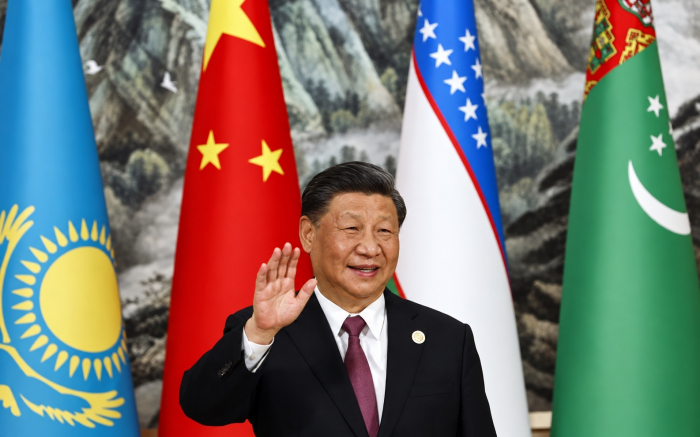
Speaking on 1 September 2026 at the Bishkek summit of the Council of Heads of State of the Shanghai Cooperation Organization, President of the PRC Xi Jinping elevated the humanitarian dimension to the status of an equal, third pillar of China's initiatives. At the heart of this vector lies the individual and the living bonds between our societies. Undoubtedly, against the backdrop of addressing global economic and geopolitical challenges, the humanitarian agenda may at times appear less ambitious in scale. Yet it is precisely here that Beijing's genuine, long-term strategy is to be found. Interstate agreements create the necessary framework, but it is people who breathe life into it. New transport arteries can be laid, trade turnover multiplied, and large-scale investment projects launched. However, their true, long-term return will be measured not only in figures, but also in how deeply partners understand one another. Ultimately, the foundation of any sustainable integration rests on mutual trust and the sincere interest of peoples in one another.
For the SCO, this task is of particular, strategic significance, as the Organization unites states with unique historical traditions, distinctive political systems, a diversity of religious traditions, and varying levels of economic development. Such profound diversity calls for balanced approaches that harmonize common interests while unconditionally respecting national sovereignty and identity. The Organization consistently proceeds from the premise that any attempts at unification or the imposition of a single development template would only exacerbate contradictions and narrow the space for genuine interaction.
In this context, President Xi Jinping's call to fully take into account the historical path, cultural traditions, social structure, and development specificities of each state is deeply symbolic. The Chinese leader organically linked the humanitarian dimension with the implementation of the Global Civilization Initiative. Respect for civilizational diversity constitutes the very essence of the "Shanghai Spirit," upon which he drew in his address. Thus, the proposed agenda not only responds to the challenges of our time, but also represents a logical, organic continuation of the fundamental principles on which the SCO is founded. The practical embodiment of this approach should be the formation of an extensive, multi-level network of dialogue — among parliaments, political parties, universities, think tanks, business communities, and the media. It was precisely these institutions that the President of the PRC identified in his address as the key drivers of people-to-people interaction.
Each of these channels plays its own distinctive role in the overall architecture of cooperation. University exchanges build human capital and lay the groundwork for joint scientific research. Expert contacts enable a deeper understanding of partners' reasoning, foster an atmosphere of trust, and allow timely identification of common ground. Business ties open the way to concrete projects and practical cooperation. And interactions among media representatives contribute to shaping an objective, multifaceted image of partner countries, enriching societies' understanding of one another through substantive engagement with the life and achievements of neighboring states. At the same time, it is important to emphasize that the SCO has long and consistently been developing the humanitarian dimension, and it cannot be perceived merely as a platform for high-level meetings around which societal and educational ties are yet to be built. The Organization possesses a rich, tested experience in this field. A telling example is the SCO University, which unites leading universities of the member states within a networked framework. The agreement on its establishment and functioning, signed in 2017, laid a solid foundation for joint training of personnel and academic mobility. Accordingly, the current task is not to create something from scratch, but to scale up the existing foundation, deepen it qualitatively, and enhance its practical effectiveness for the benefit of the peoples of our countries.
A special, strategic place among the Chinese proposals is occupied by the sphere of education. President Xi Jinping announced the establishment of the China–SCO Education Cooperation Center, and reaffirmed the readiness to advance work through the network of Confucius Institutes and "Lu Ban Workshops". This initiative opens a new chapter in multilateral humanitarian interaction and calls for subsequent institutional formalization within the SCO's platforms.
"The Lu Ban Workshops", distinguished by their pronounced applied orientation, deserve particular attention. These projects focus on vocational and technical education and respond to concrete labor market demands. A telling example is the workshop opened in 2022 in Tajikistan, based on cooperation between the Tajik Technical University named after Academician M. Osimi and a specialized educational institution in Tianjin. Among the key training areas are urban thermal energy engineering and engineering geodesy. Thus, educational interaction gains a direct connection with infrastructure needs and the real tasks facing the national economy. This reflects the practice-oriented nature of the Chinese approach. The expansion of industrial cooperation and the development of energy, transport, and digital technologies require highly qualified specialists capable of designing, maintaining, and improving the relevant systems. Workforce training becomes an integral condition for the sustainability of economic projects. For partner countries, particular value lies in the fact that the competencies acquired remain within the national economy, strengthening local enterprises, enhancing economic competitiveness, and expanding employment opportunities for the younger generation. In essence, this is about investment in human capital that serves the long-term development interests of every SCO member state.
Educational cooperation also yields a deeper, longer-term effect. Joint studies, scientific research, and professional training enable individuals to accumulate invaluable experience of interaction that endures well beyond any particular program. Graduates become engineers, entrepreneurs, scientists, and civil servants, bringing this experience into their subsequent work. In this way, gradually and organically, professional communities are formed that sustain ties between countries at an everyday, living level. Such a network may rightly be called the human infrastructure of the SCO. This concept accurately captures the invisible yet sturdy connection that exists between major interstate decisions and the people upon whom their implementation depends. If transport corridors ensure the movement of goods, then professional and societal contacts create the conditions for aligning interests, identifying partners, and jointly addressing emerging challenges. In essence, it is the human infrastructure that turns signed agreements into real deeds.
In this regard, the success of the humanitarian track is best assessed by concrete, tangible results — including the sustainability of university partnerships, the quality of joint scientific research, genuine professional prospects for graduates, the emergence of new business projects, and the continuation of living contacts beyond the conclusion of official events. It is precisely such indicators that reveal whether political intentions are being transformed into authentic, functioning bonds between societies.
It is important to recognize soberly that the humanitarian agenda is not intended to replace diplomatic mechanisms for the settlement of interstate issues, nor does it eliminate existing contradictions. However, it is capable of substantially expanding the space for dialogue, fostering an atmosphere of trust, and reducing the costs of mutual misunderstanding. Herein lies its independent, distinctive value for the SCO, which unites countries so diverse in culture, traditions, and paths of development. The humanitarian dimension becomes the soft yet strong adhesive that holds together the entire structure of the SCO's multilateral cooperation.
Thus, the third track of President Xi Jinping's address may rightly be regarded as a strategic proposal to strengthen the social, human foundation for the further development of the Shanghai Cooperation Organization. This emphasis draws attention to the next, qualitatively new stage in the Organization's evolution — namely, its capacity to sustain cooperation not only through high-level political decisions, but also through the everyday, living engagement of individuals, professional communities, and public institutions.
GSR

